CAT. 01// 2025
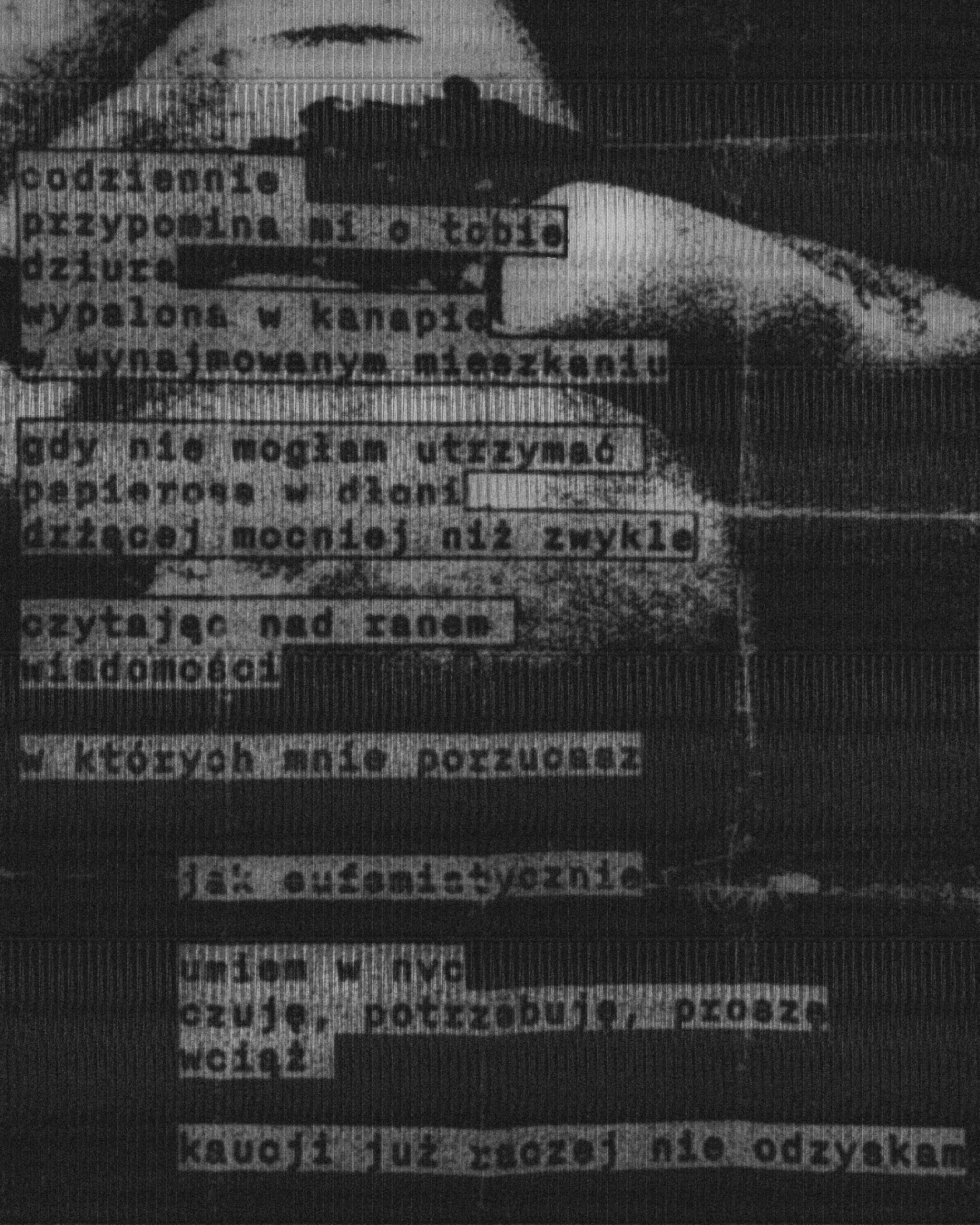
Hole
Medium: Poem
A poem about being abandoned at dawn, where the language of care fails and a cigarette burn turns heartbreak into a problem with the security deposit.
This digital catalogue documents the works, installation and related events presented in and around the exhibition.
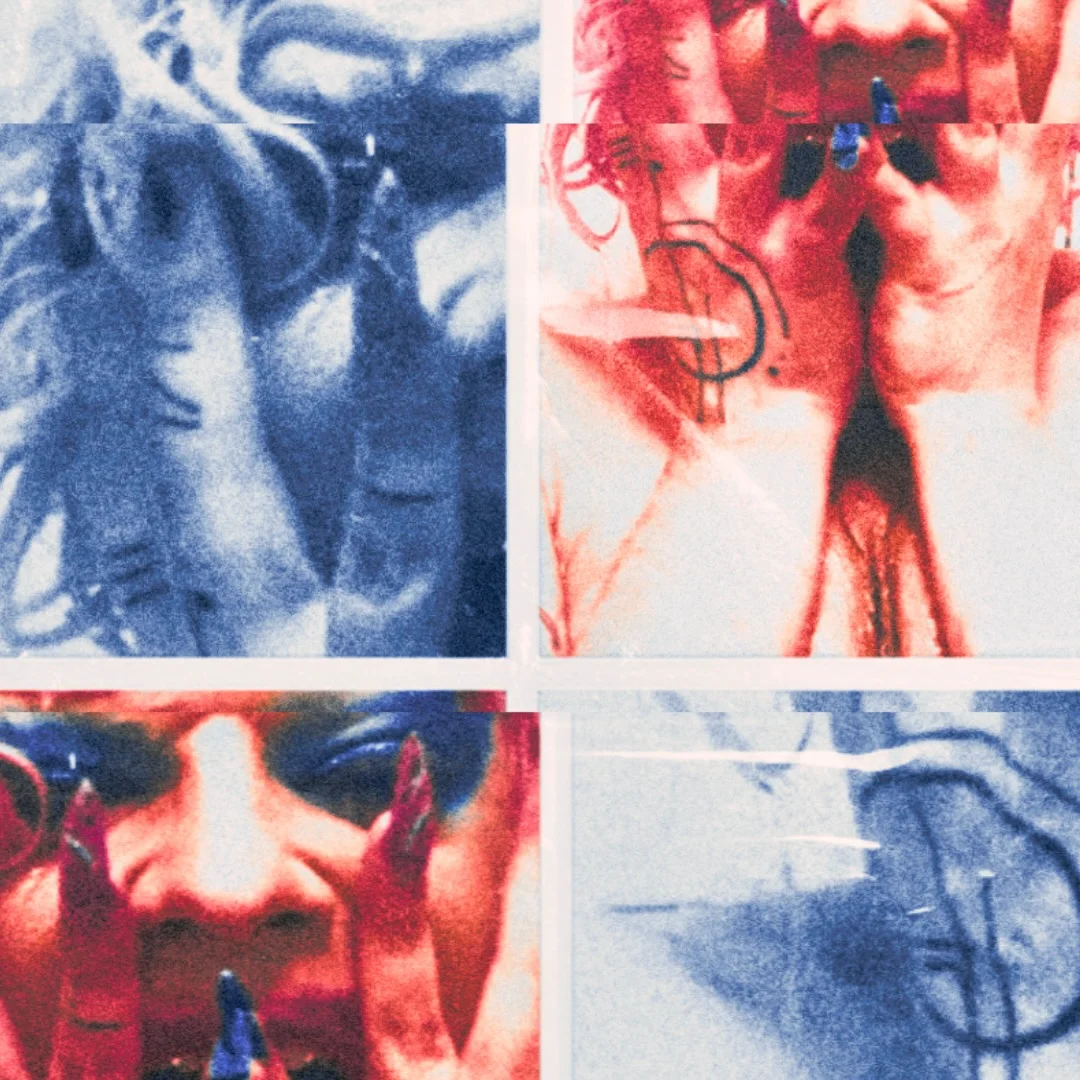
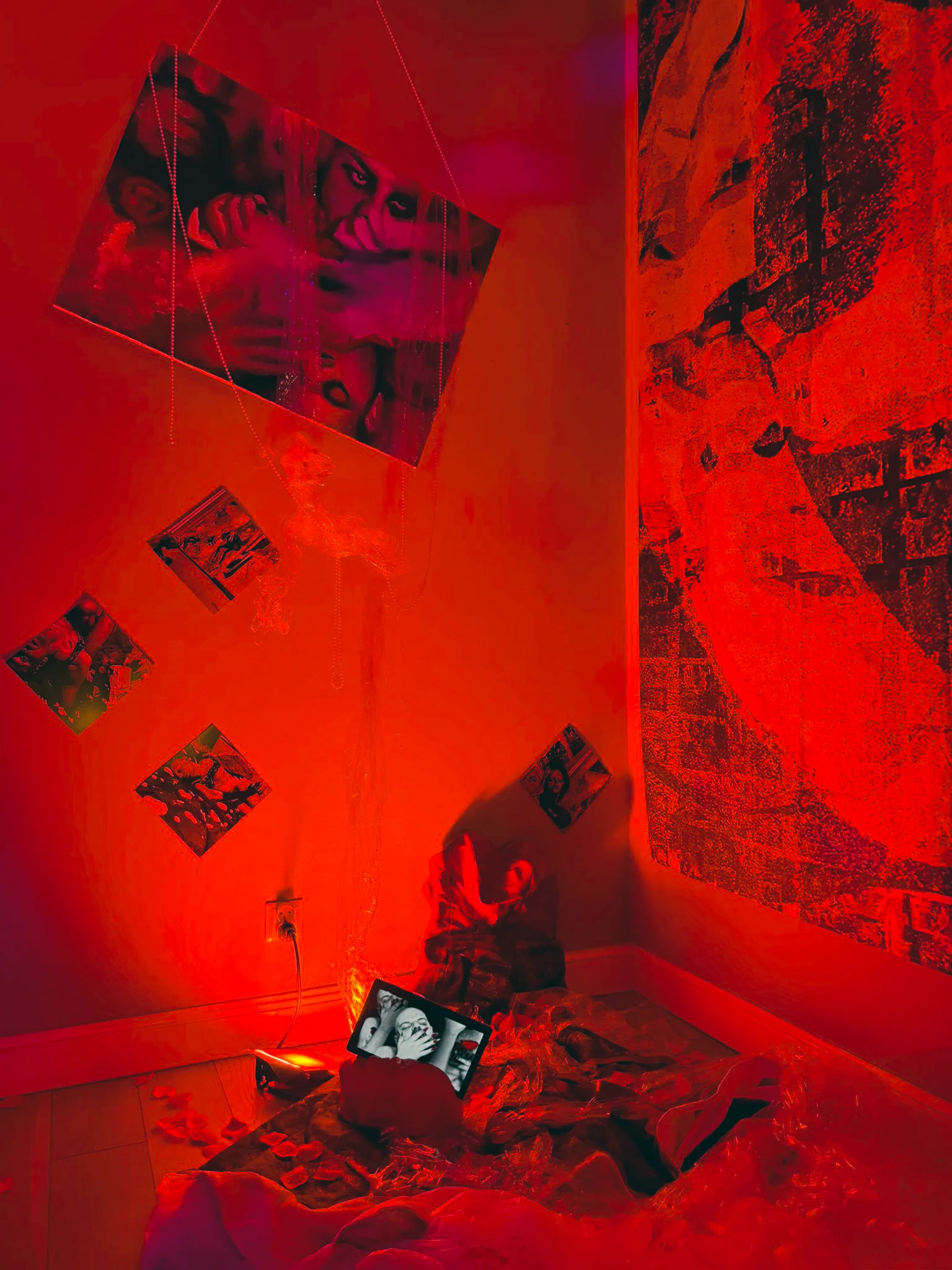
I Just Wanted to Be an Icon brings together works from different moments of Simona Kasprowicz’s practice in a new exhibition structure. Moving image, painting, photography, objects and text return as parts of a fragmented self-portrait: images are repeated, reworked and placed beside one another so that their earlier meanings shift. The exhibition follows self-image and self-production through queer and trans femininity, asking how a body is made visible, becomes a surface for projection and is consumed.
Iconicity appears here as a process rather than a fixed religious code. The body operates as both image and archive, carrying pop-cultural projections, private memory, desire and fragments of earlier performance. Motifs migrate between video, painting, photography and objects; each return alters the form and pressure of the image.
The exhibition does not present a single, completed figure. It gathers repetitions, reproductions and partial views into a dispersed portrait of a practice in motion — one in which visibility can be desired, used and resisted at the same time.
Curated editorial sequence of artworks, moving image, and spatial interventions
A poem about being abandoned at dawn, where the language of care fails and a cigarette burn turns heartbreak into a problem with the security deposit.
An experimental film examining trans and nonbinary embodiment as a site of enforced legibility, where visibility, damage, and desire coexist without narrative resolution.
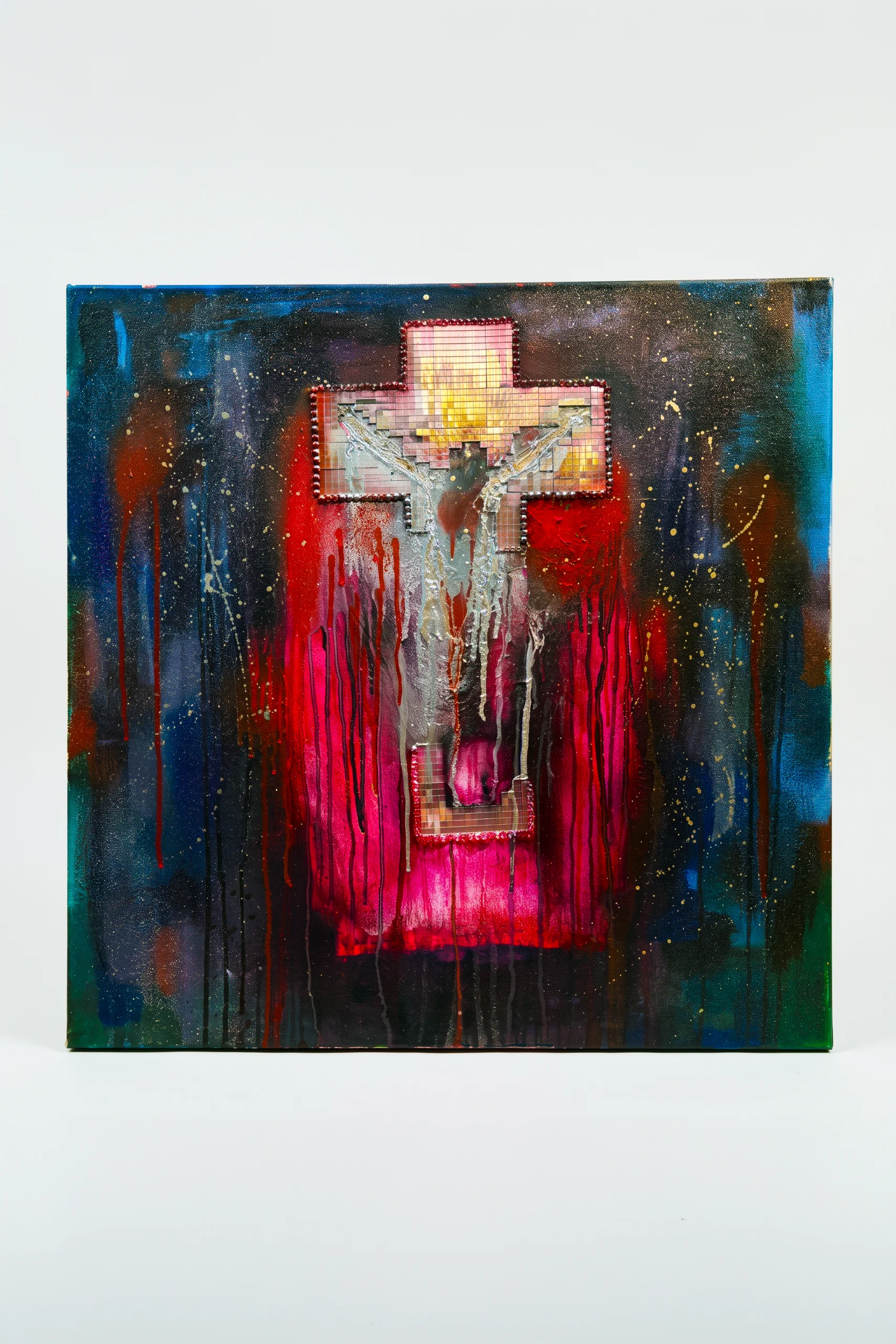
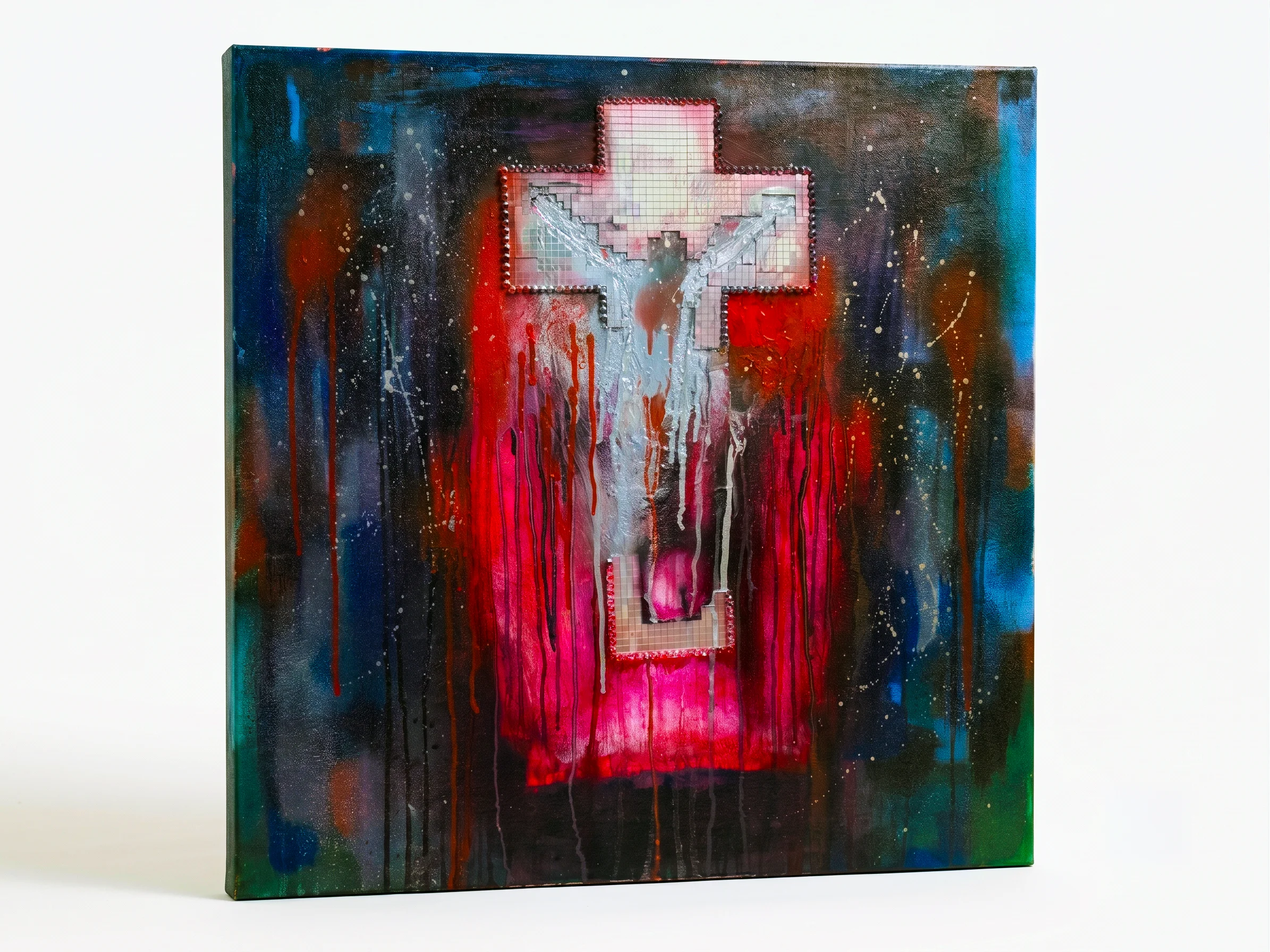
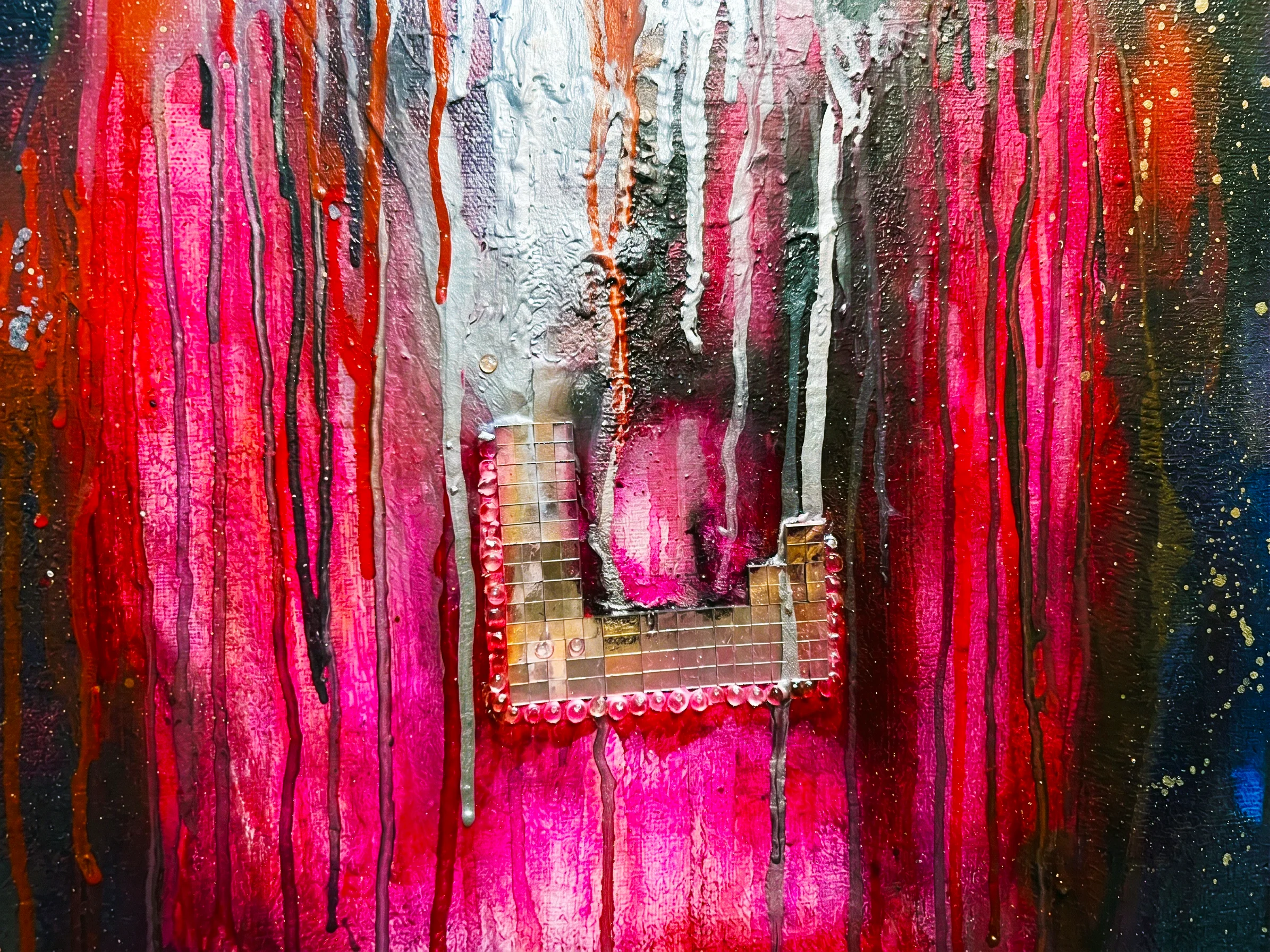
Series: Iconoclasm. An ornate cruciform structure exposes and absorbs a body at once, turning the icon of suffering into a device that controls how harm is seen, named and understood.
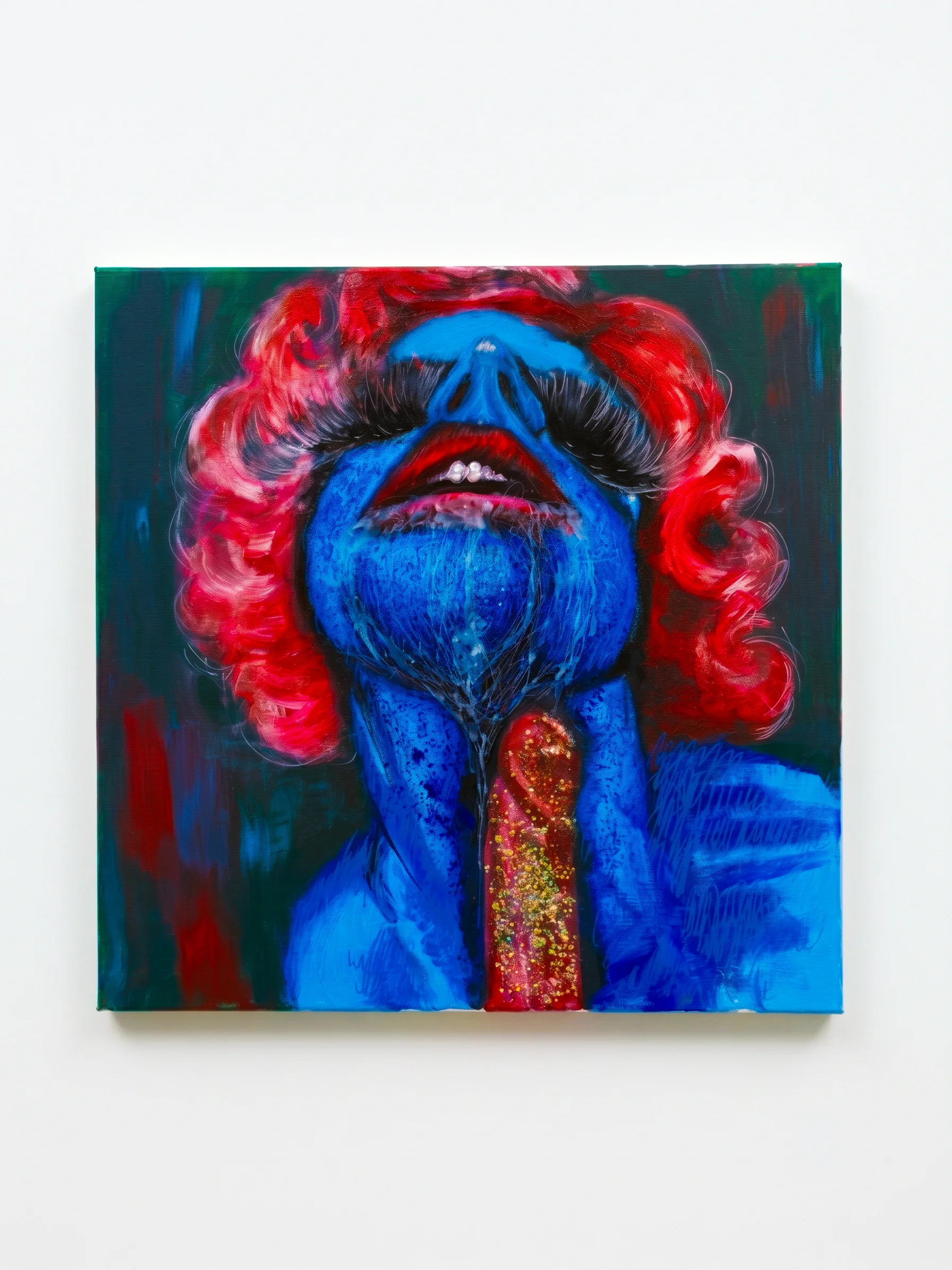
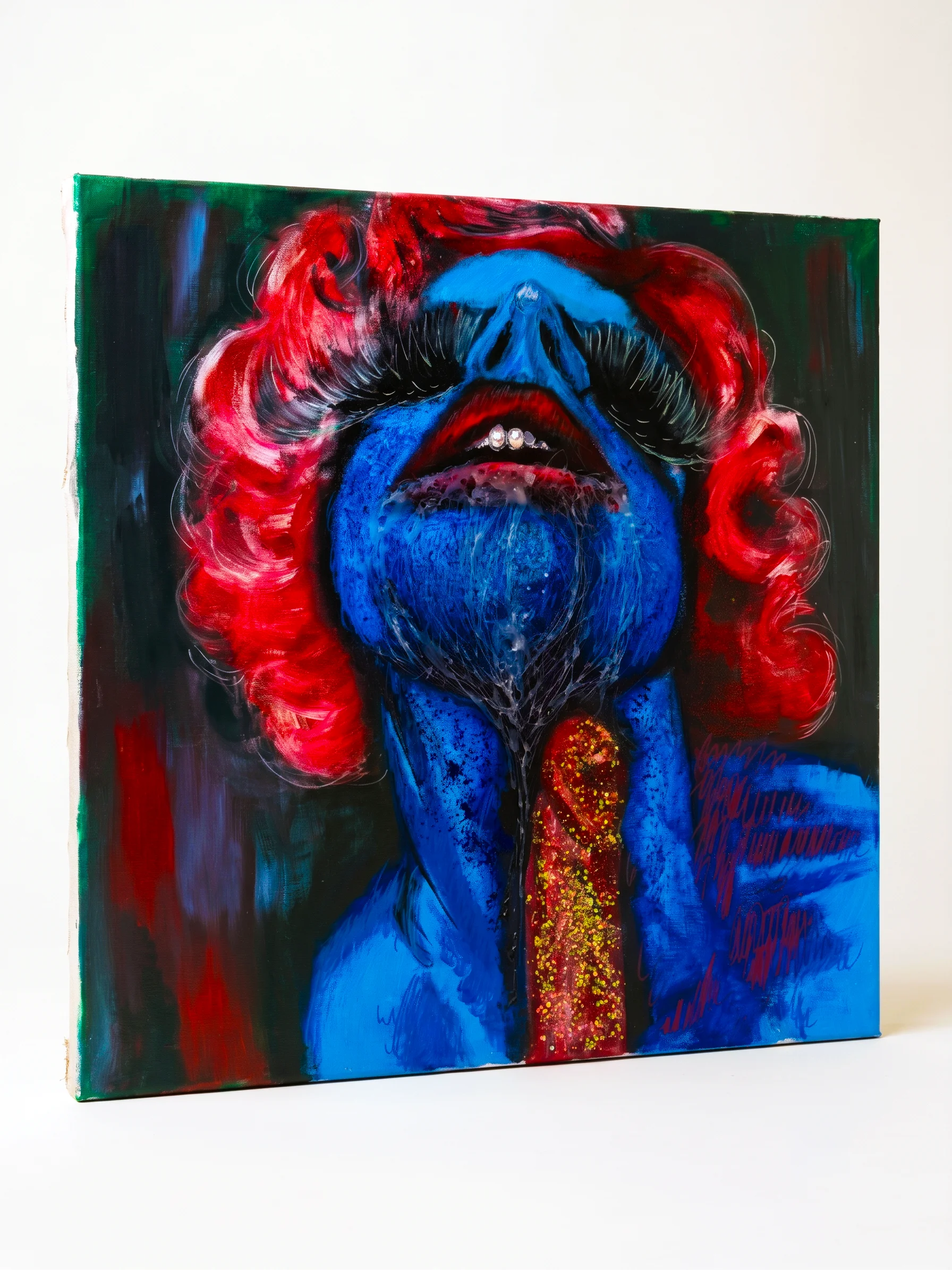
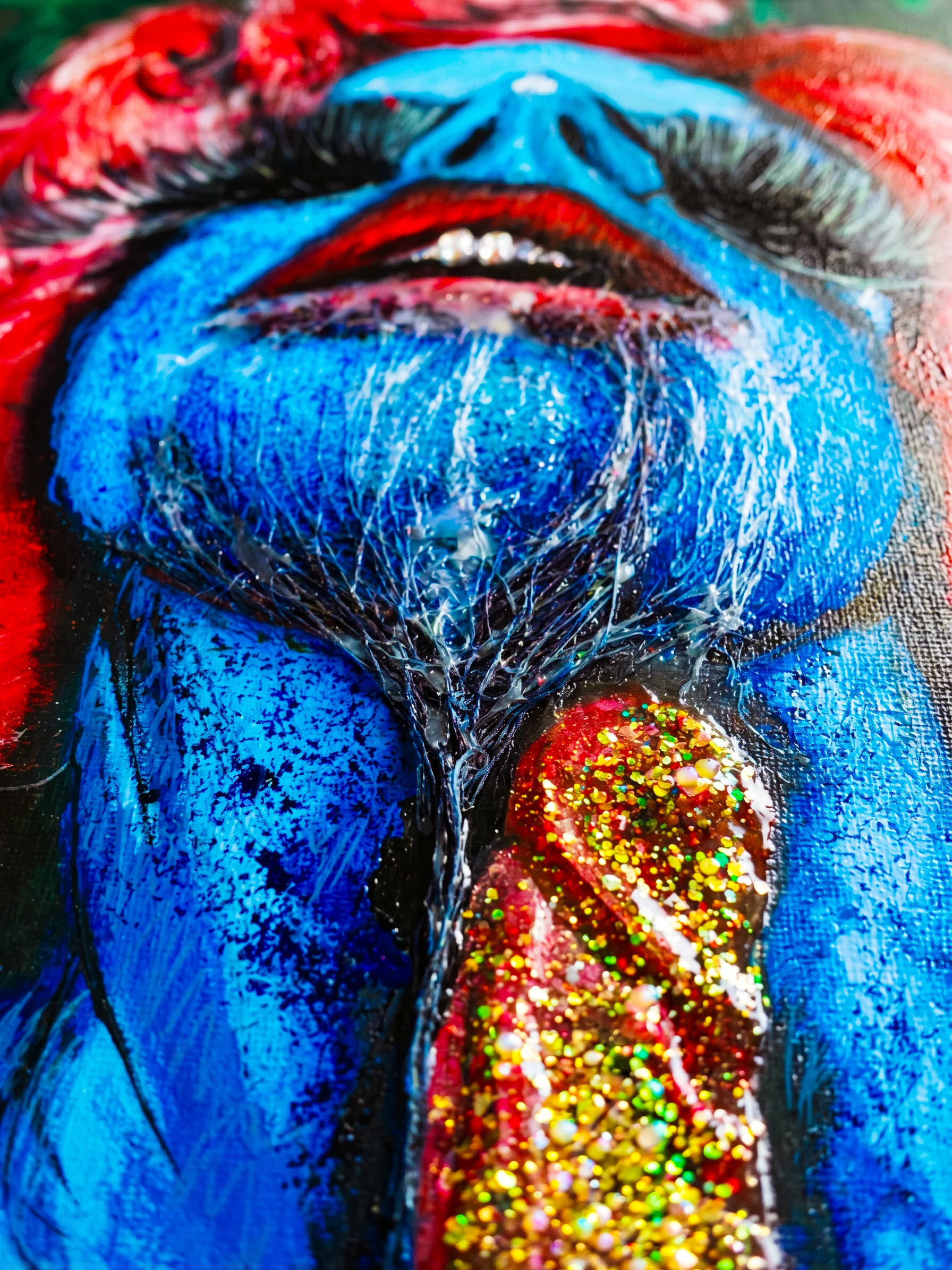
A blue figure assumes the pose of sacred ecstasy as a glittering phallic form rises along the axis of her body, suspending the image between devotion, desire, exposure, and restraint.
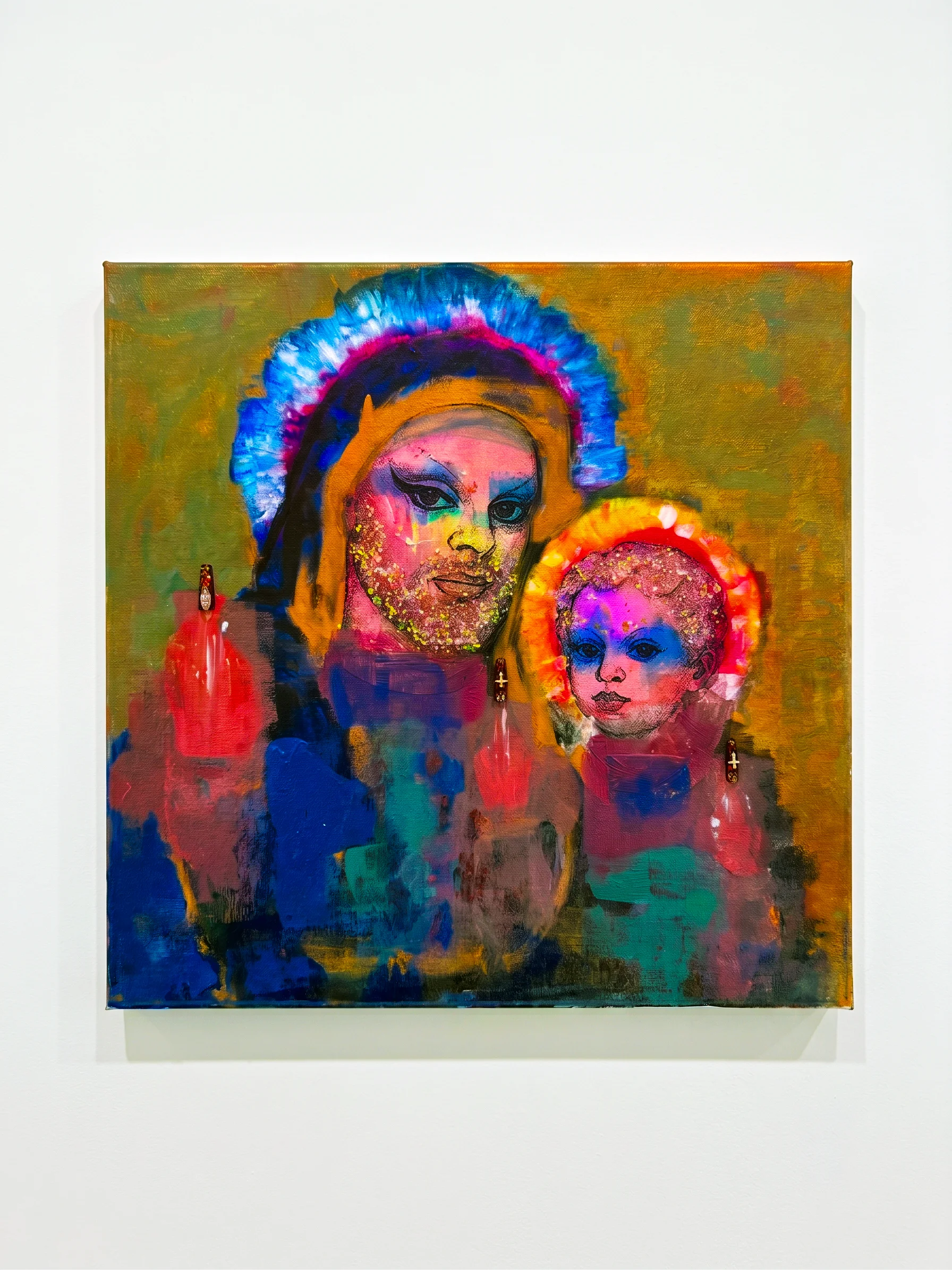
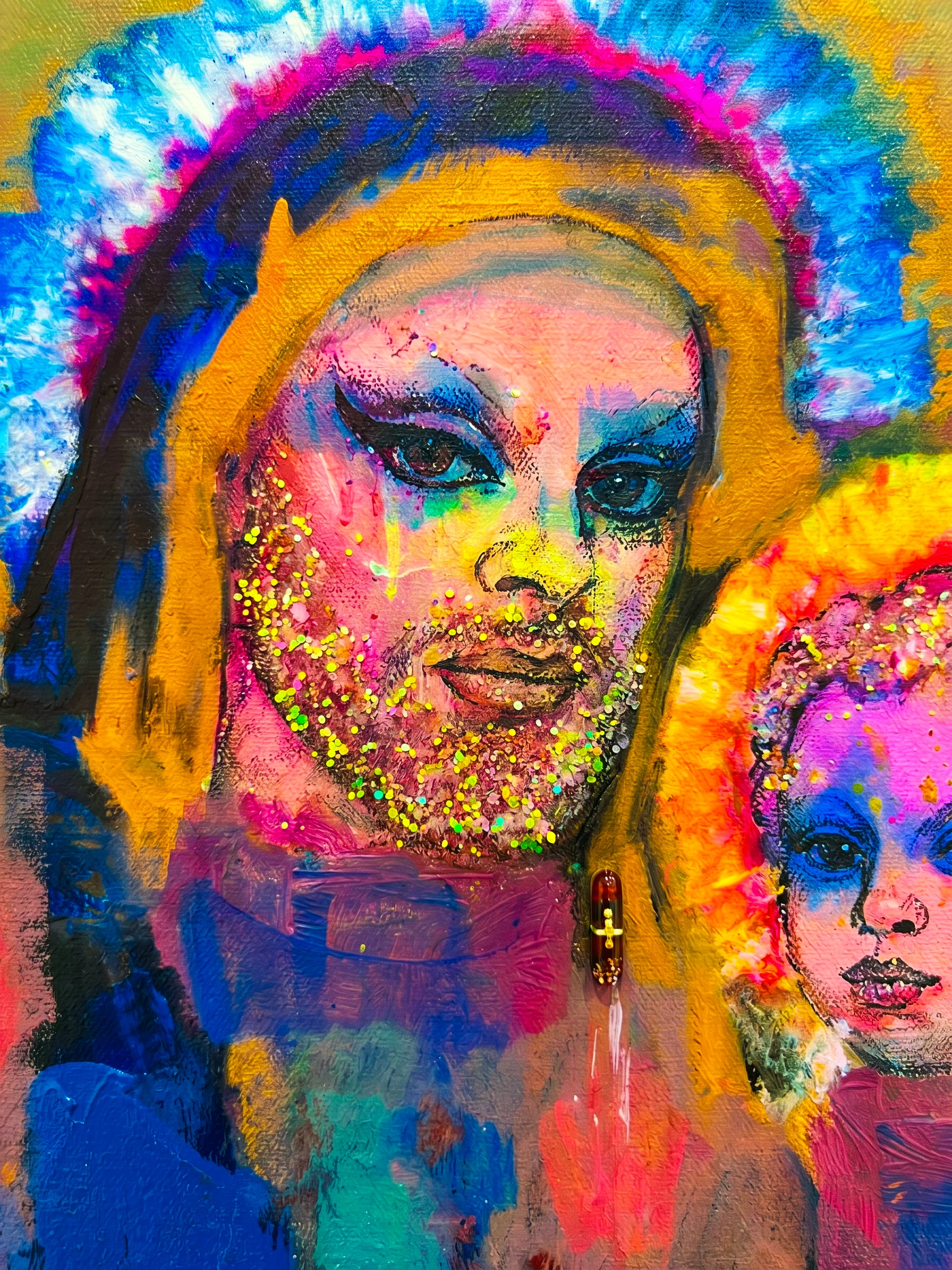
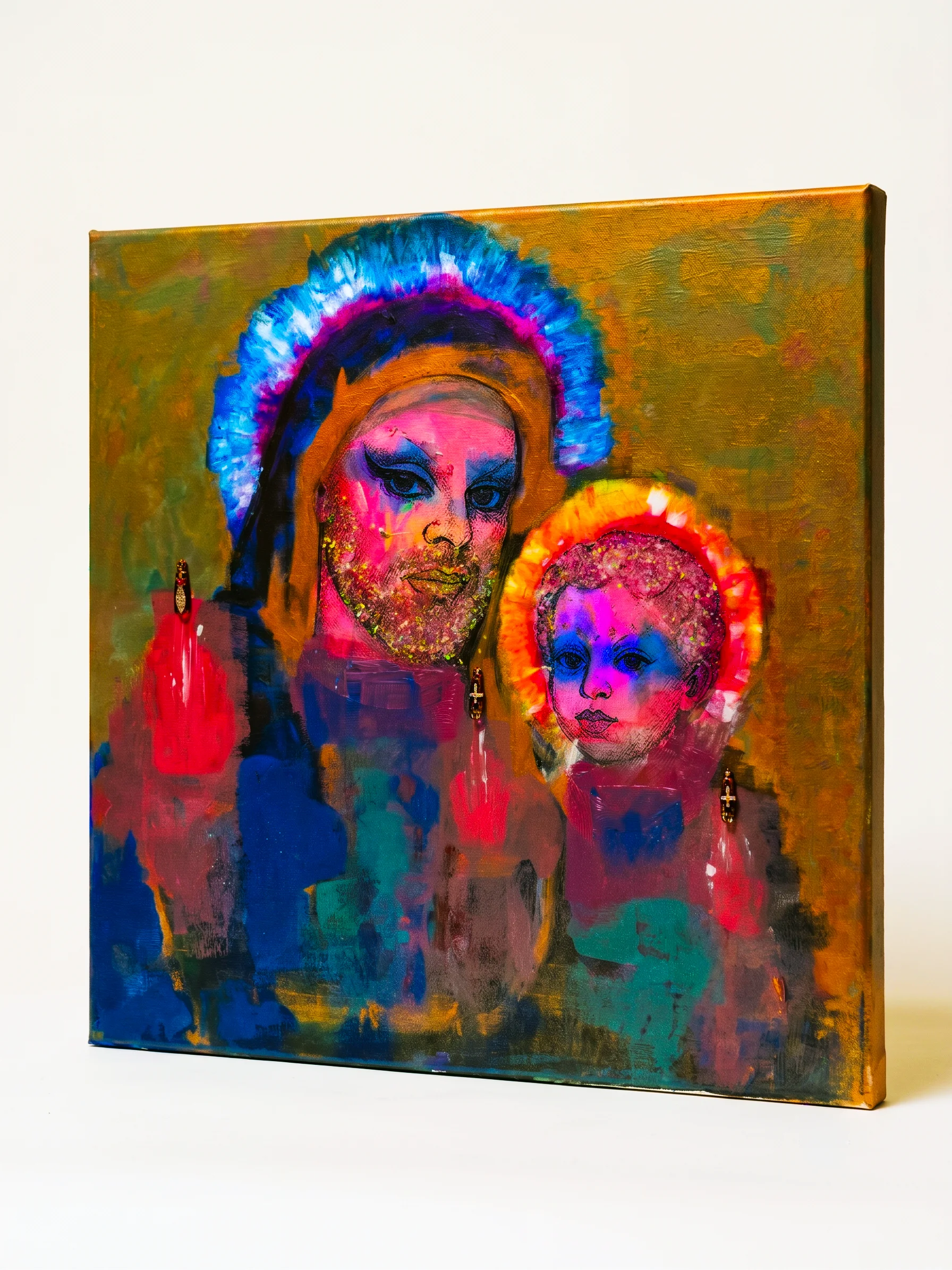
Series: Iconoclasm. A drag-transformed Madonna and Child shifts a devotional image toward unstable gendered codes and refusal.
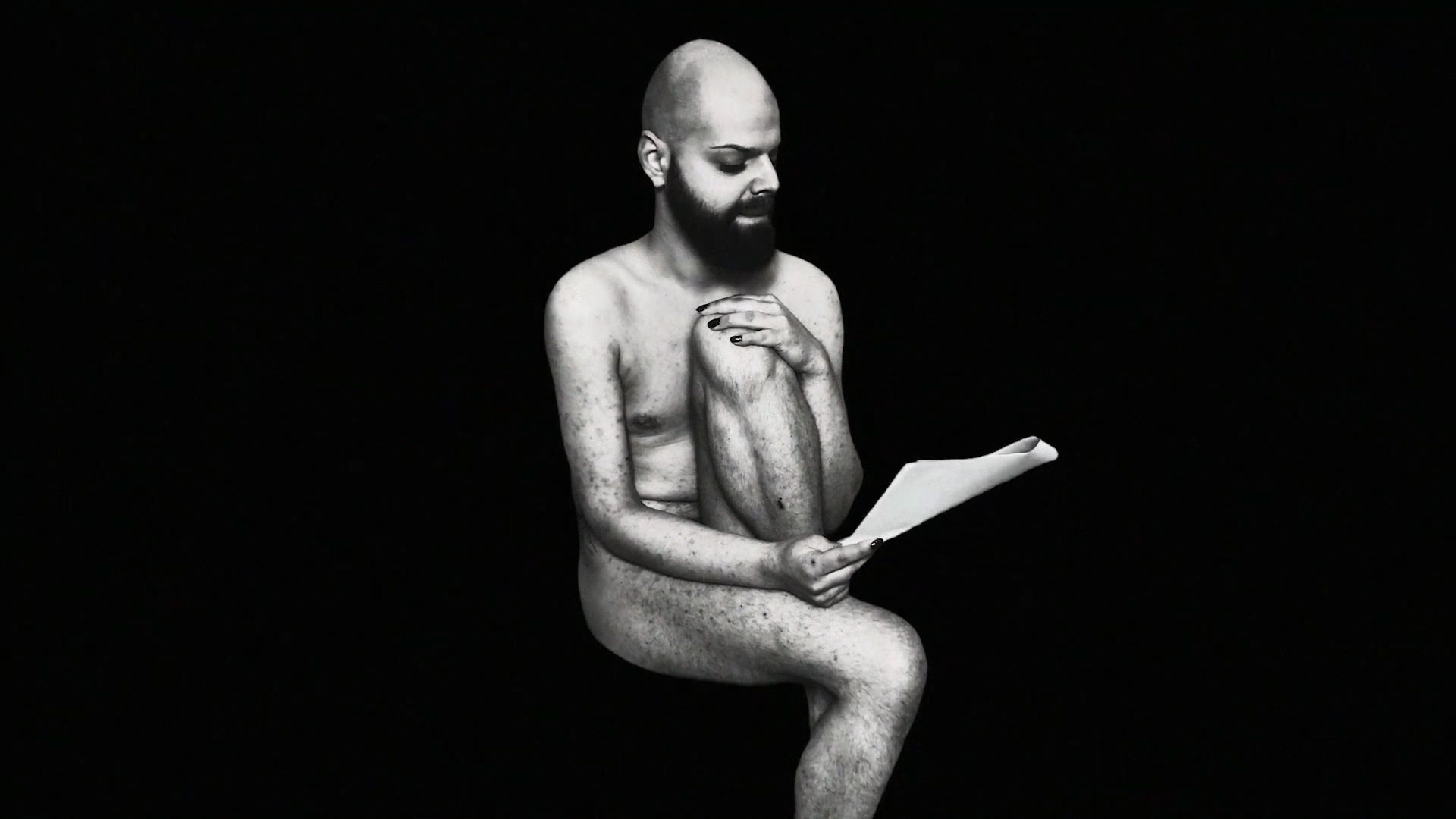
A stripped-back video returns to a post-violence text as the camera studies skin up close—tracking how words lodge in the body, resurface in rhythm and texture, and refuse closure.
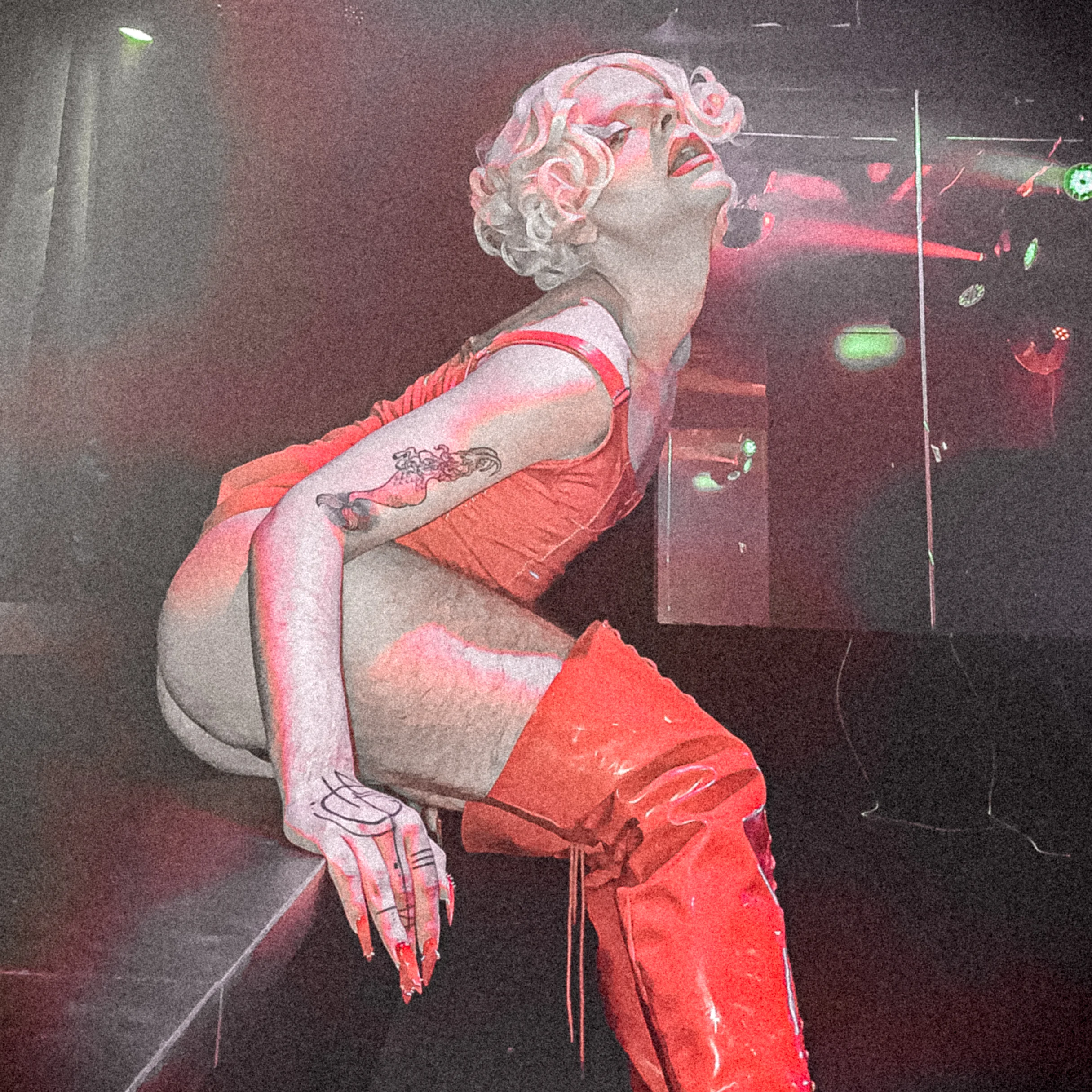
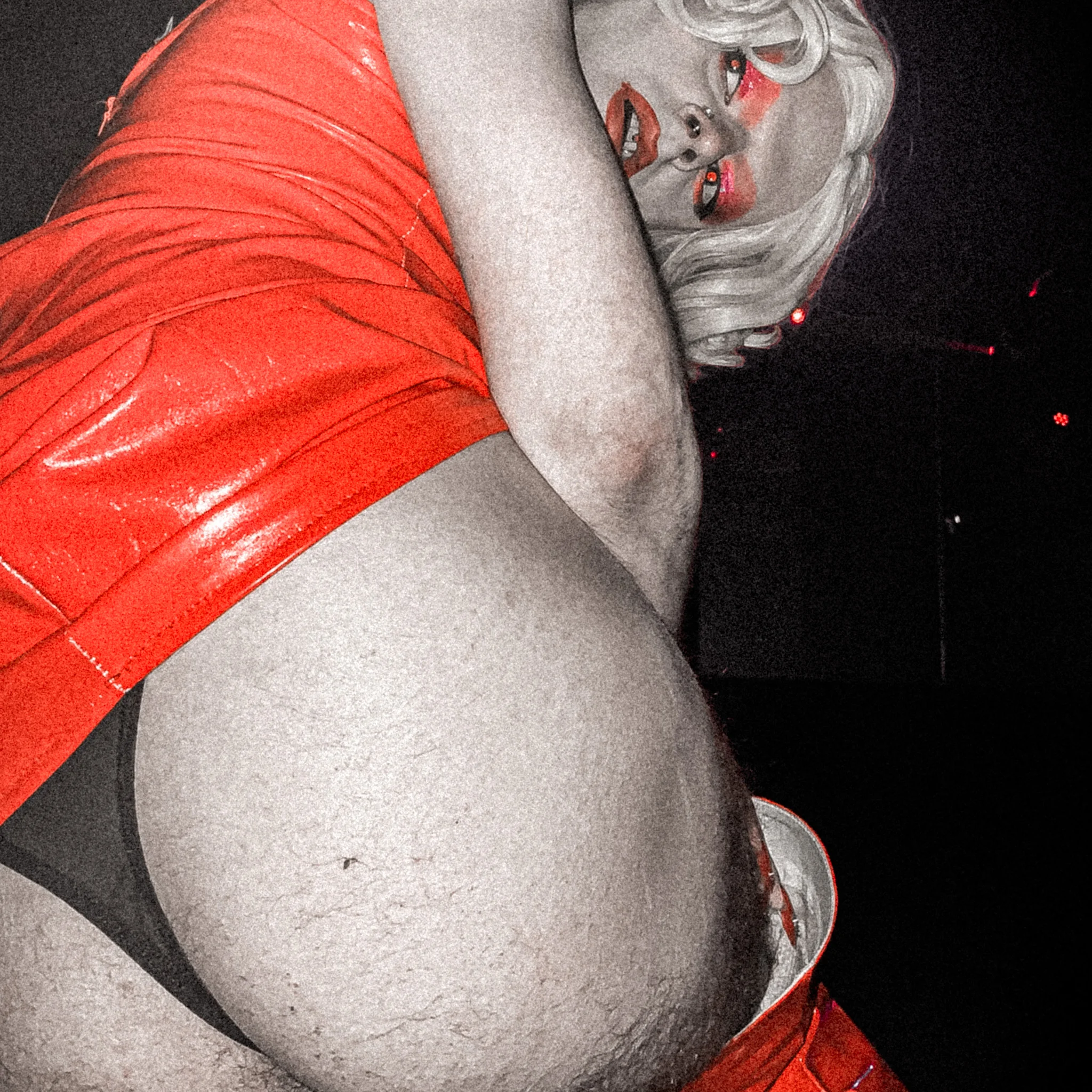
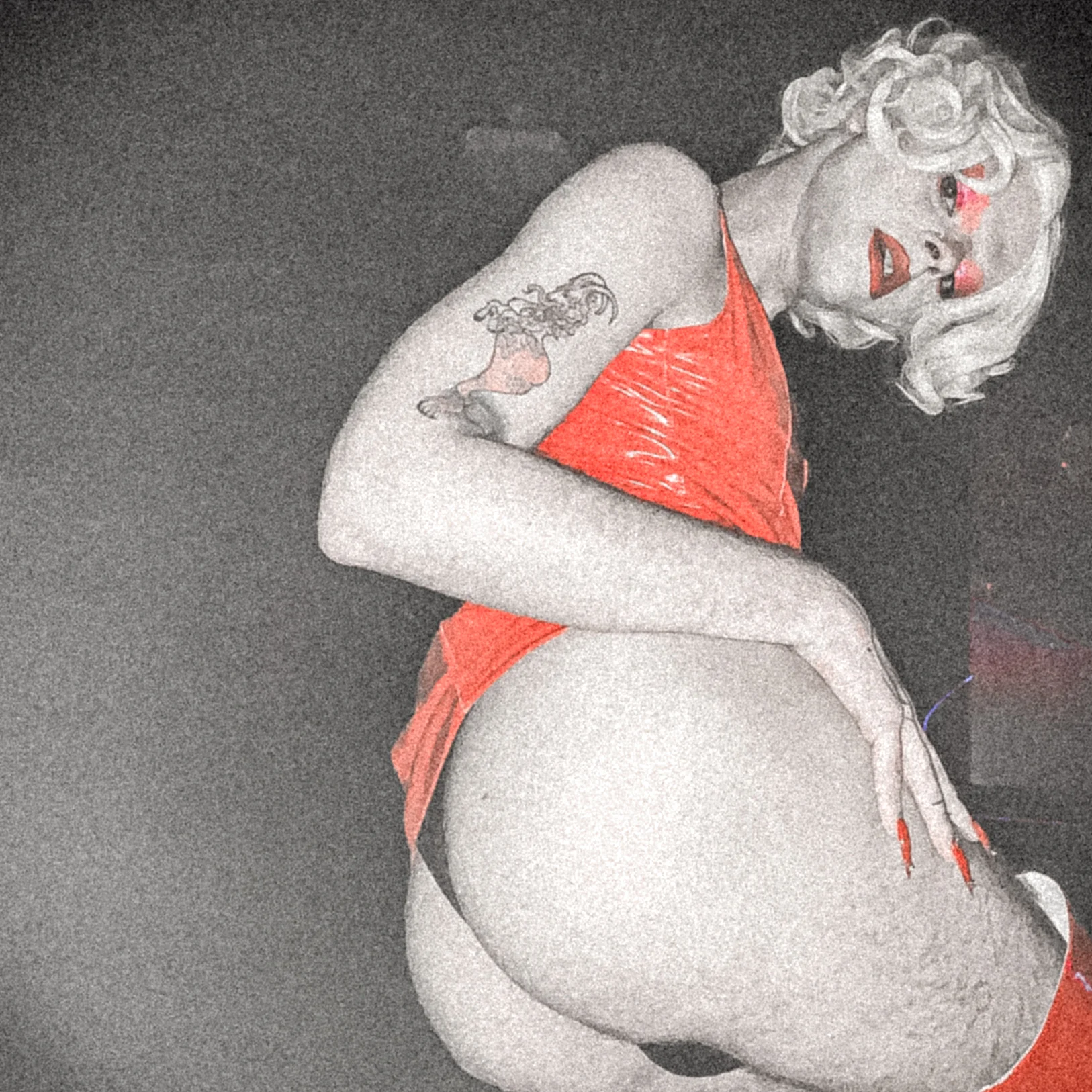
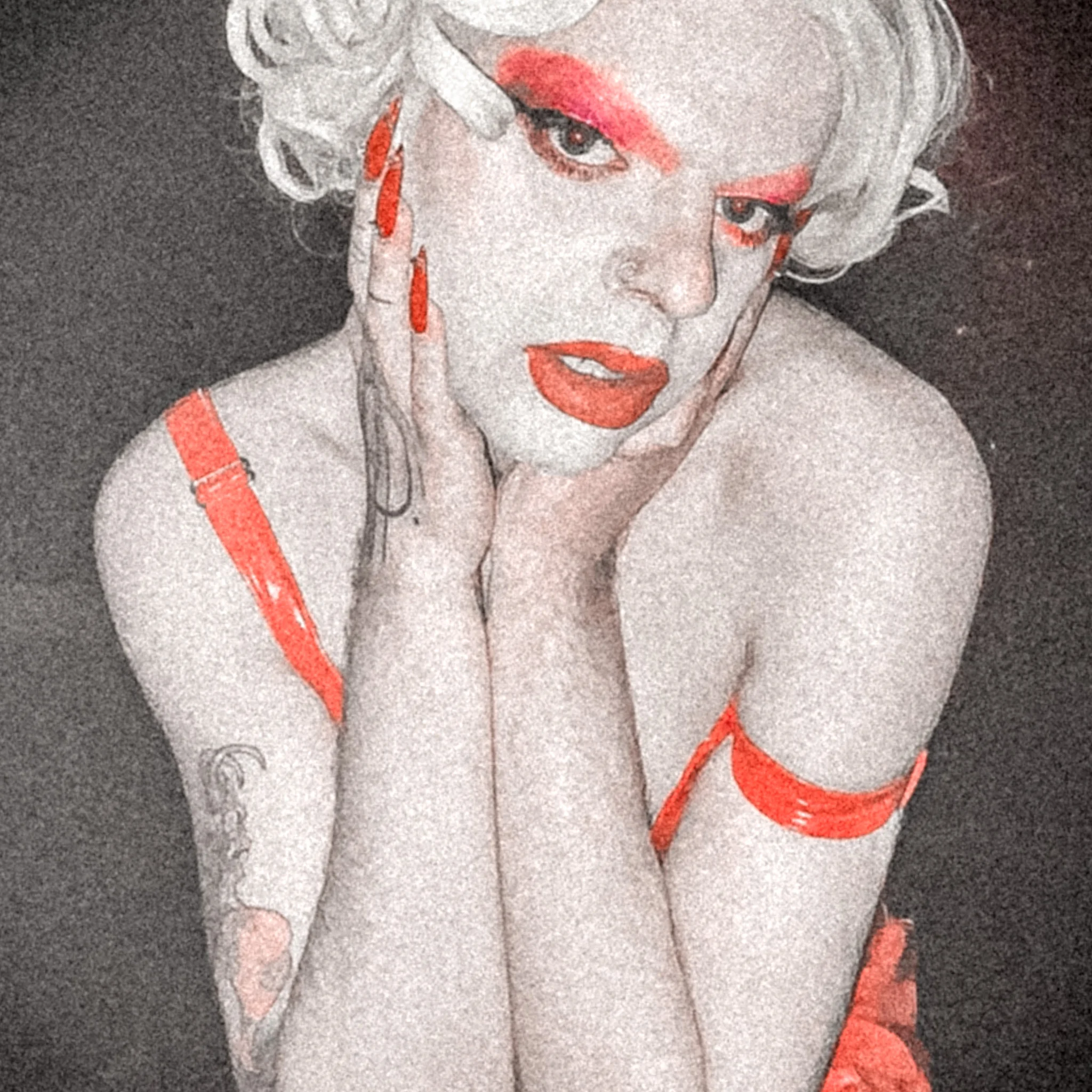
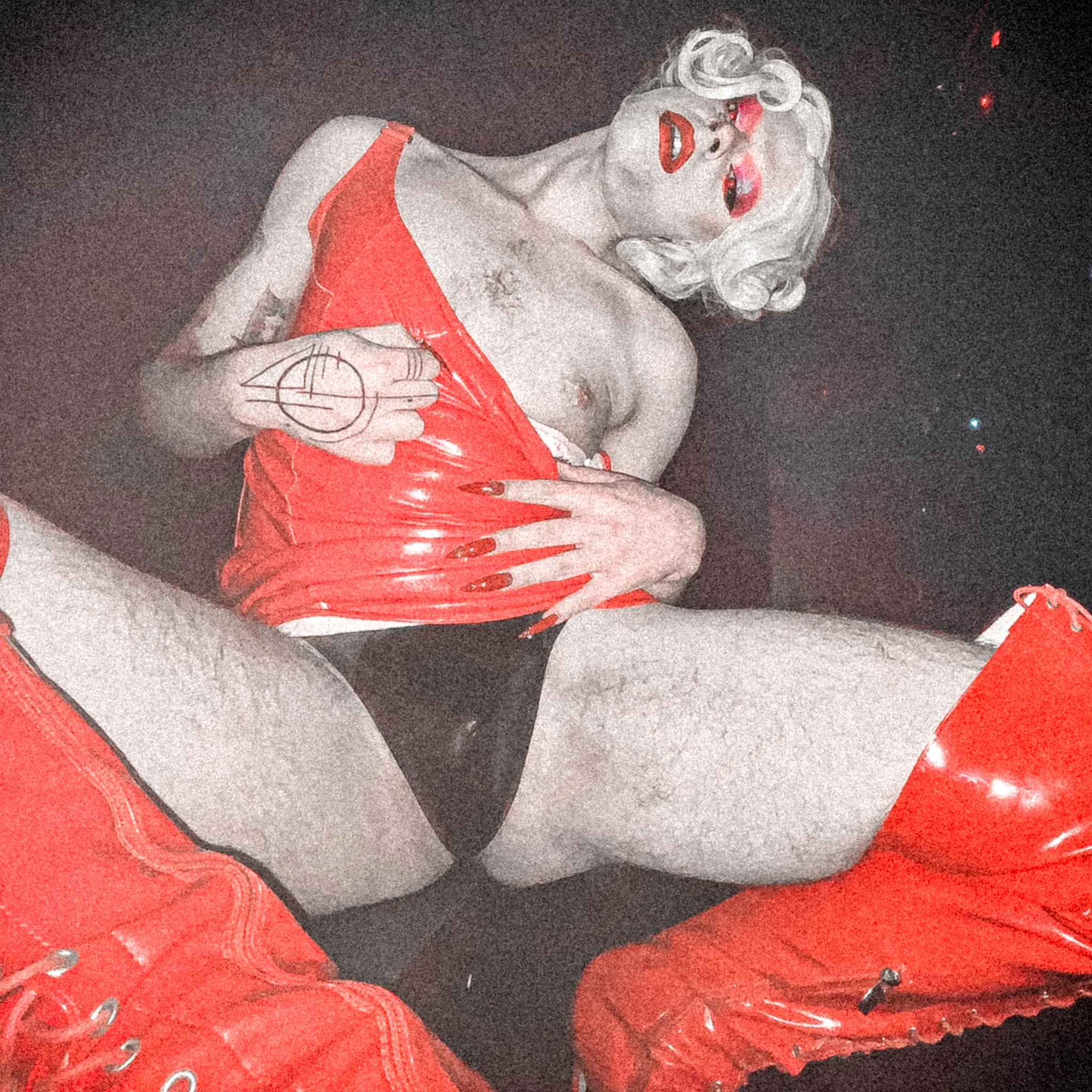
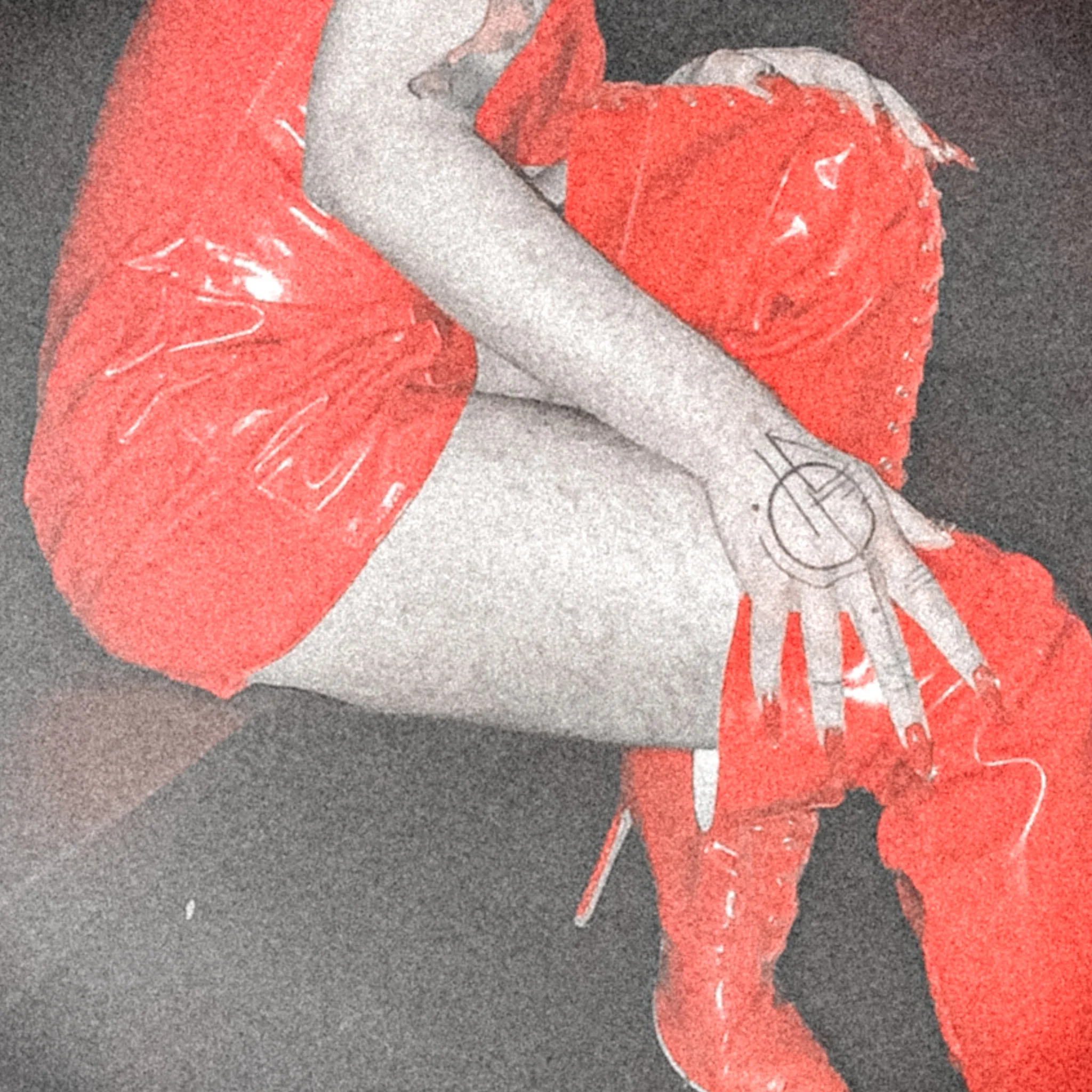
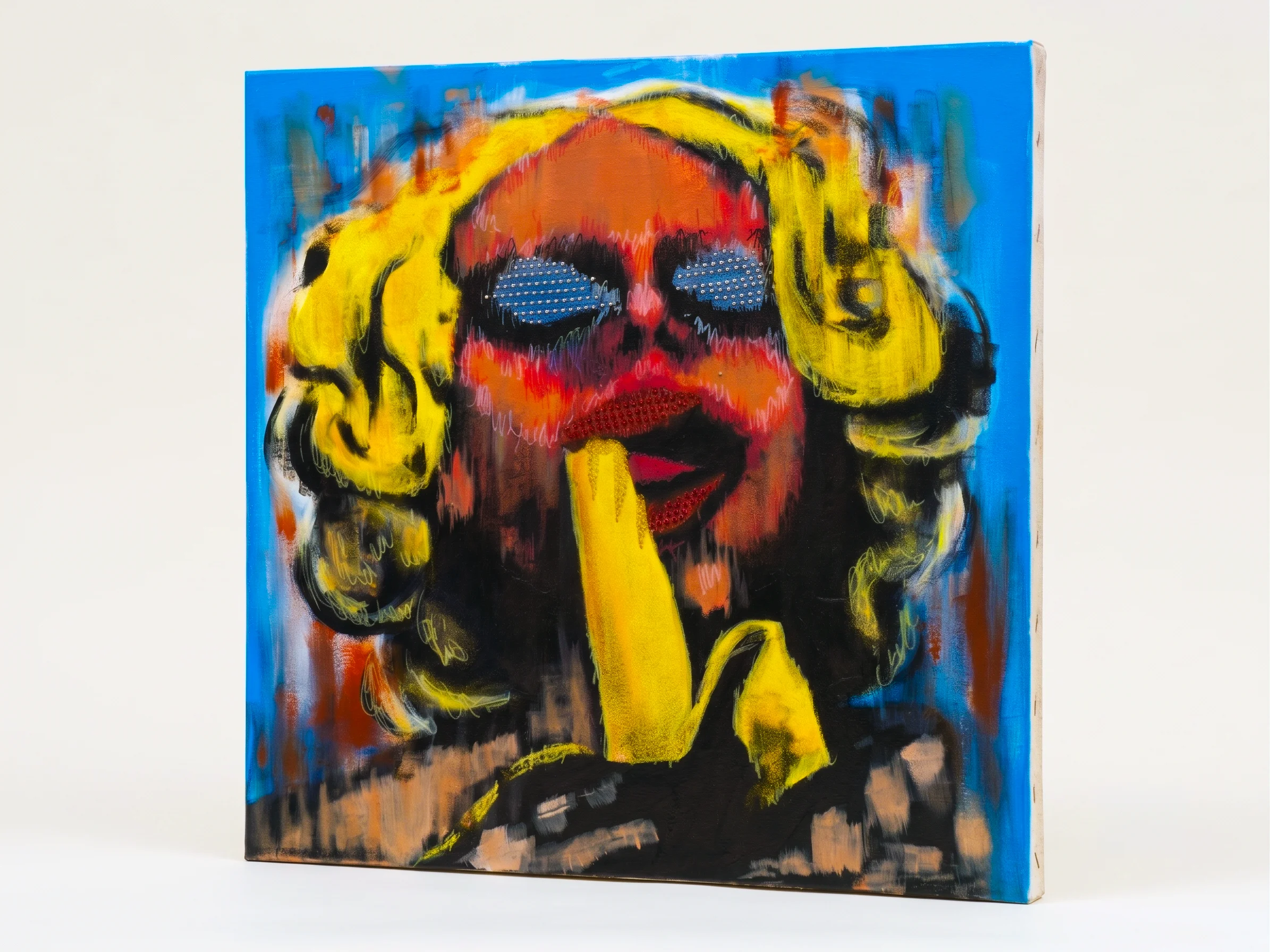
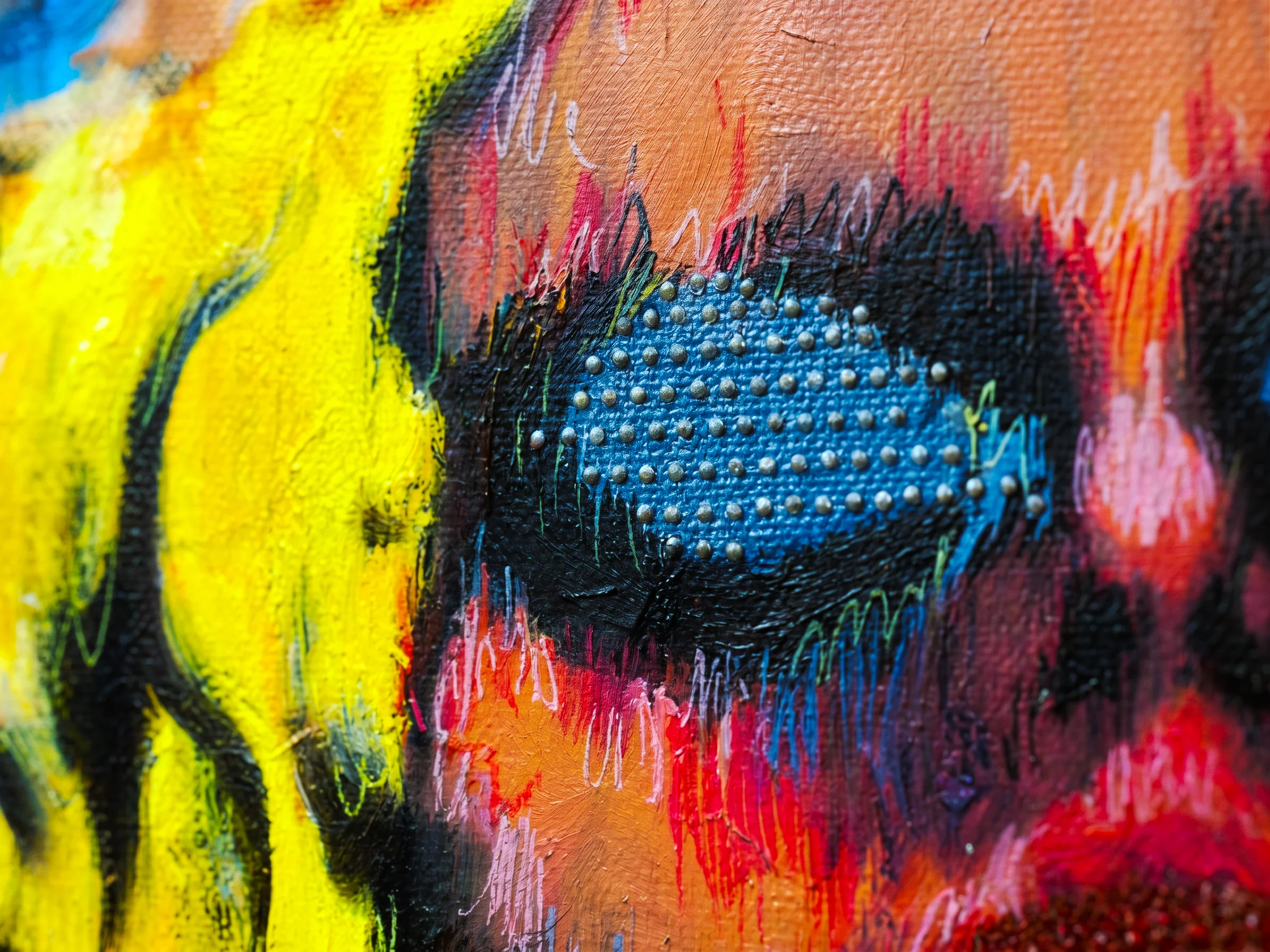
Series: Iconoclasm. A trans-femme self-portrait inhabits Marilyn Monroe pop iconography while withholding the gaze it appears to promise.
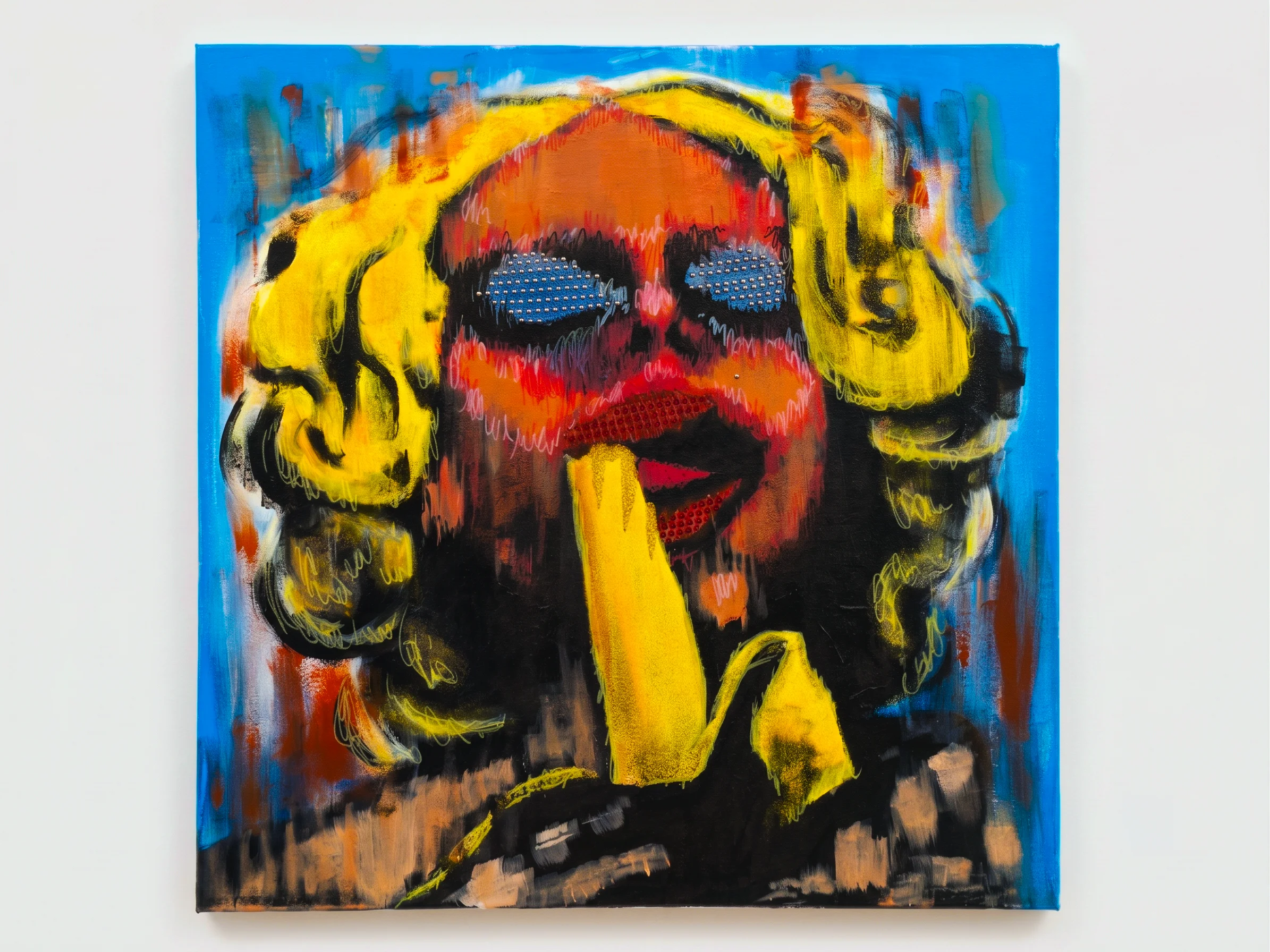
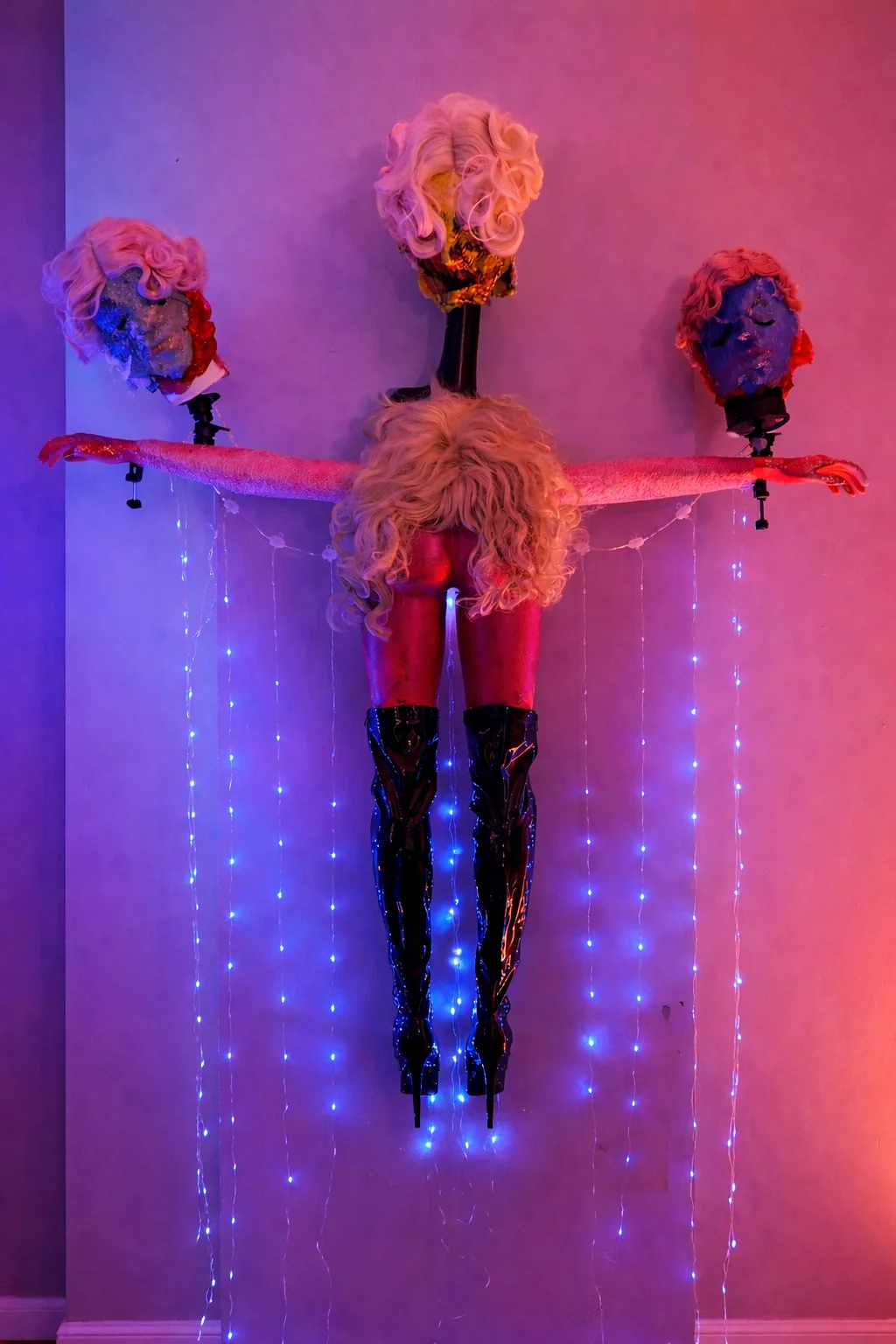
A cruciform structure mounts detached heads, limbs, synthetic hair, and patent boots as relics of a trans-femme figure that has no complete body behind it.
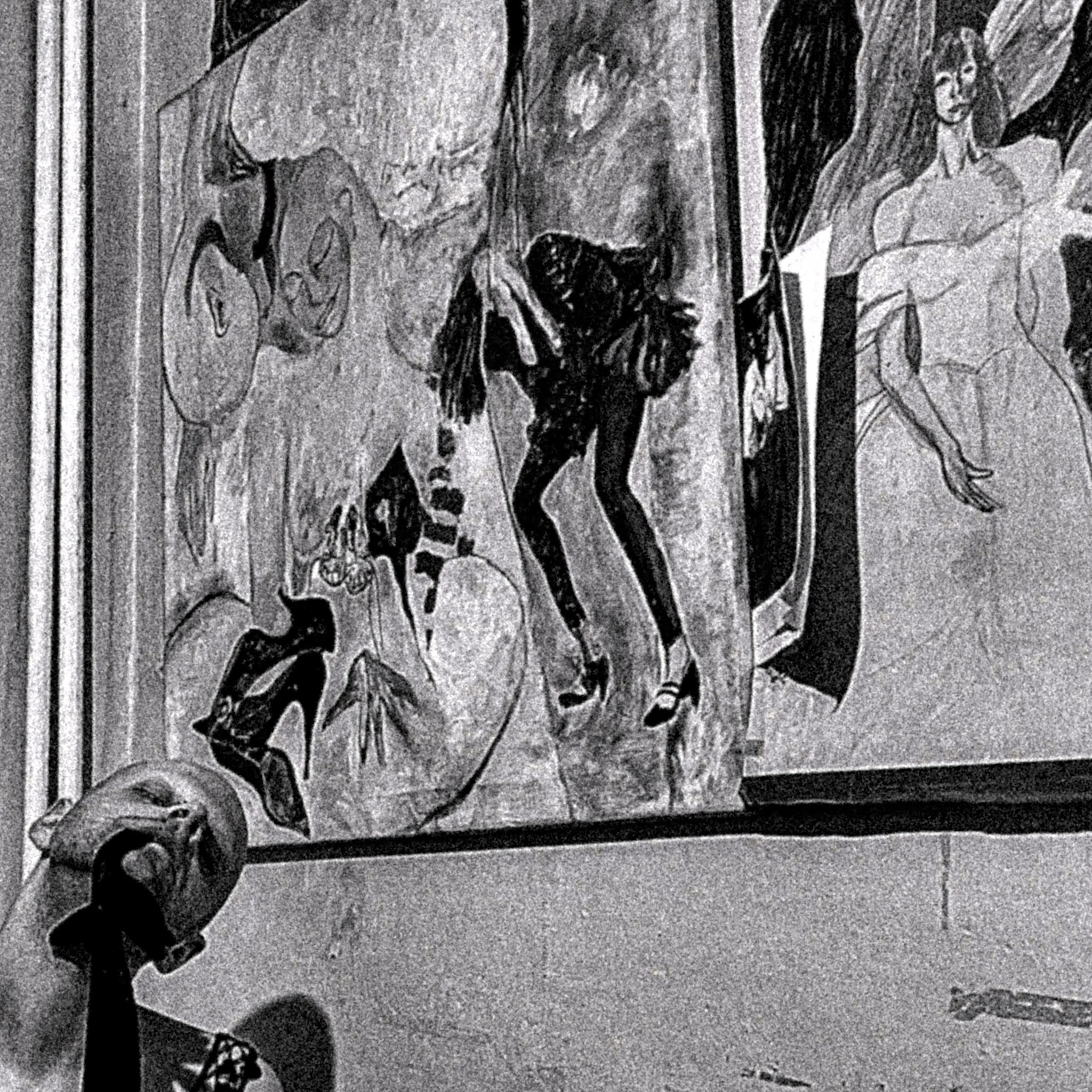
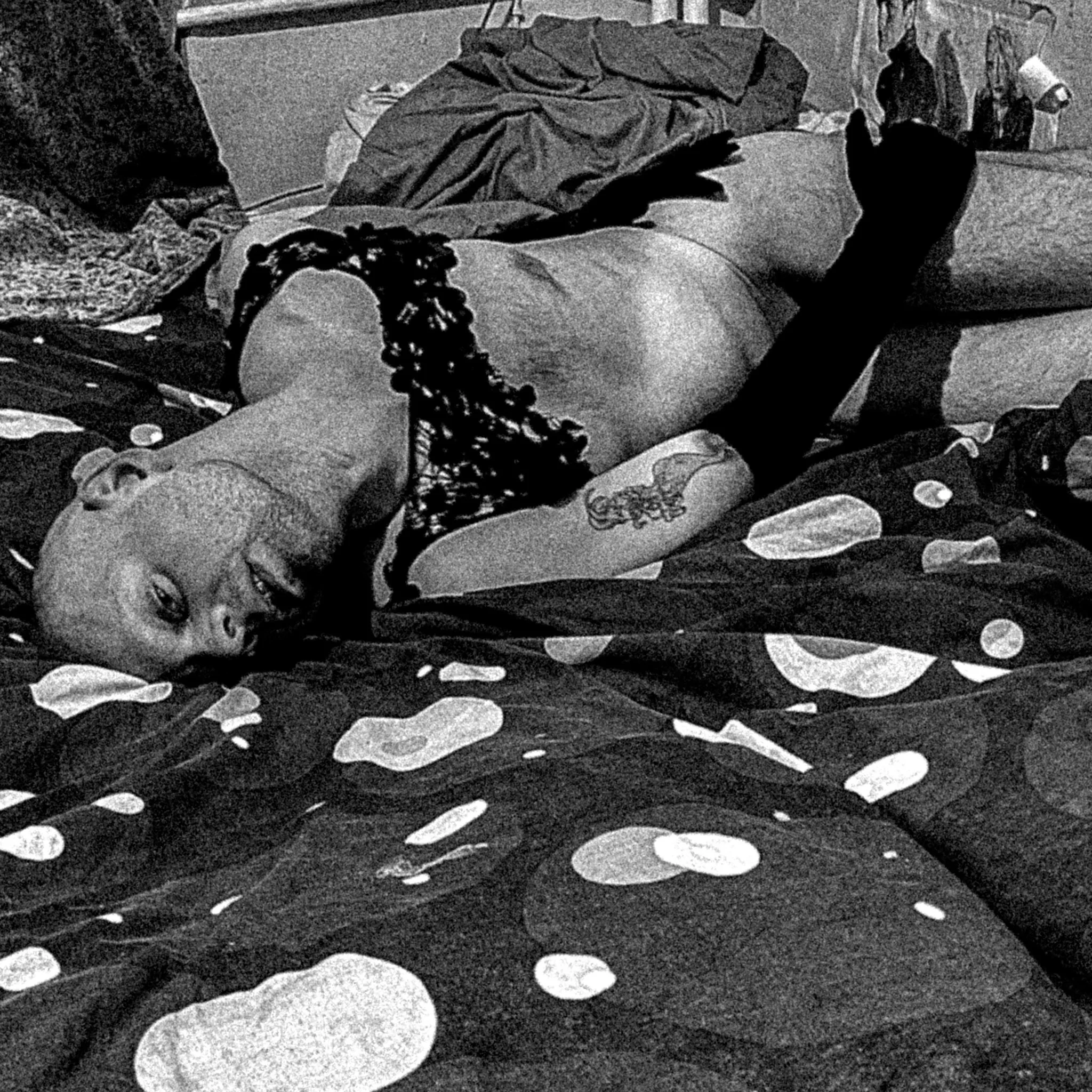
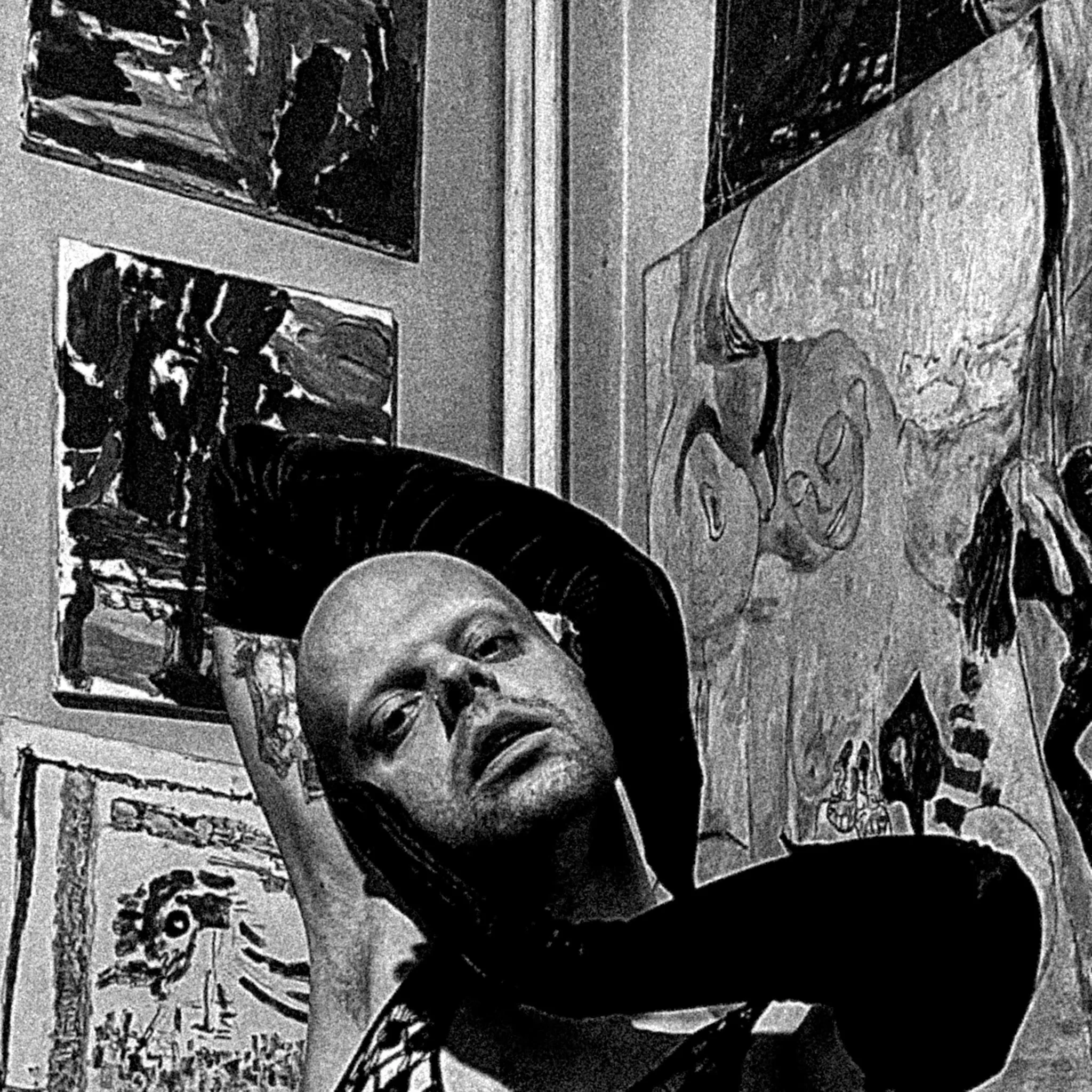
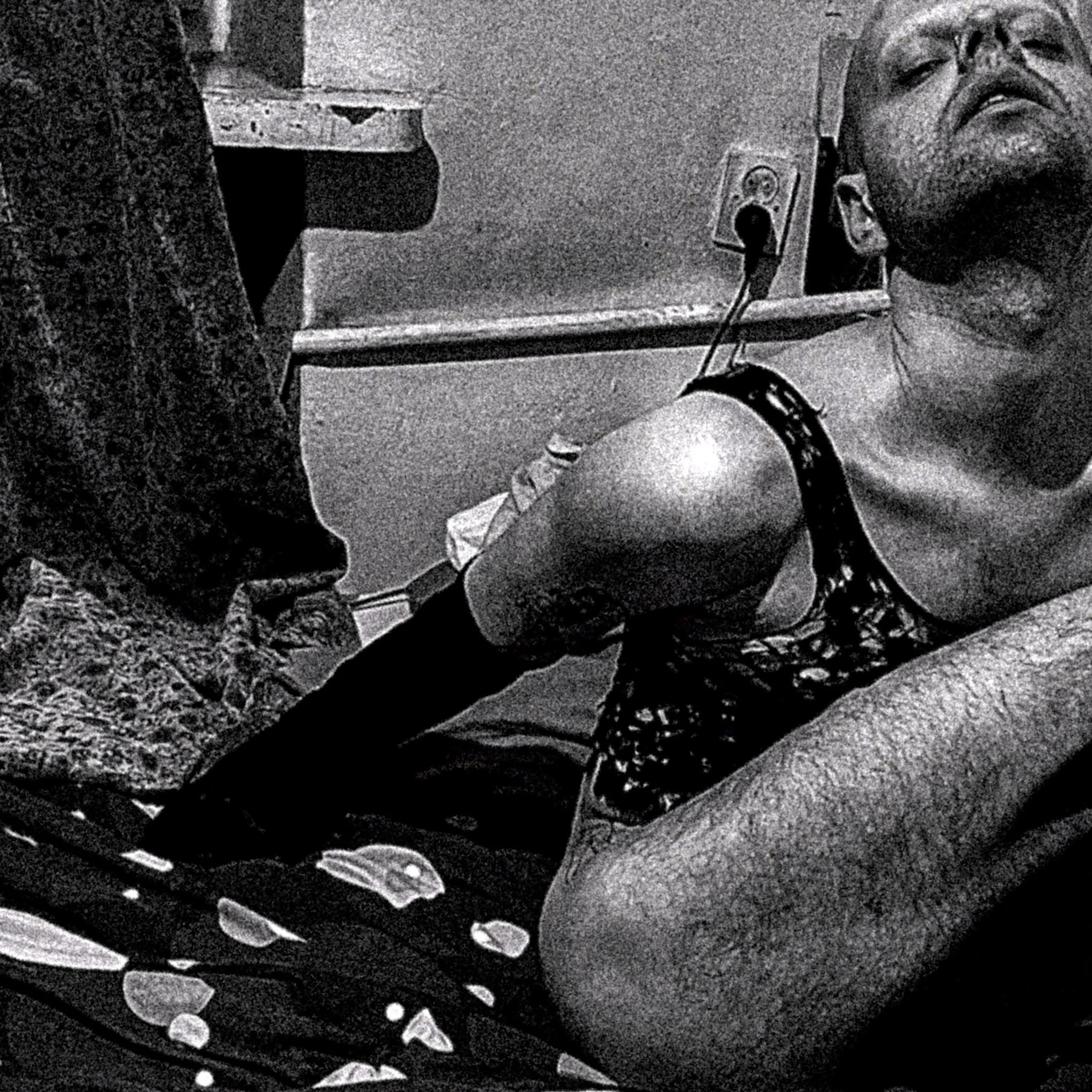
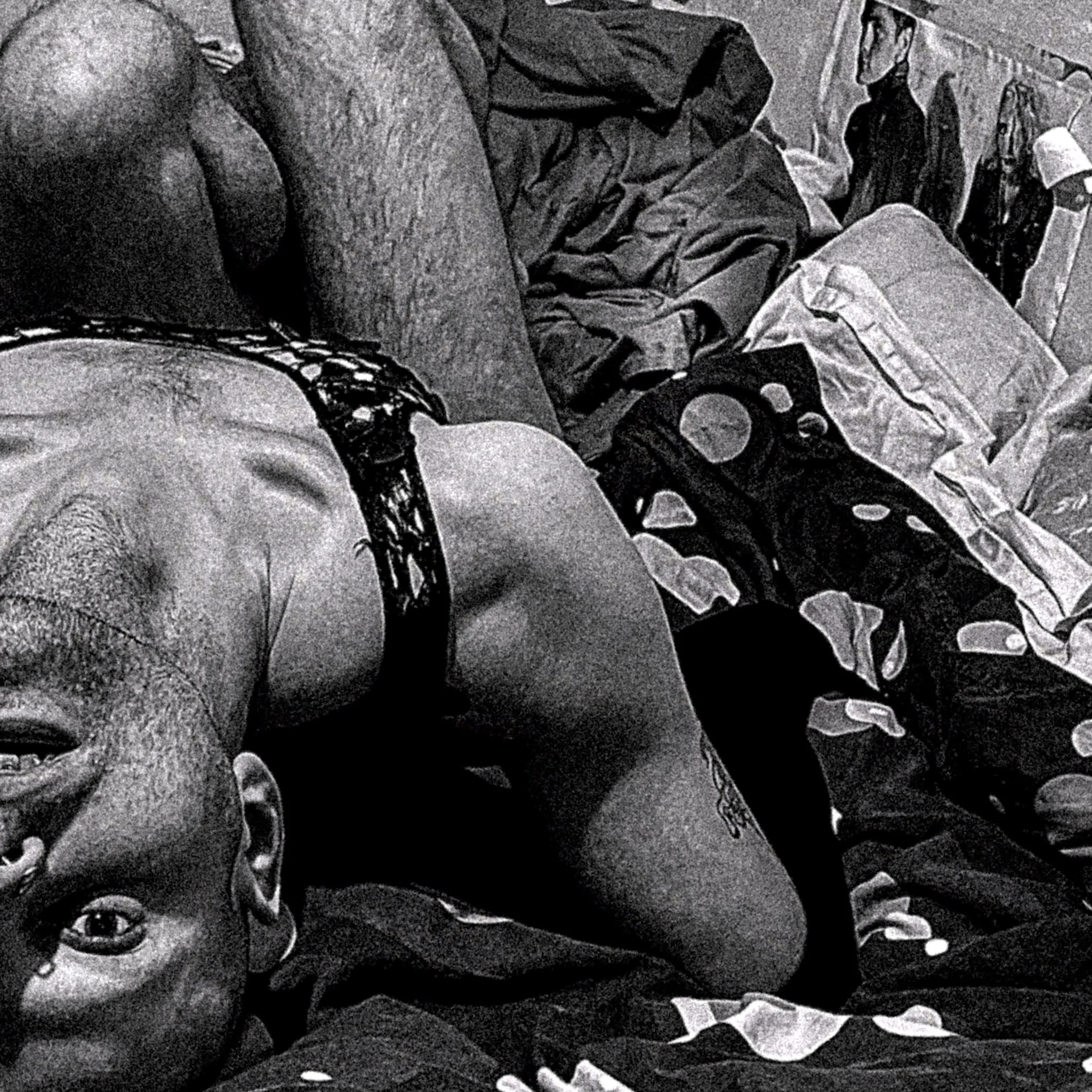
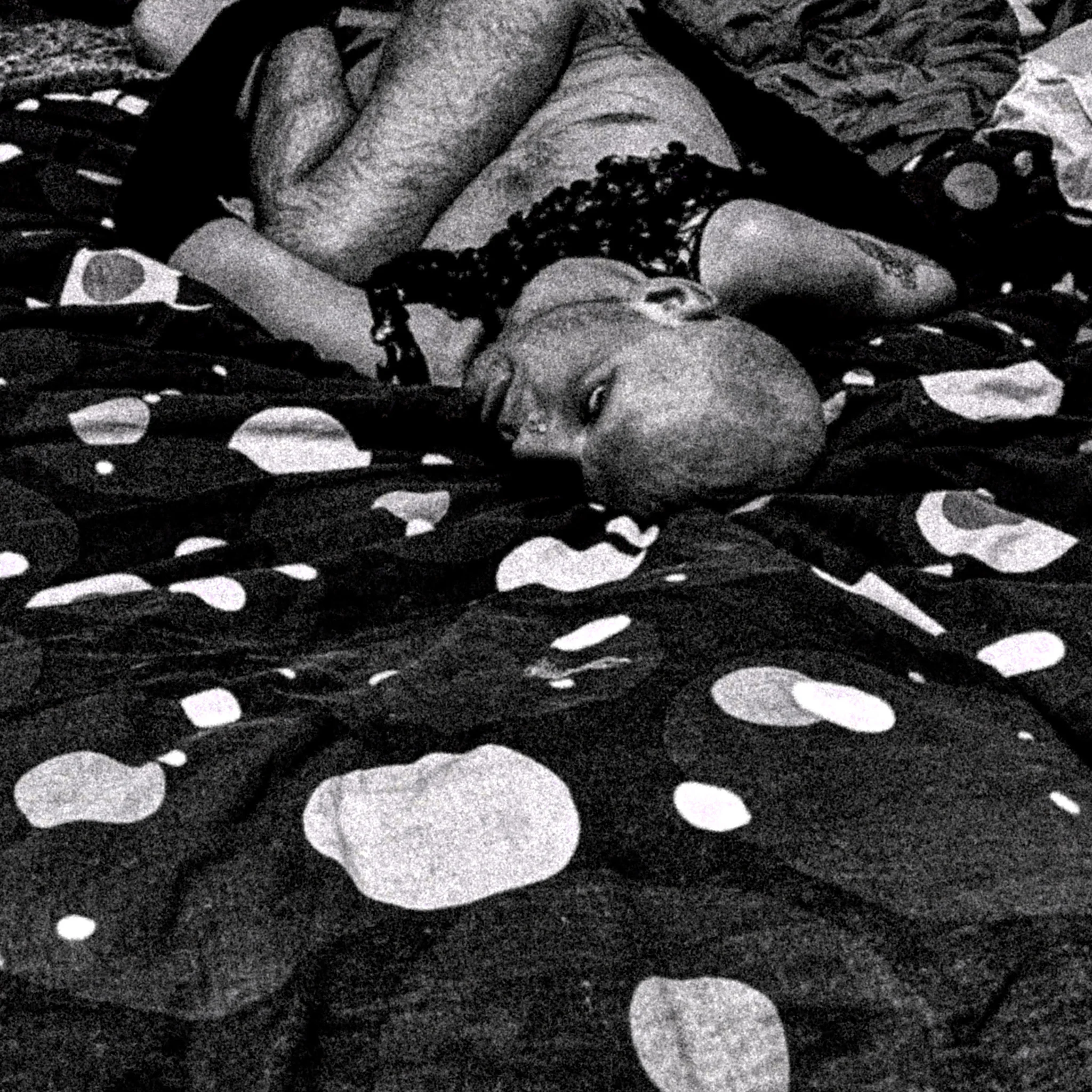
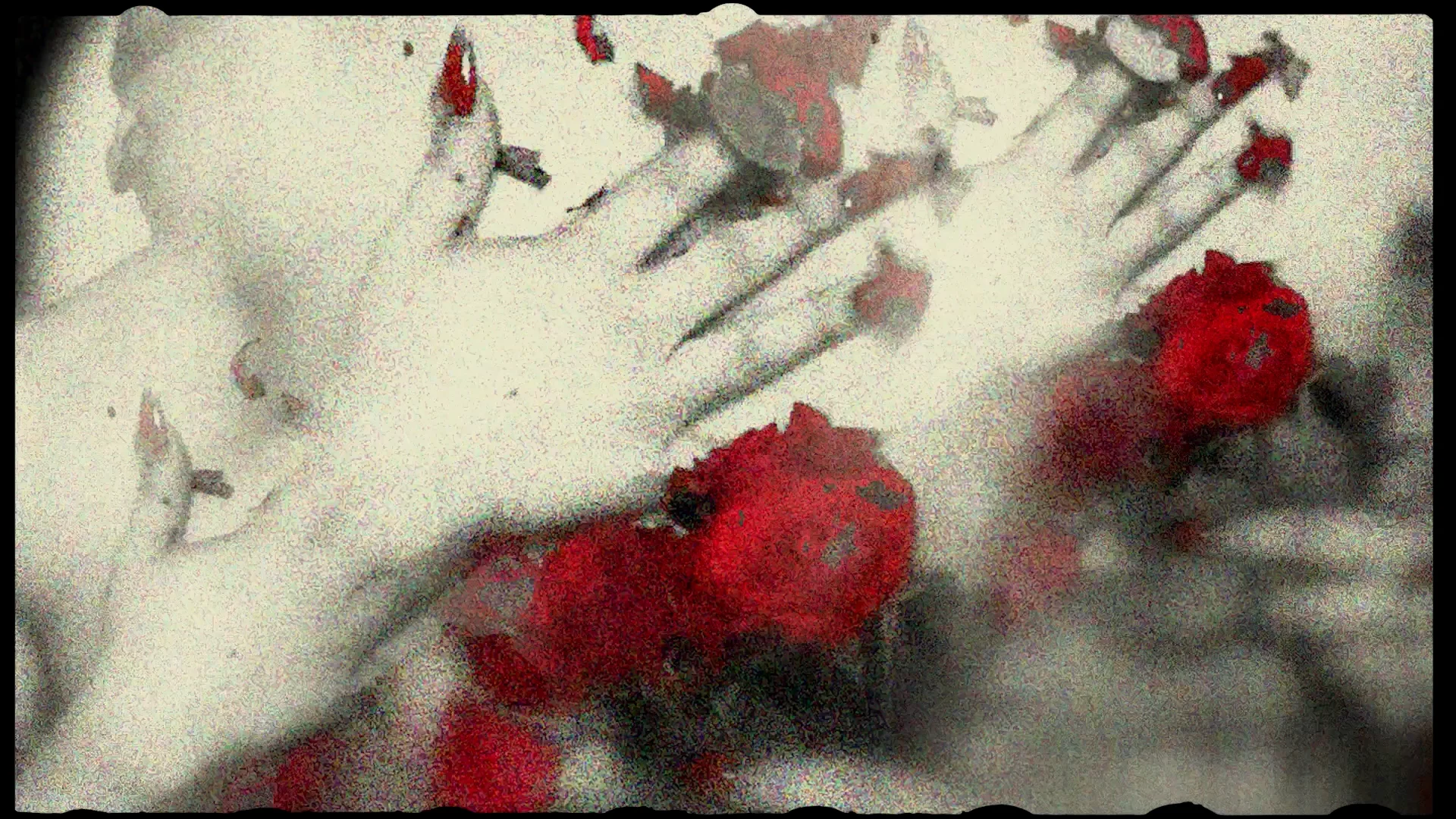
A moving-image work that examines love as residue rather than narrative — intimacy that lingers in the body after its ending, refusing closure, healing, or disappearance.
A painting that reassembles visual material from the earlier moving-image work Sweet Nothing Love I: bodies, flowers and interrupted gestures occupy one simultaneous image.
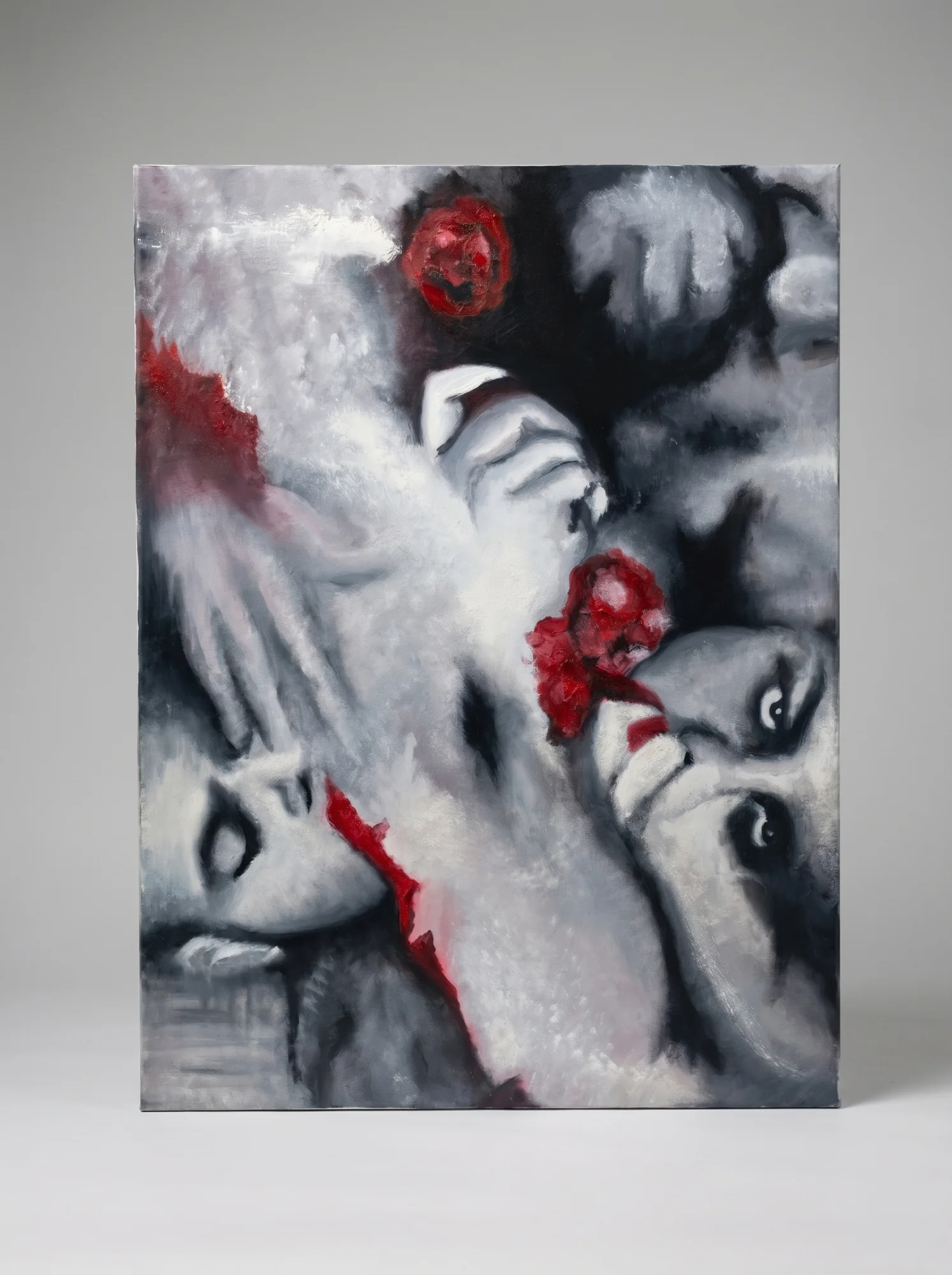
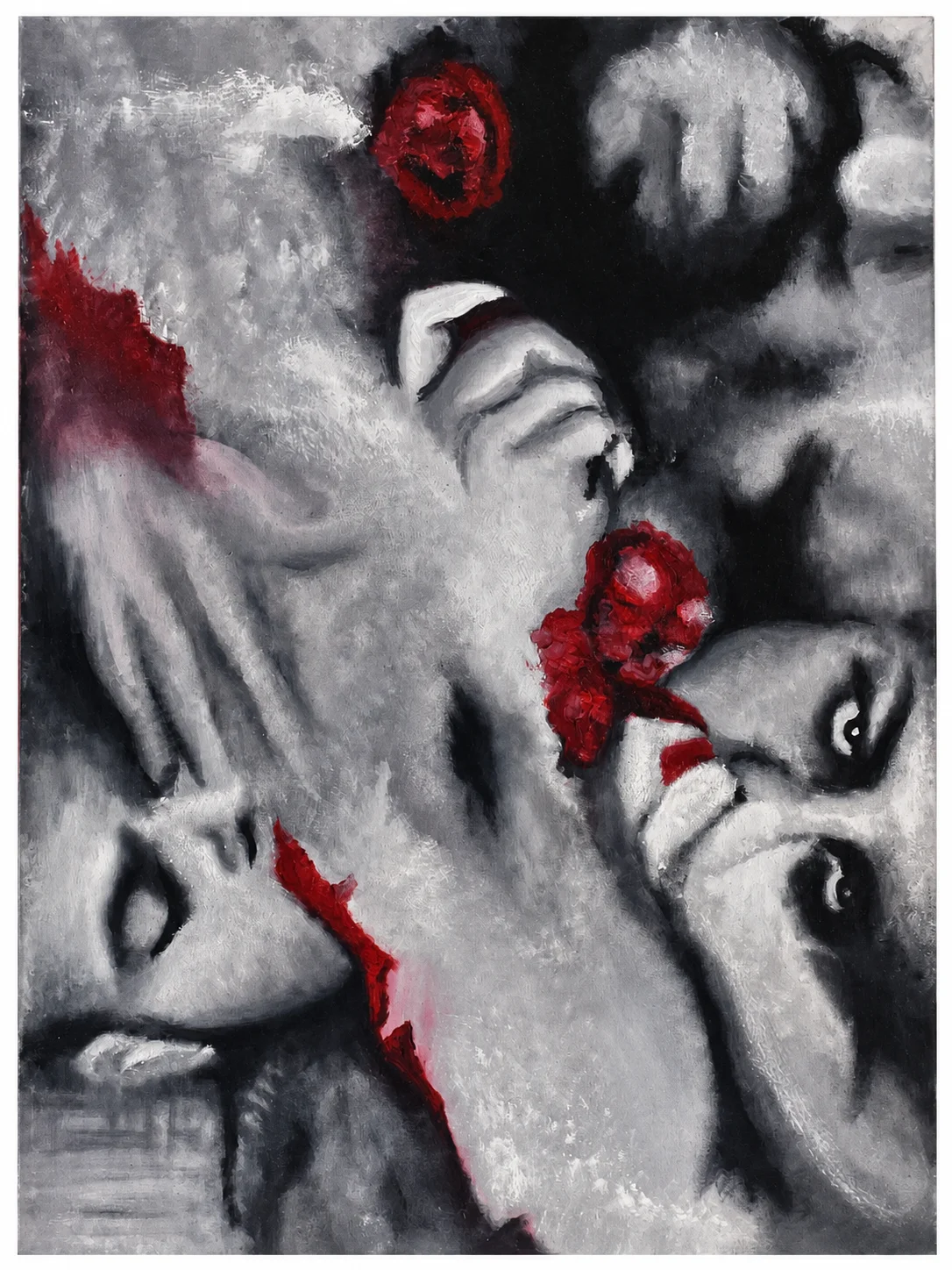
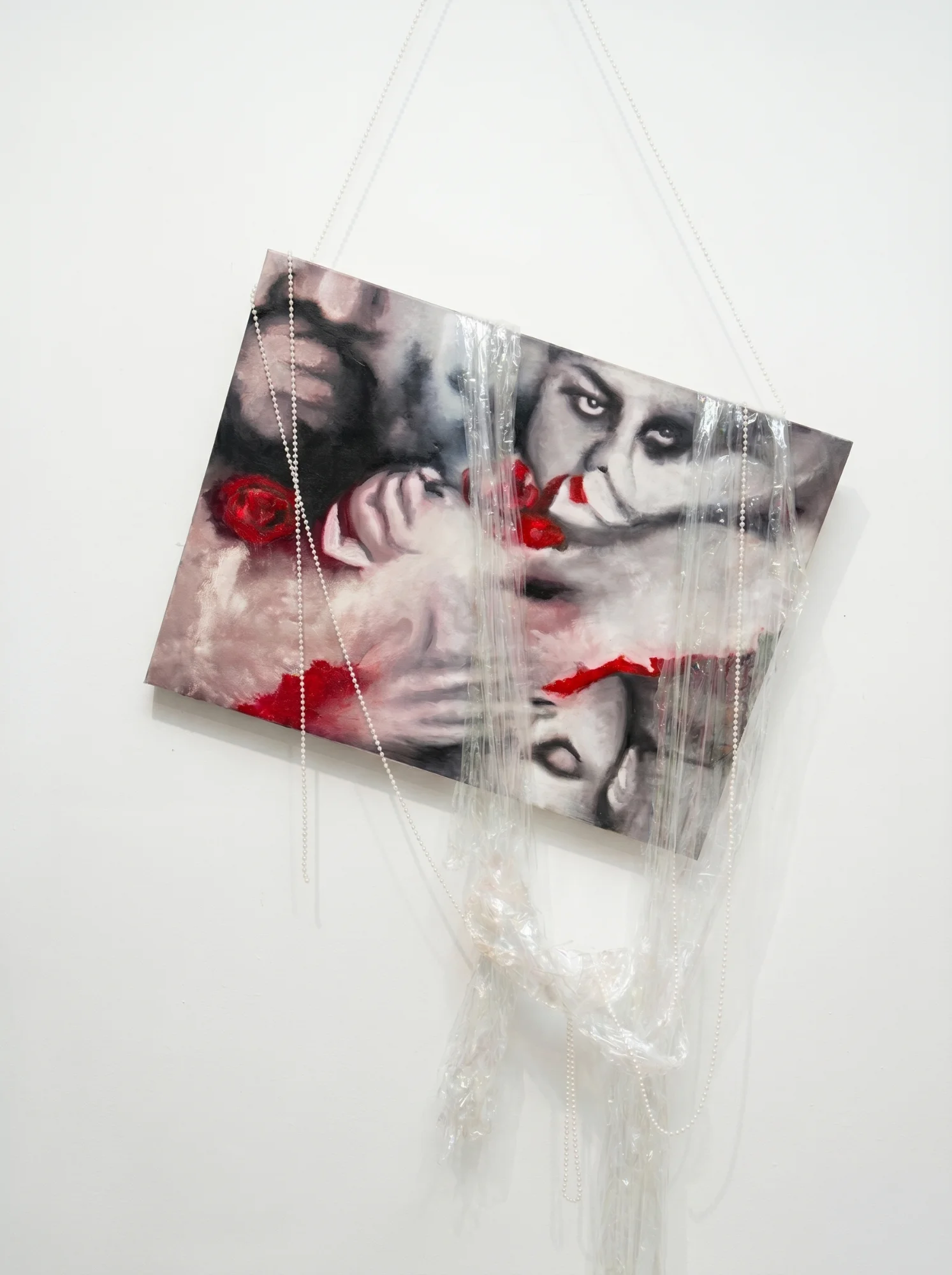
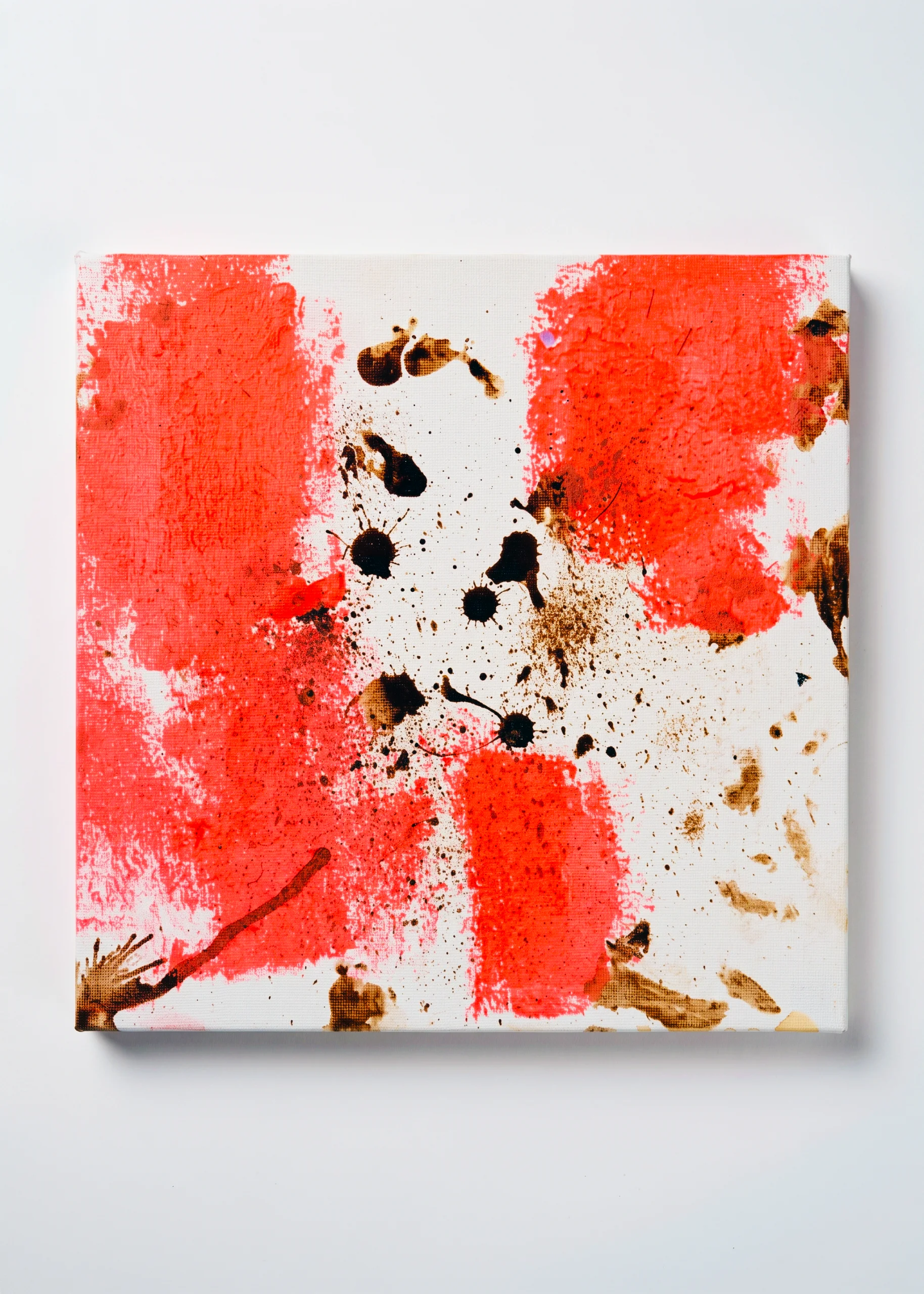
A painting after the earlier performance Ave (2021), rebuilding its residue as an autonomous image.
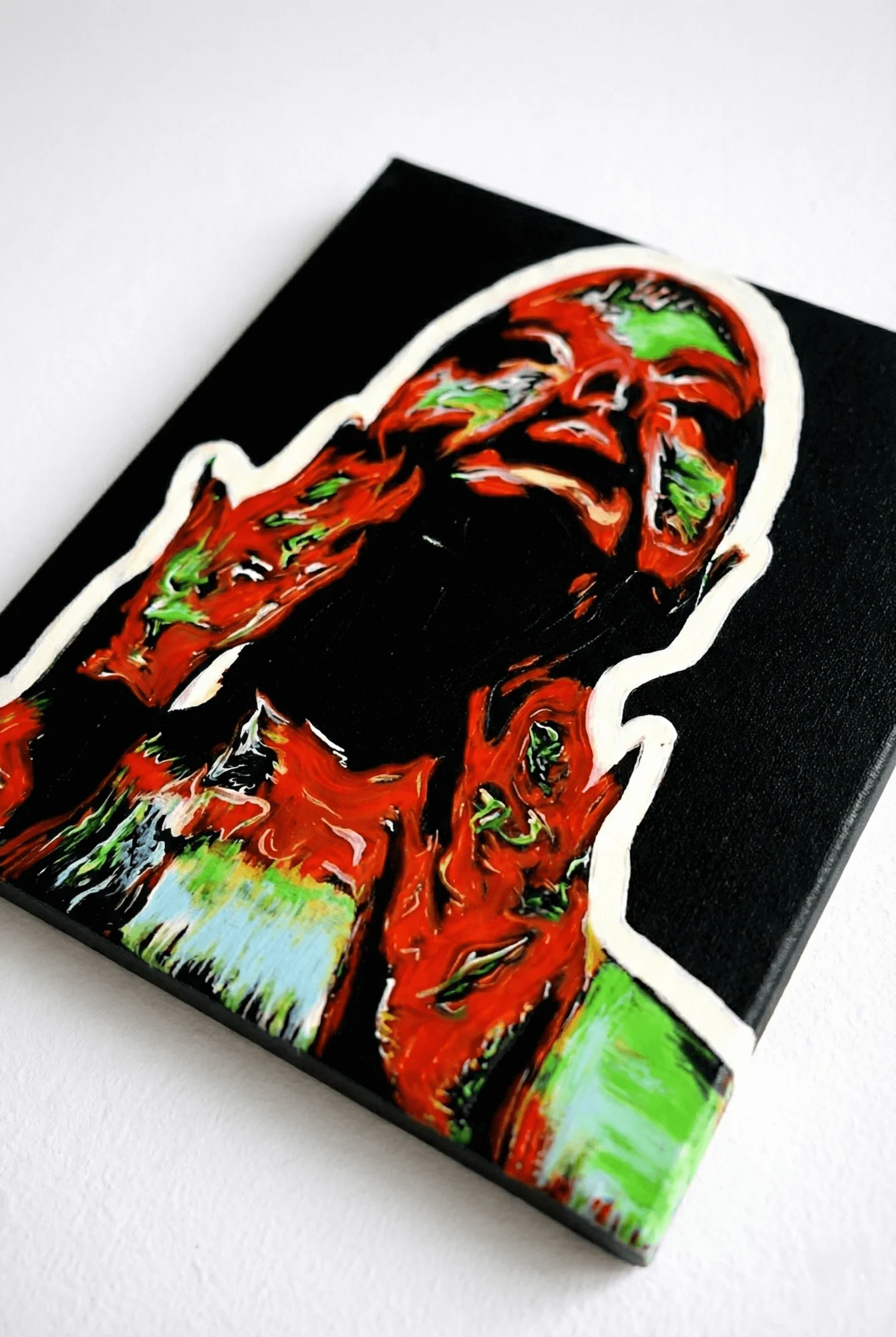
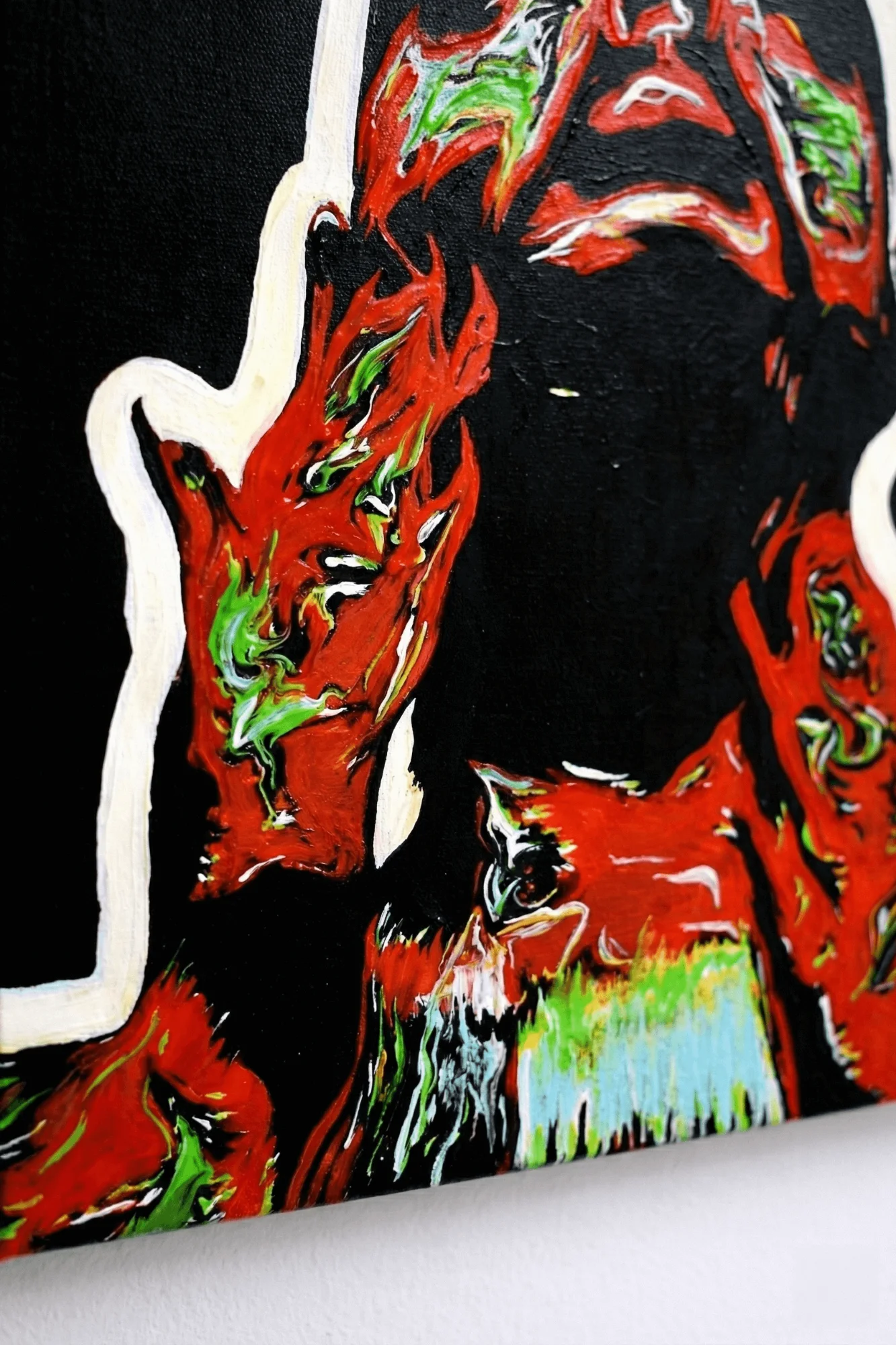
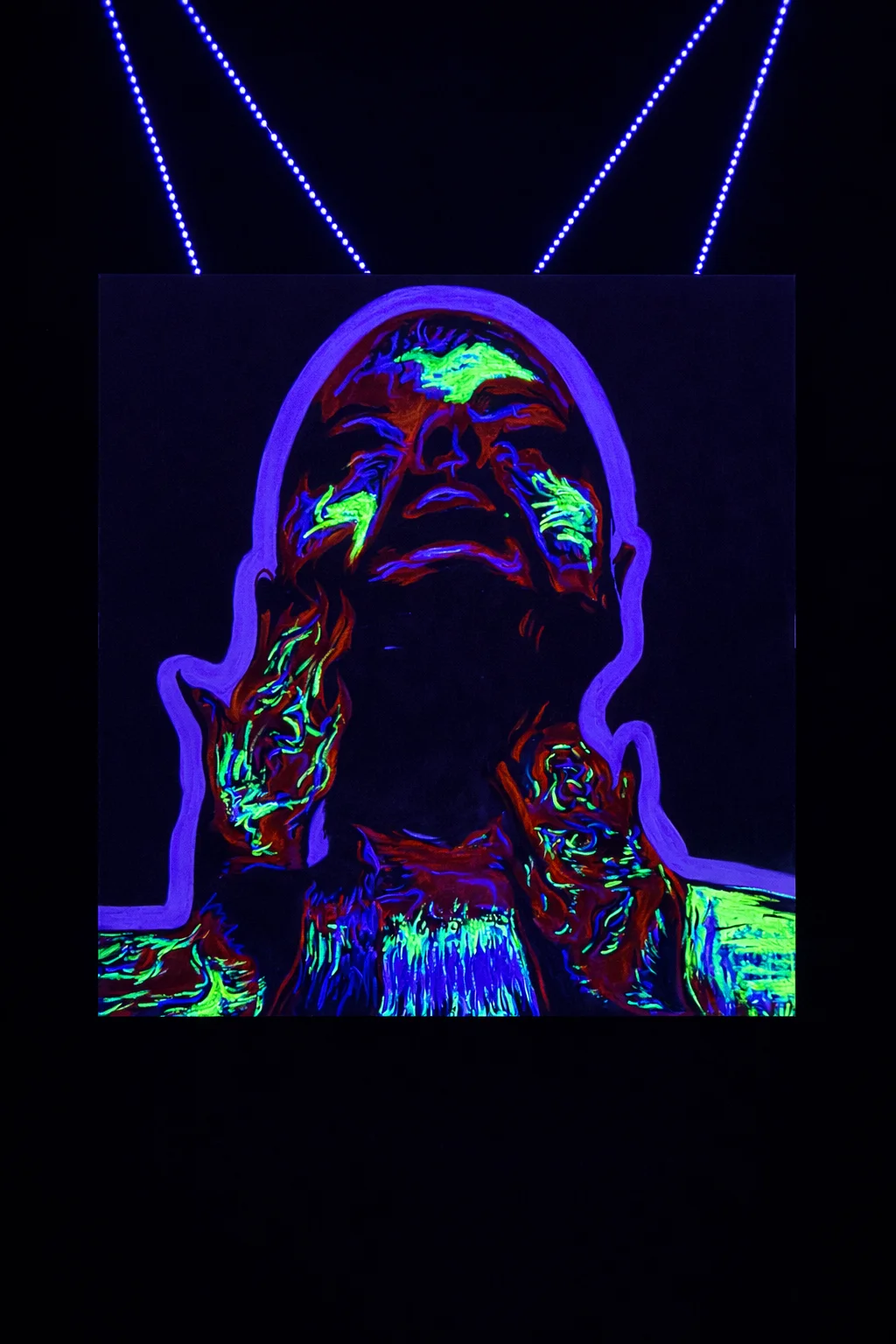
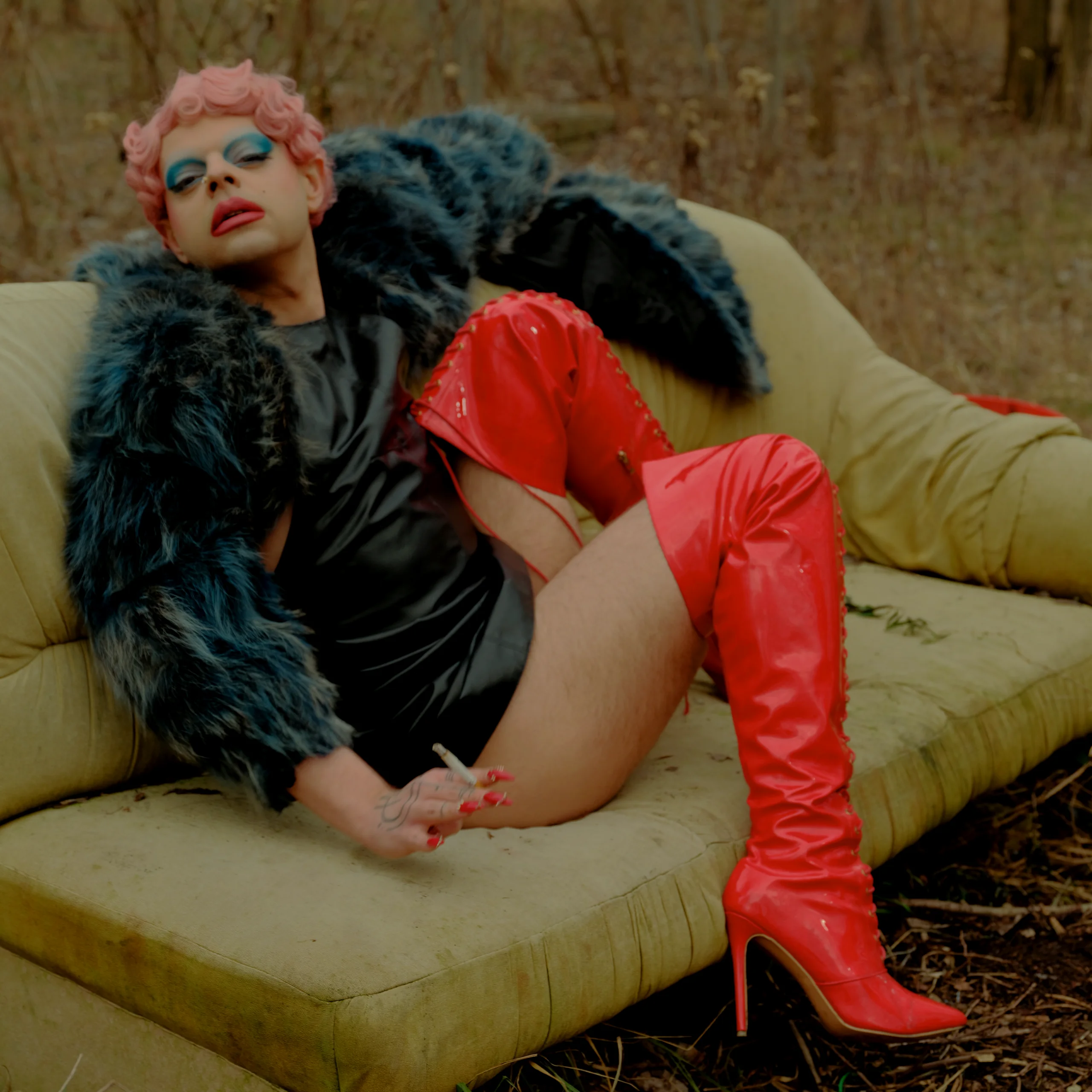
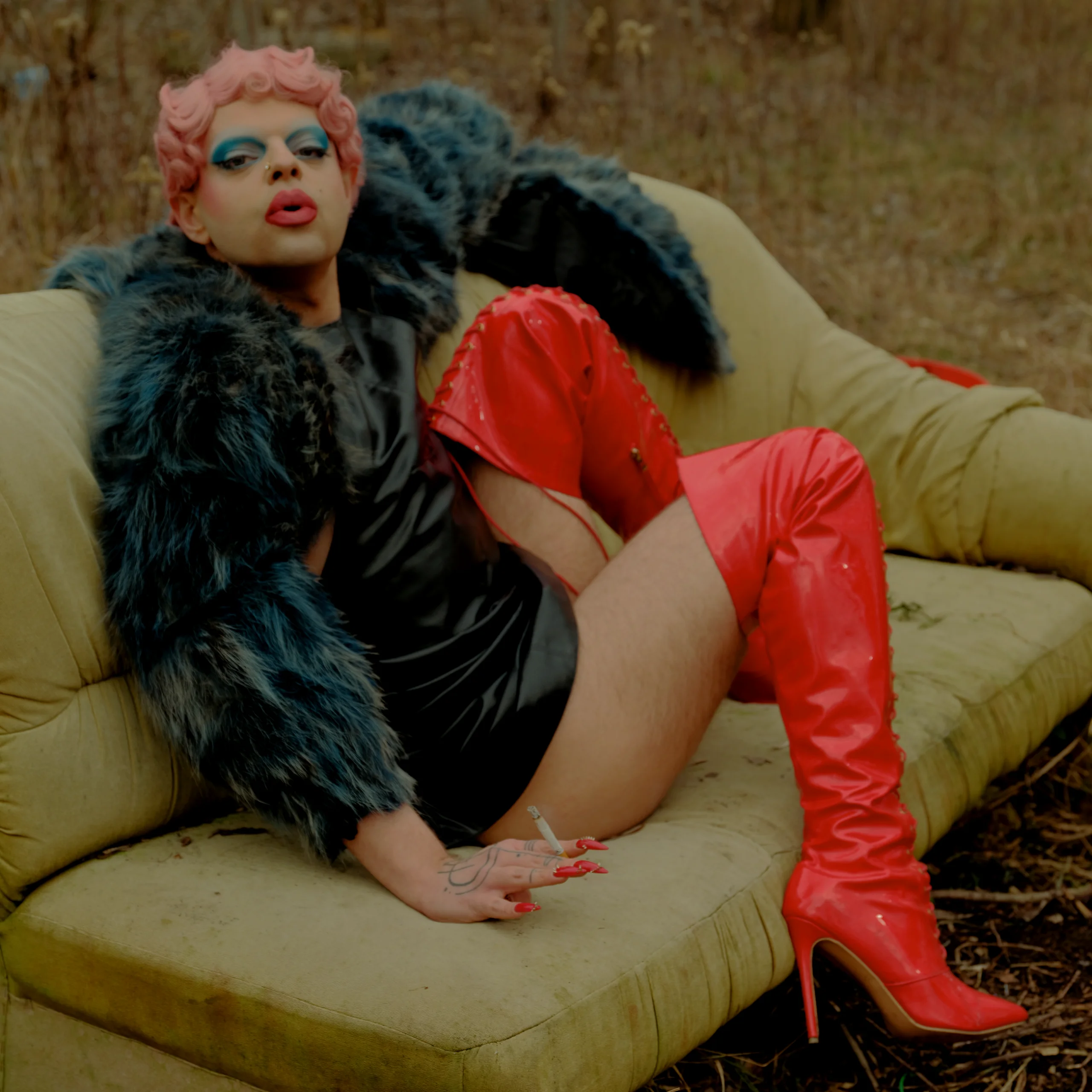
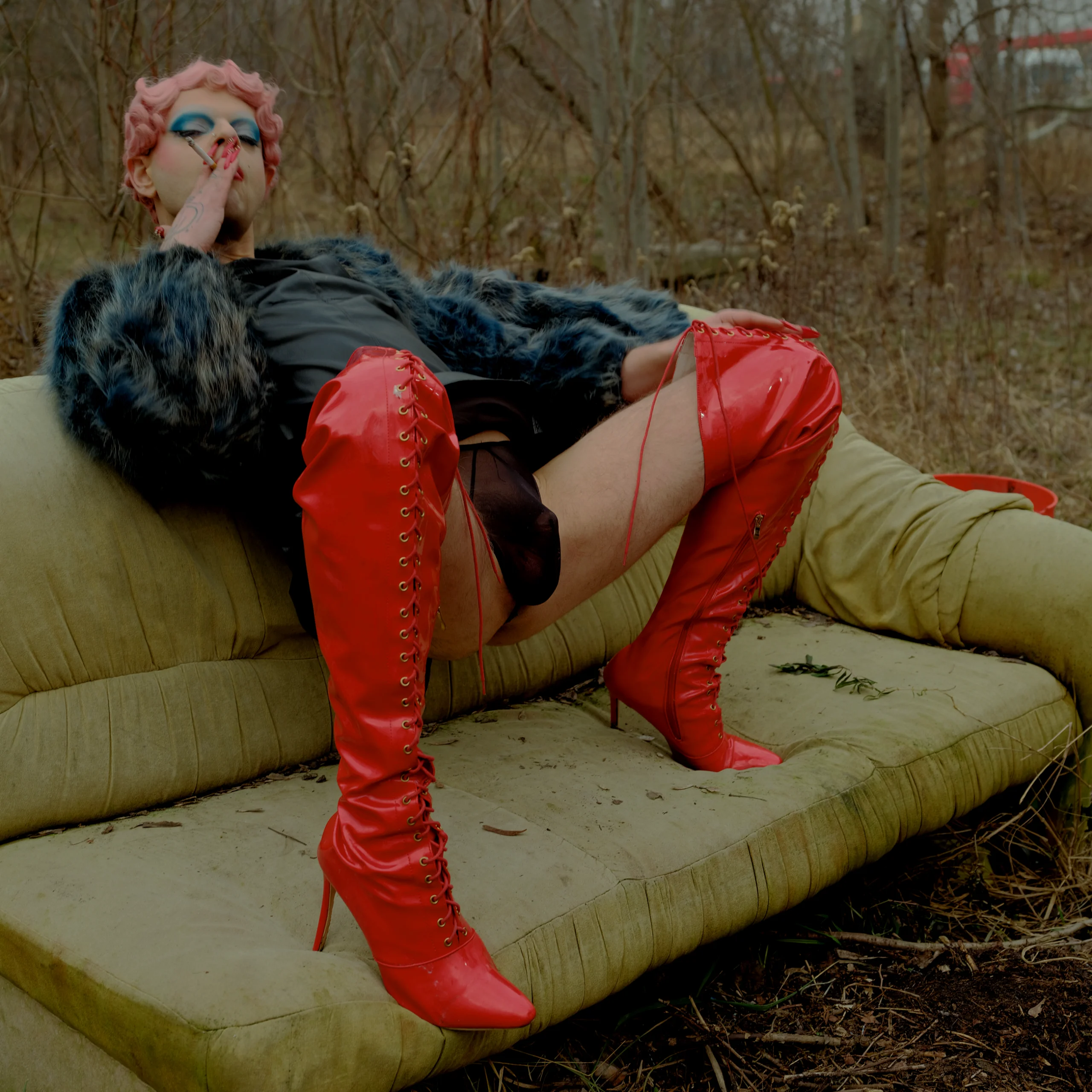
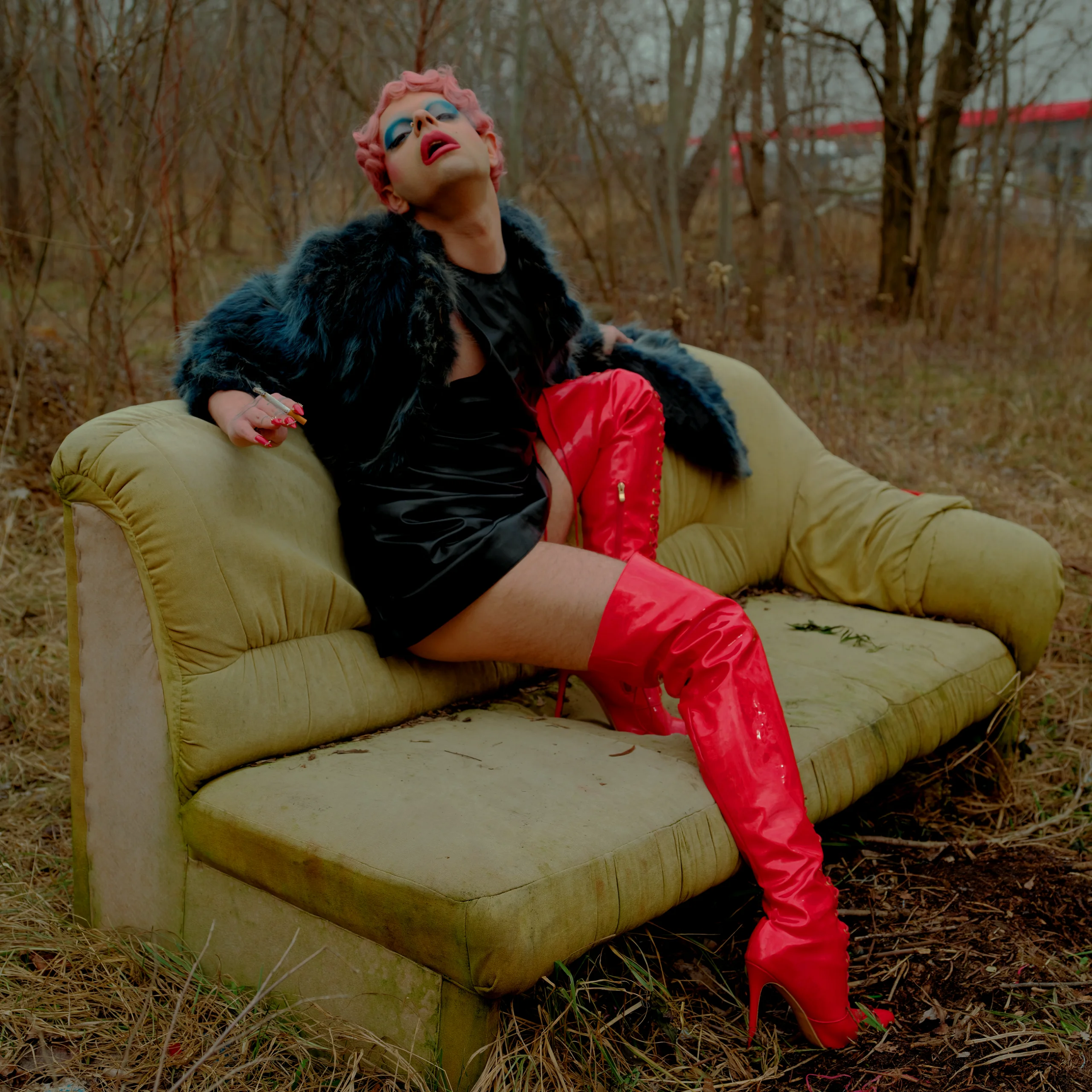
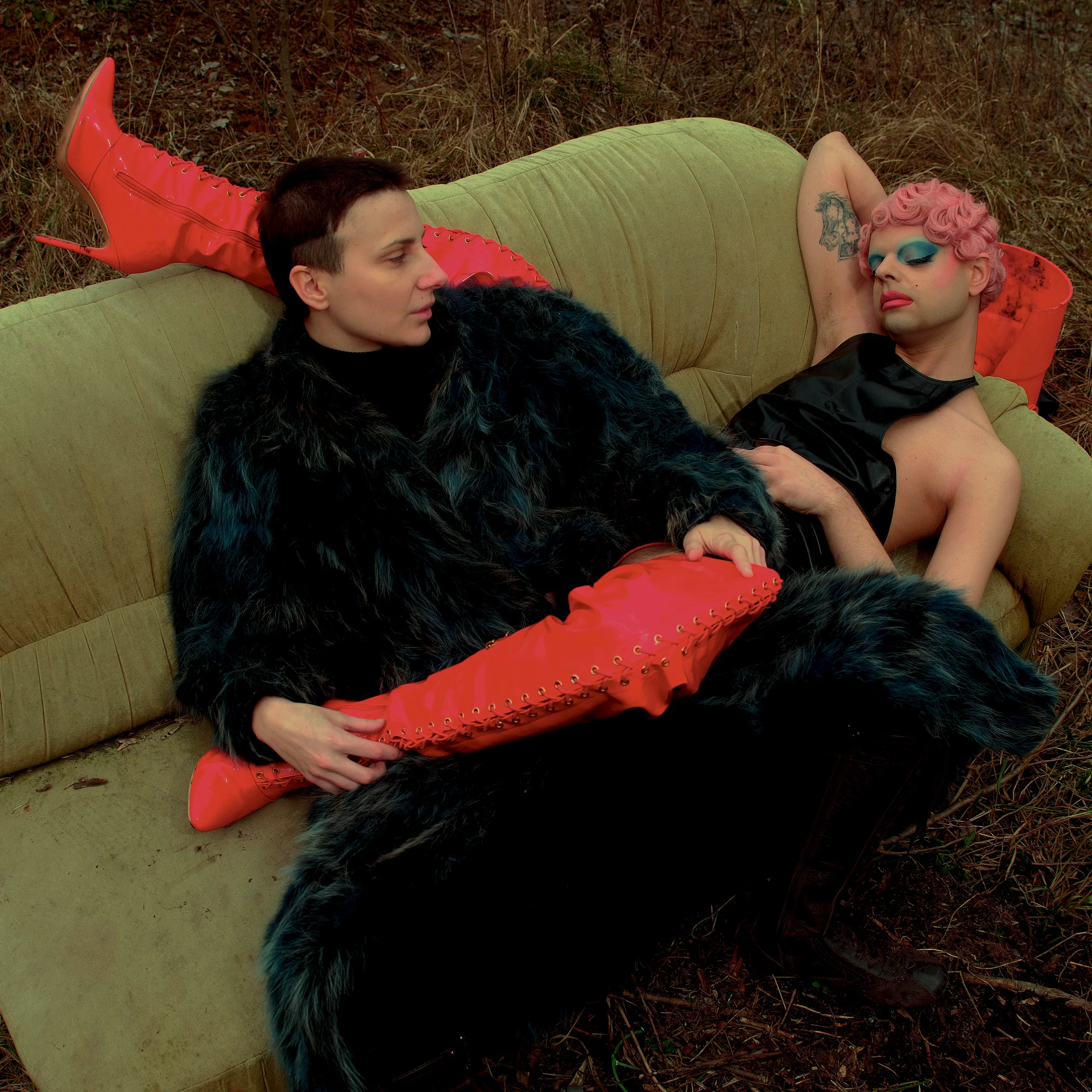
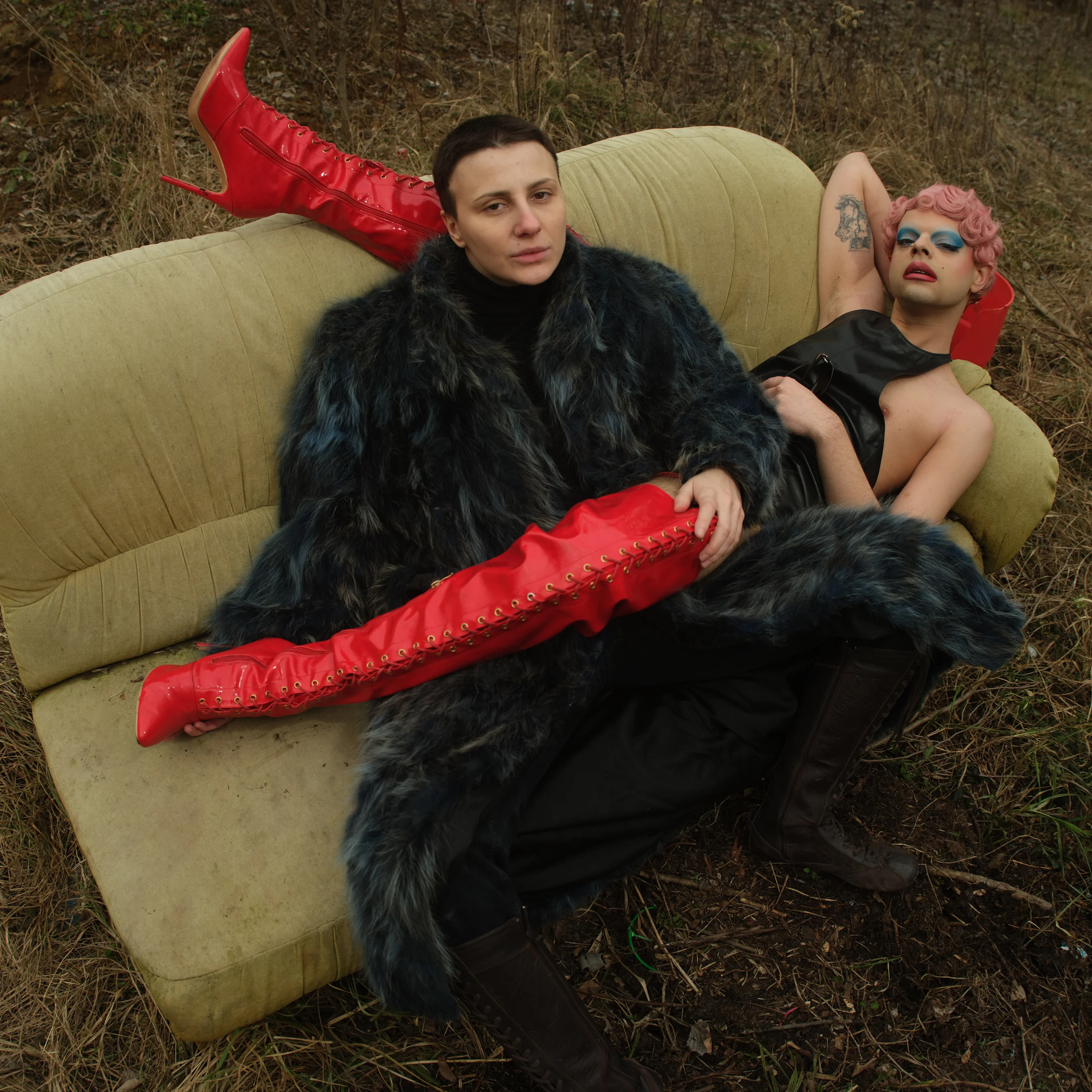
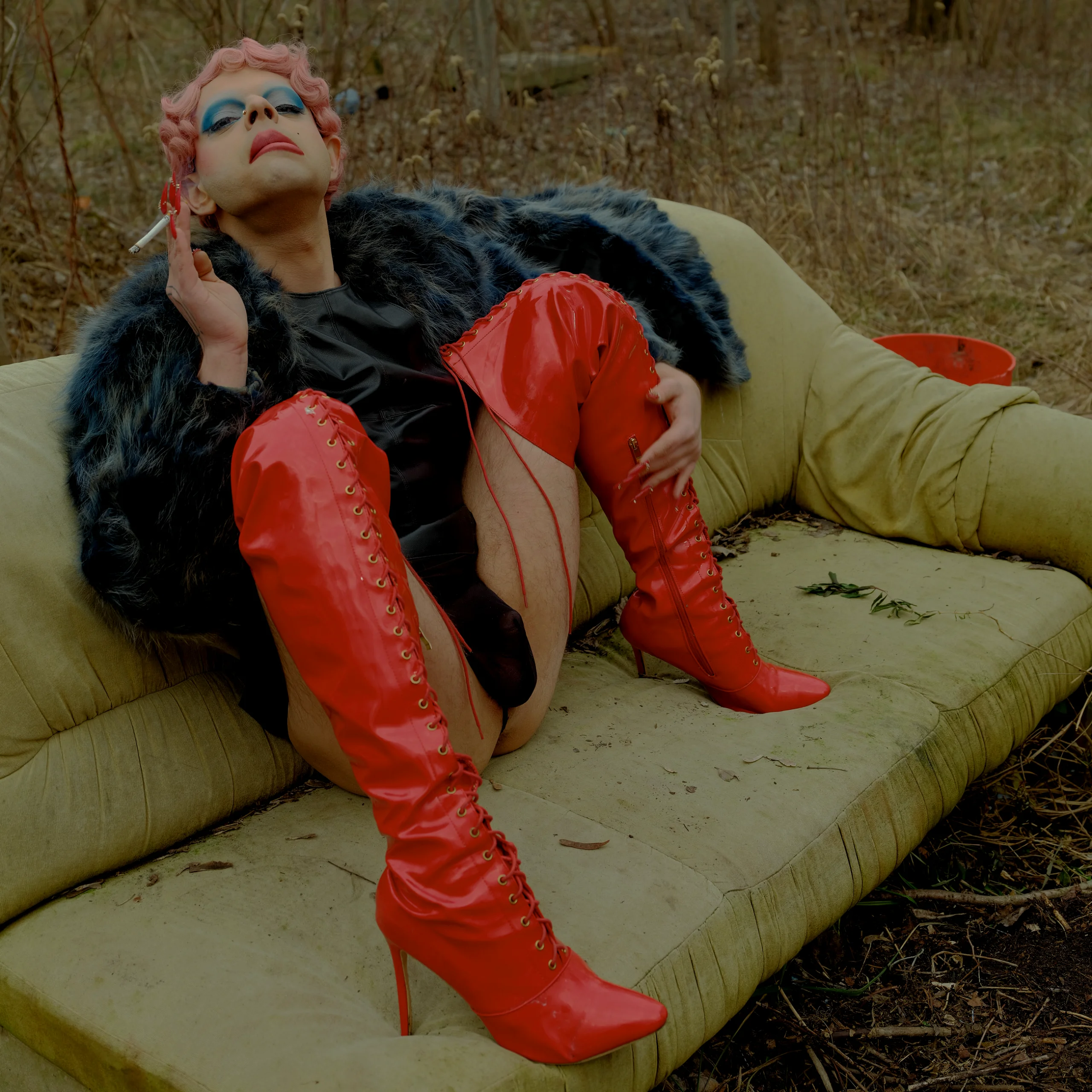
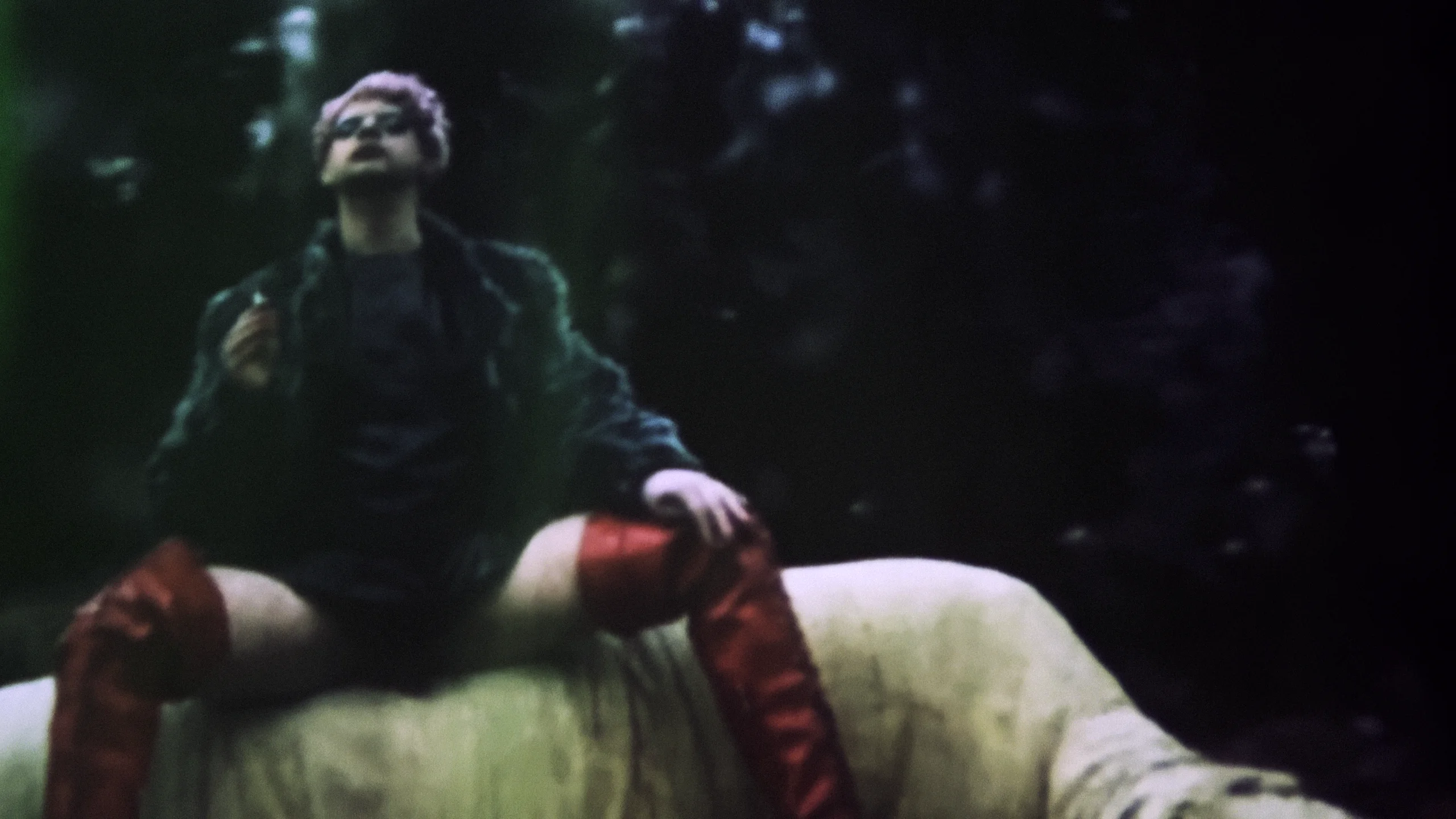
A silent 360° video in which a sofa, a cigarette and a seated body are displaced from domestic space into an unfamiliar landscape.
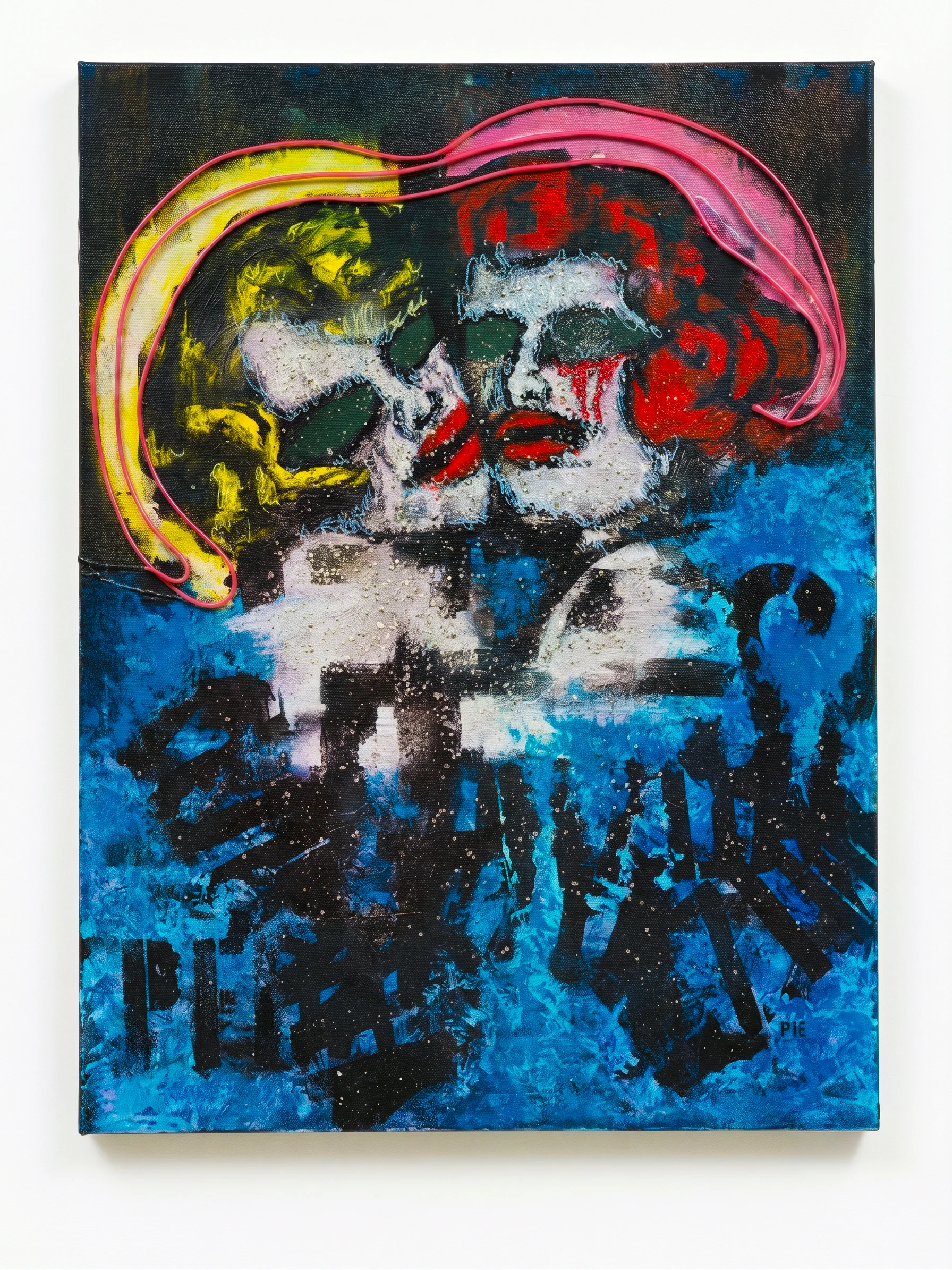
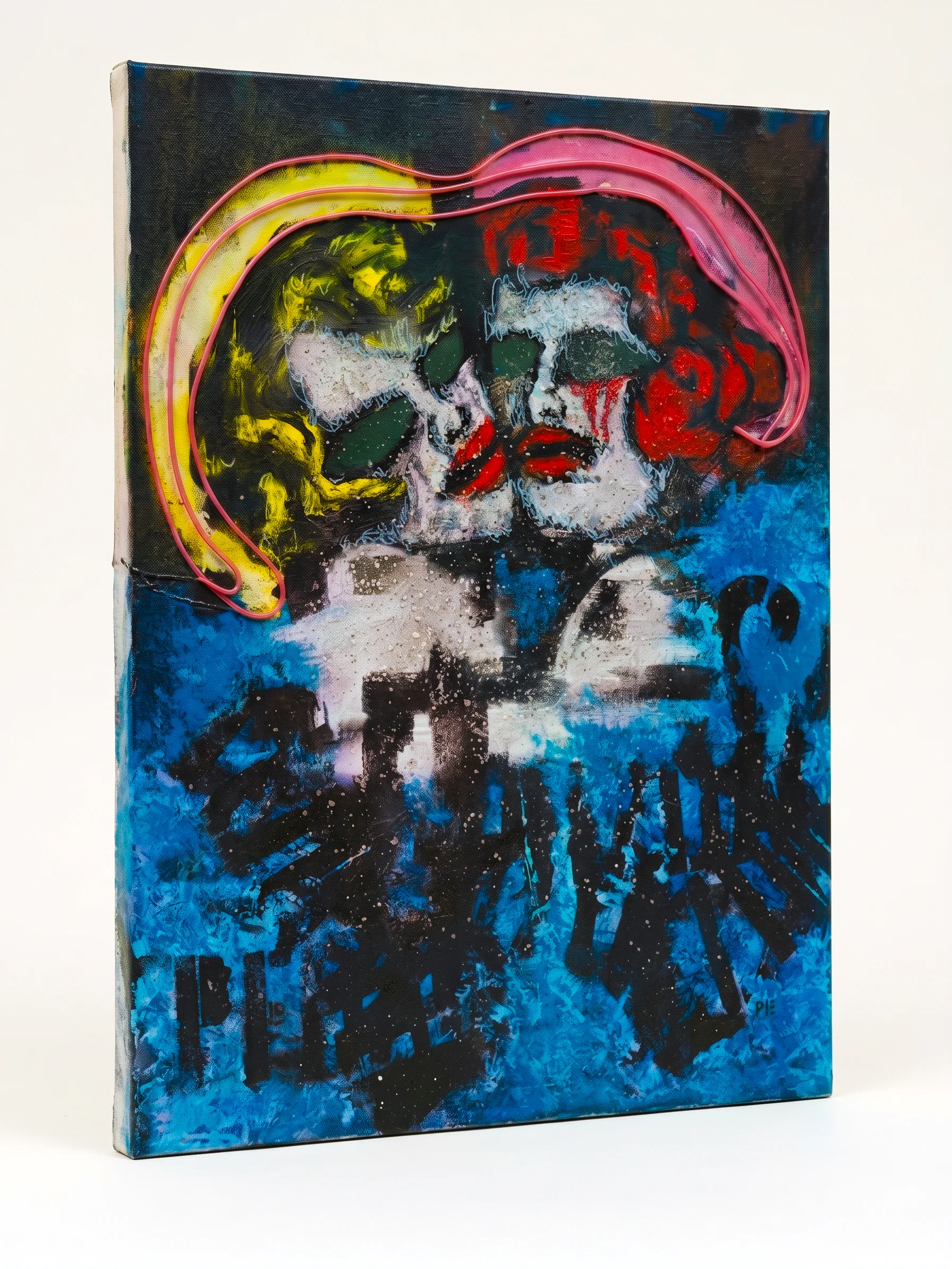
A doubled trans-femme self-portrait recasts the Pietà as an intimate encounter held beneath a shared neon halo and above a field of fragmented slurs.
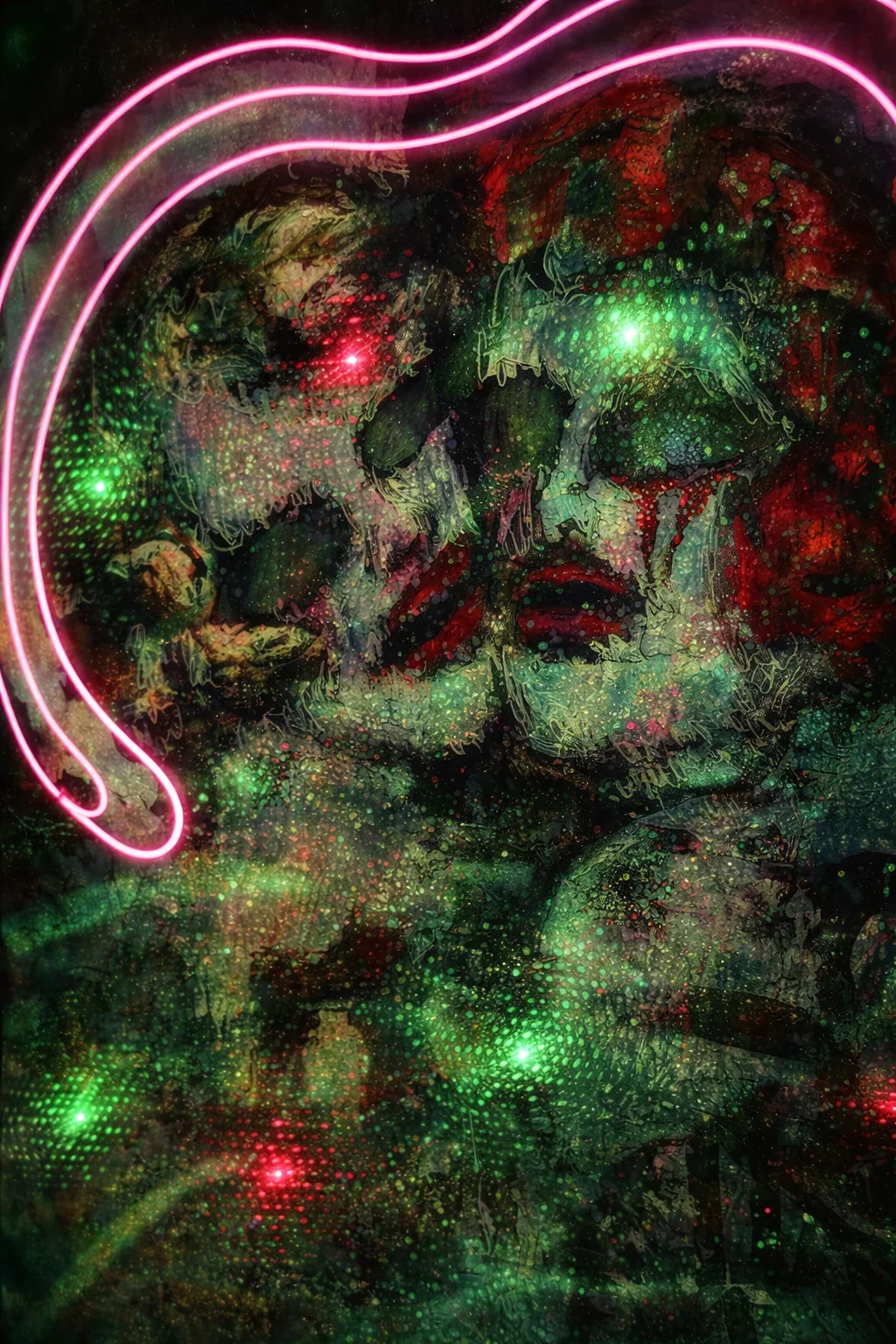
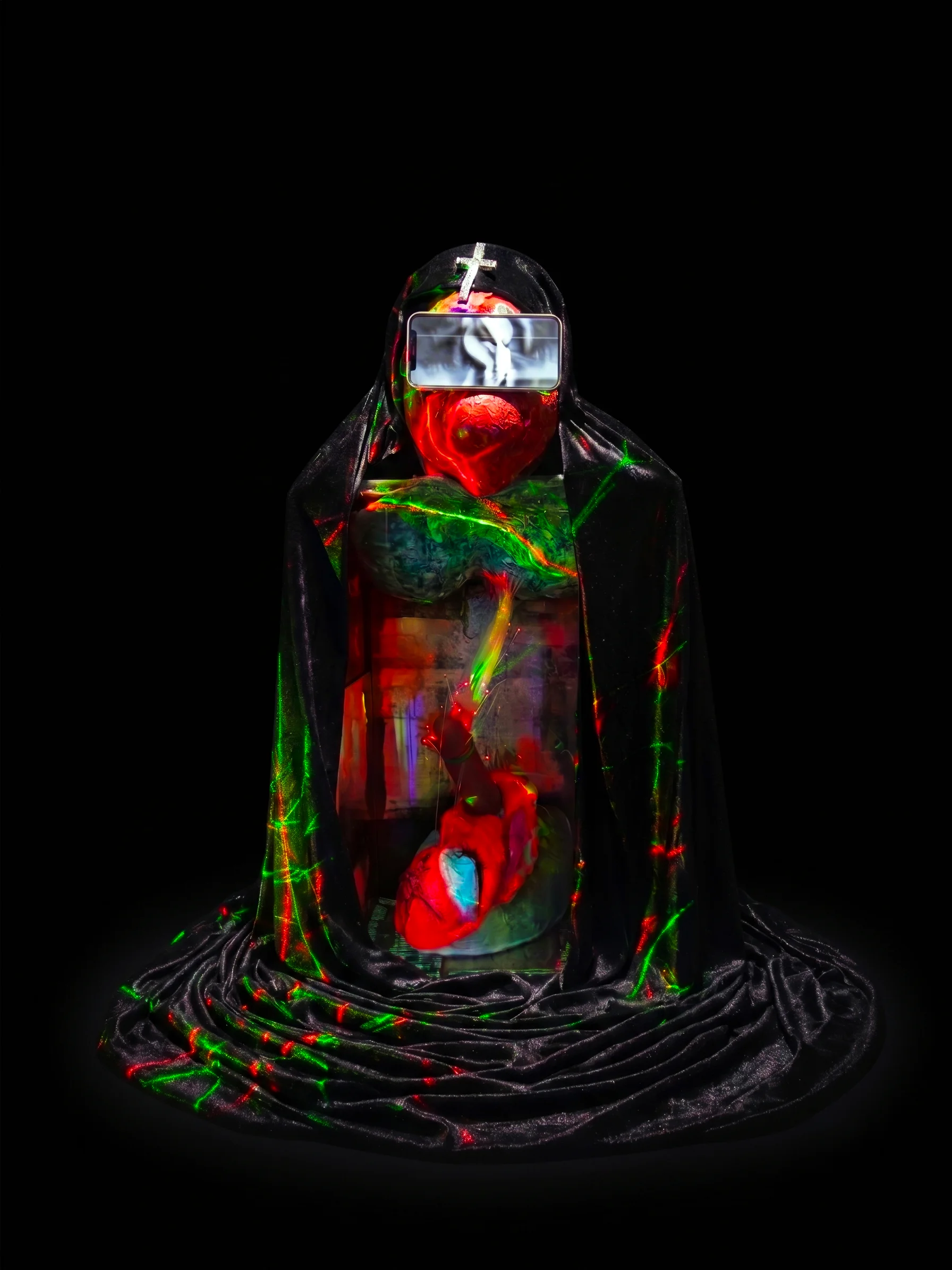
A kinetic devotional figure convulses between self-canonizing prayer, erotic display, and the insults of men responding to the artist’s escort advertisement.
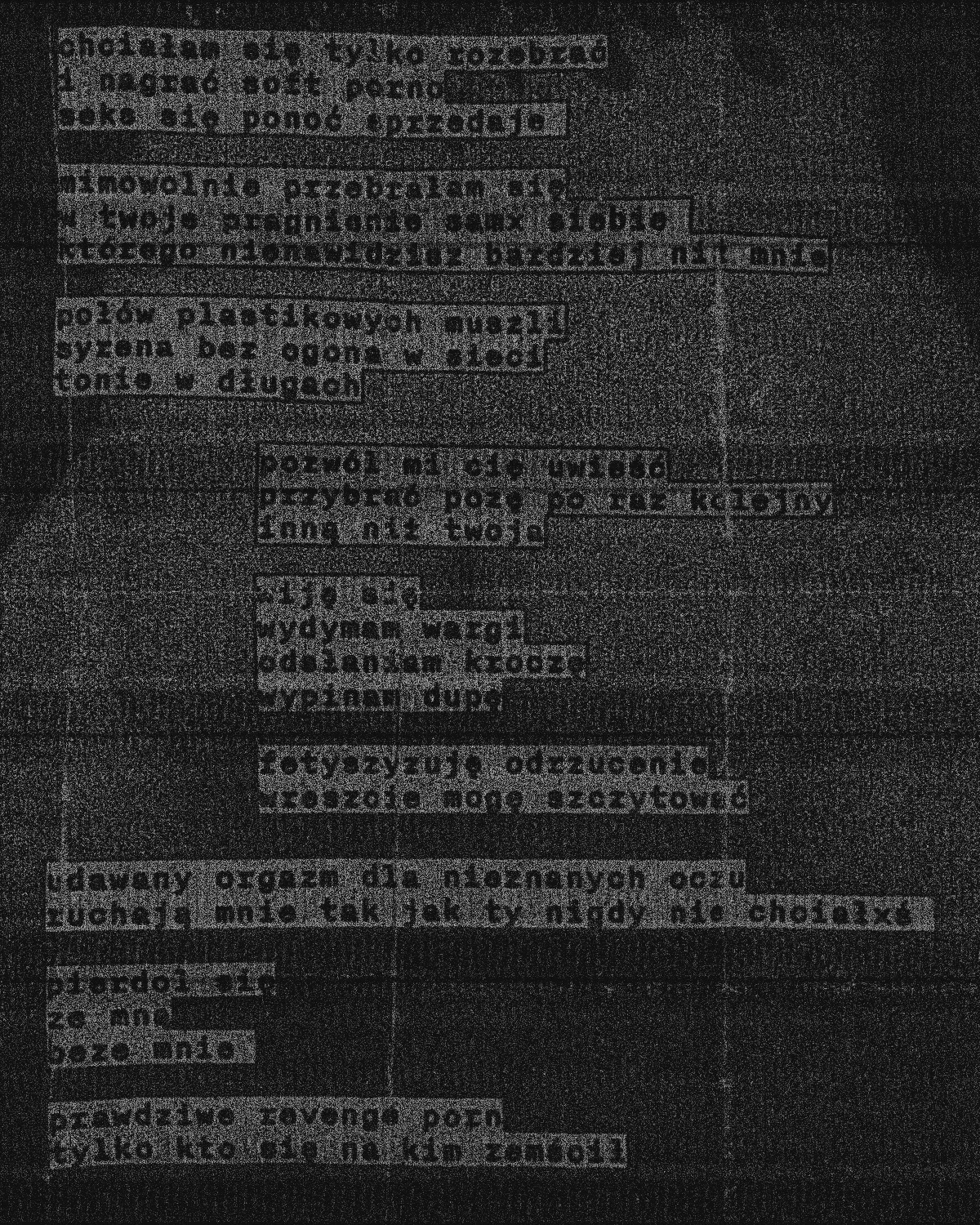
A poem that turns sexual self-staging and rejection into an unstable form of revenge, asking who ultimately controls the image and who is being used by whom.
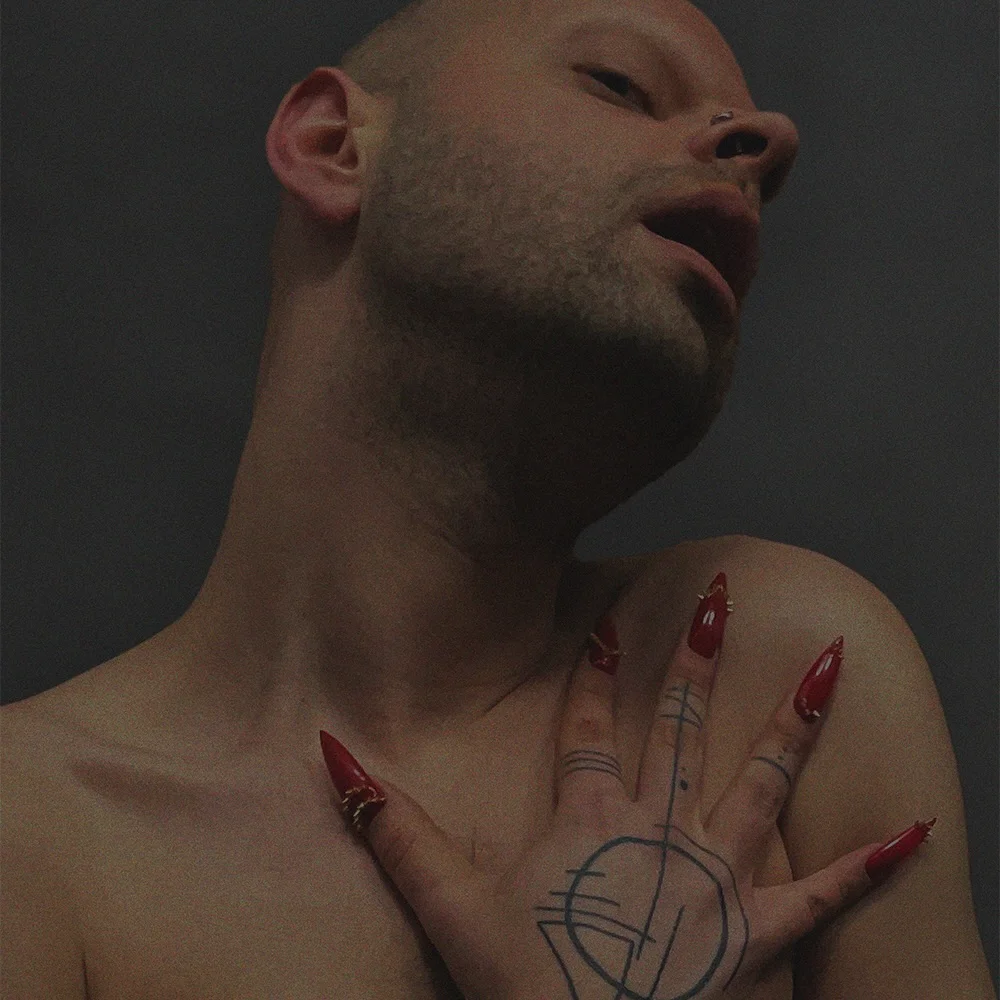
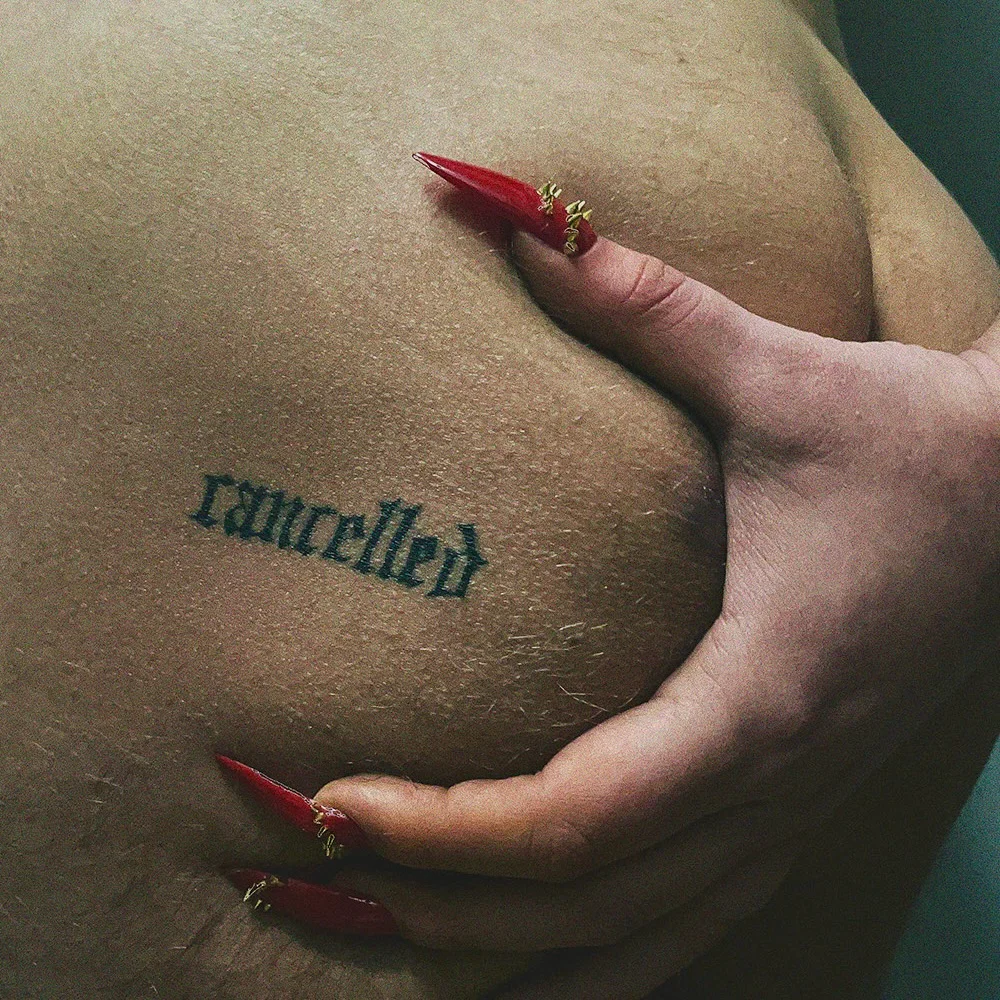
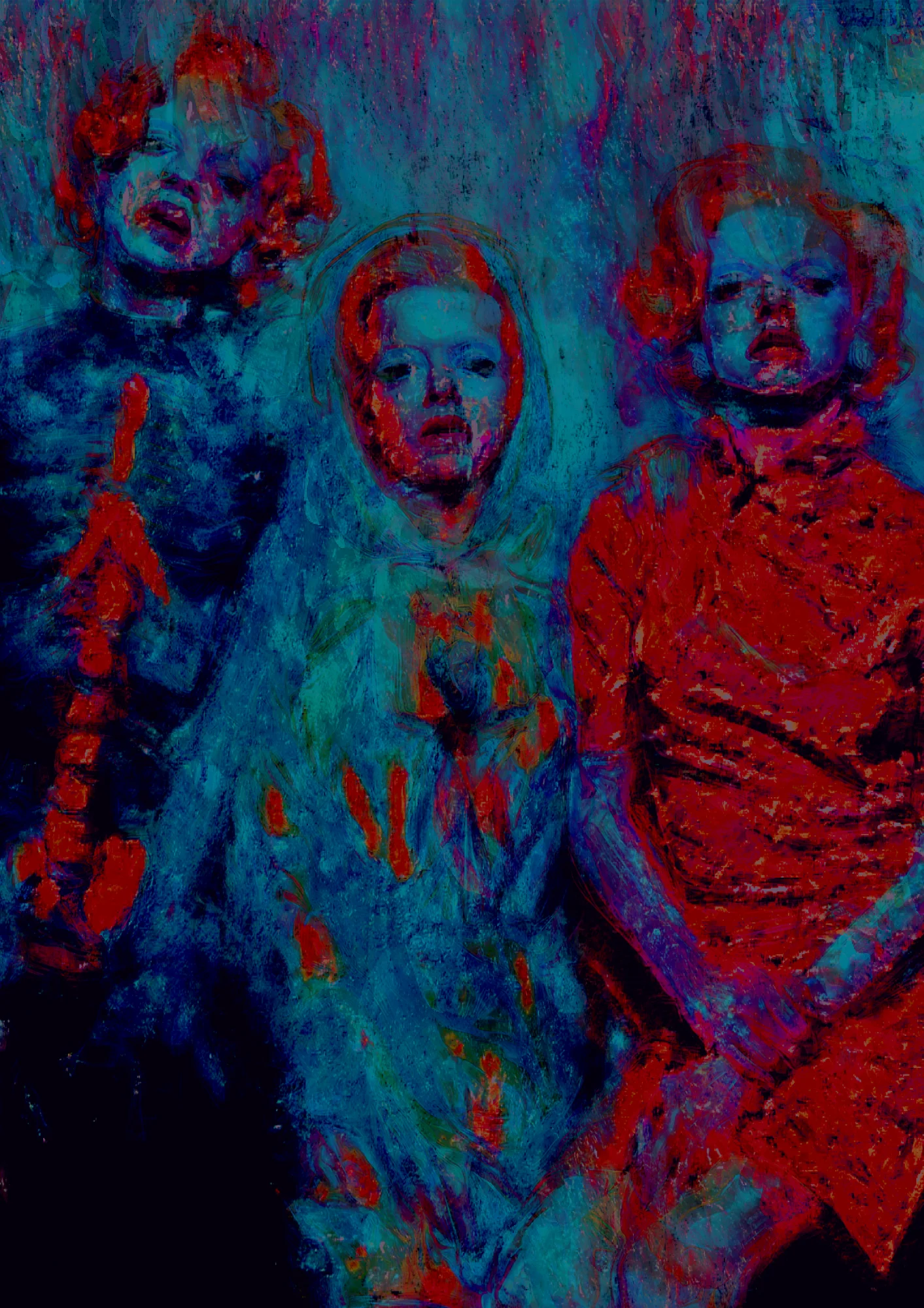
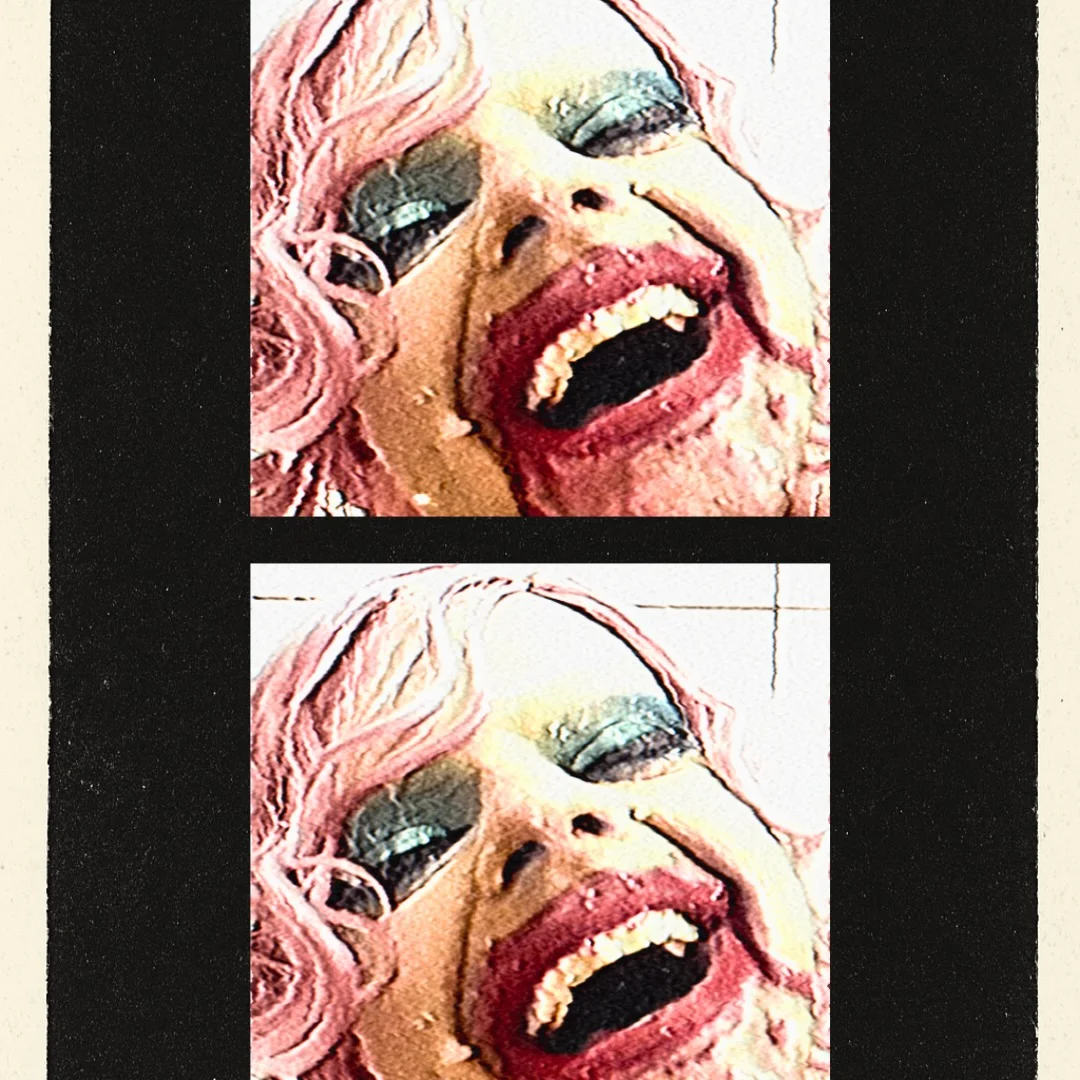
Three vertically arranged portraits repeat the codes of the Hollywood blonde, allowing glamour and distortion to sustain the icon without producing a definitive face.
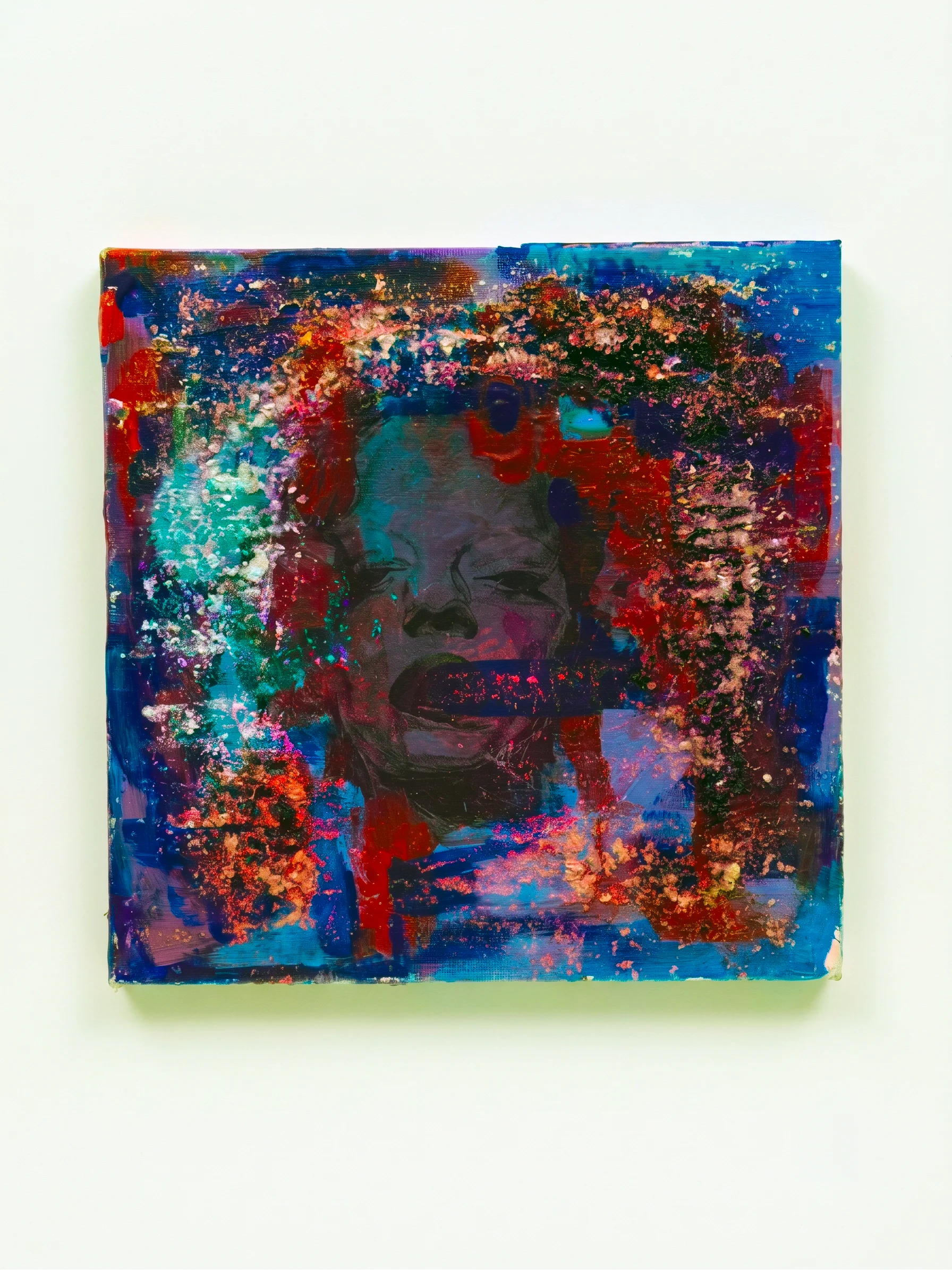
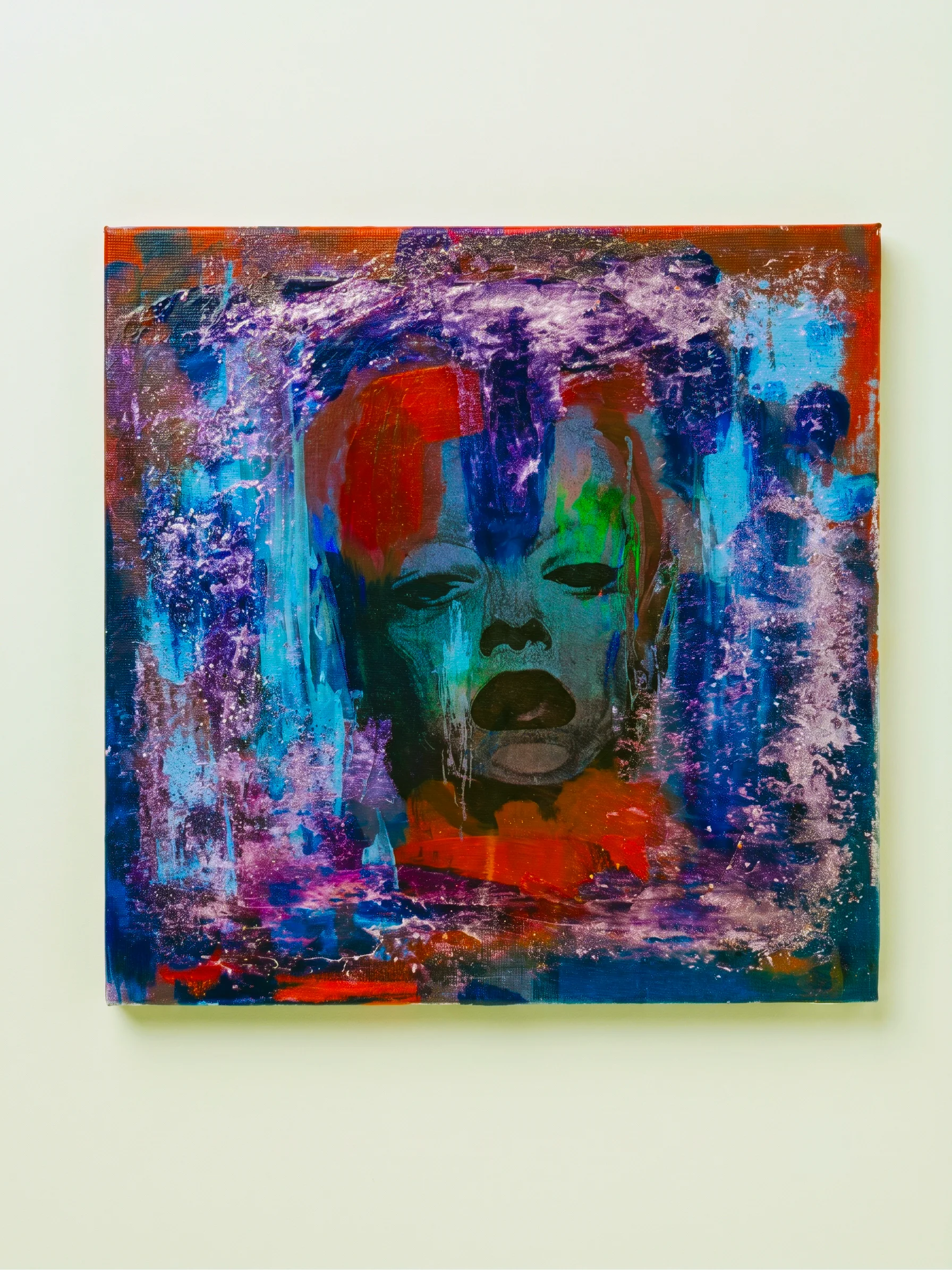
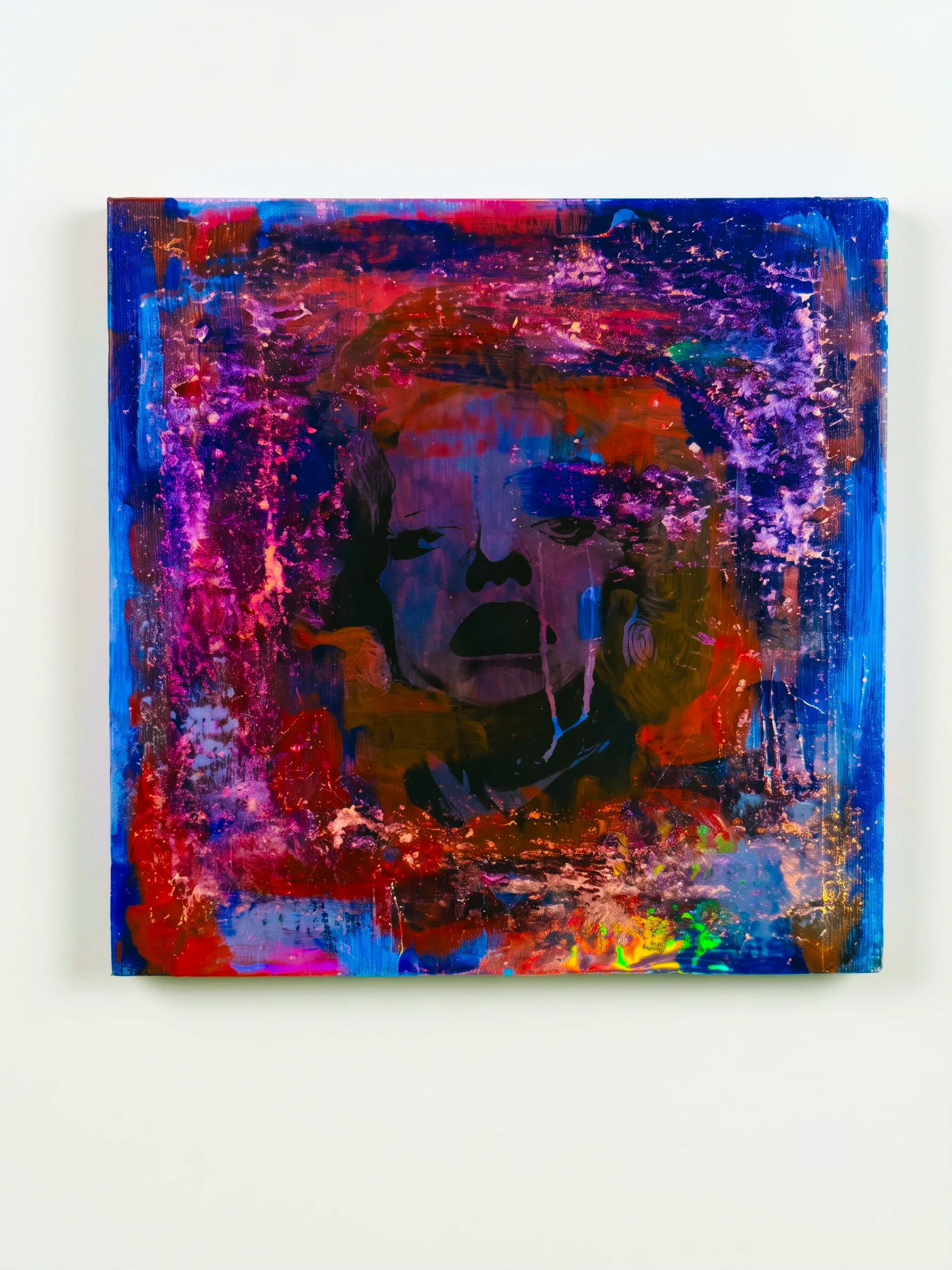
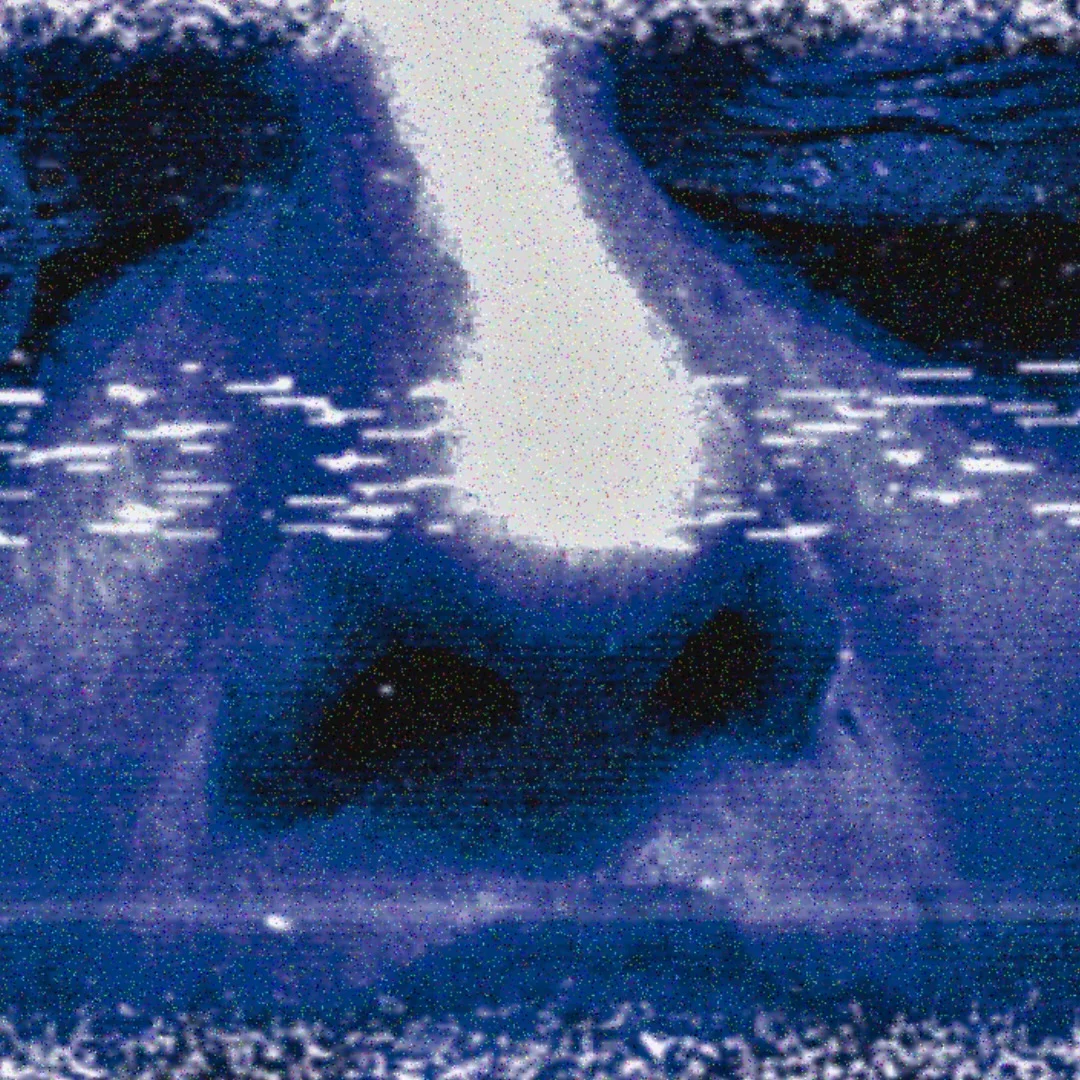
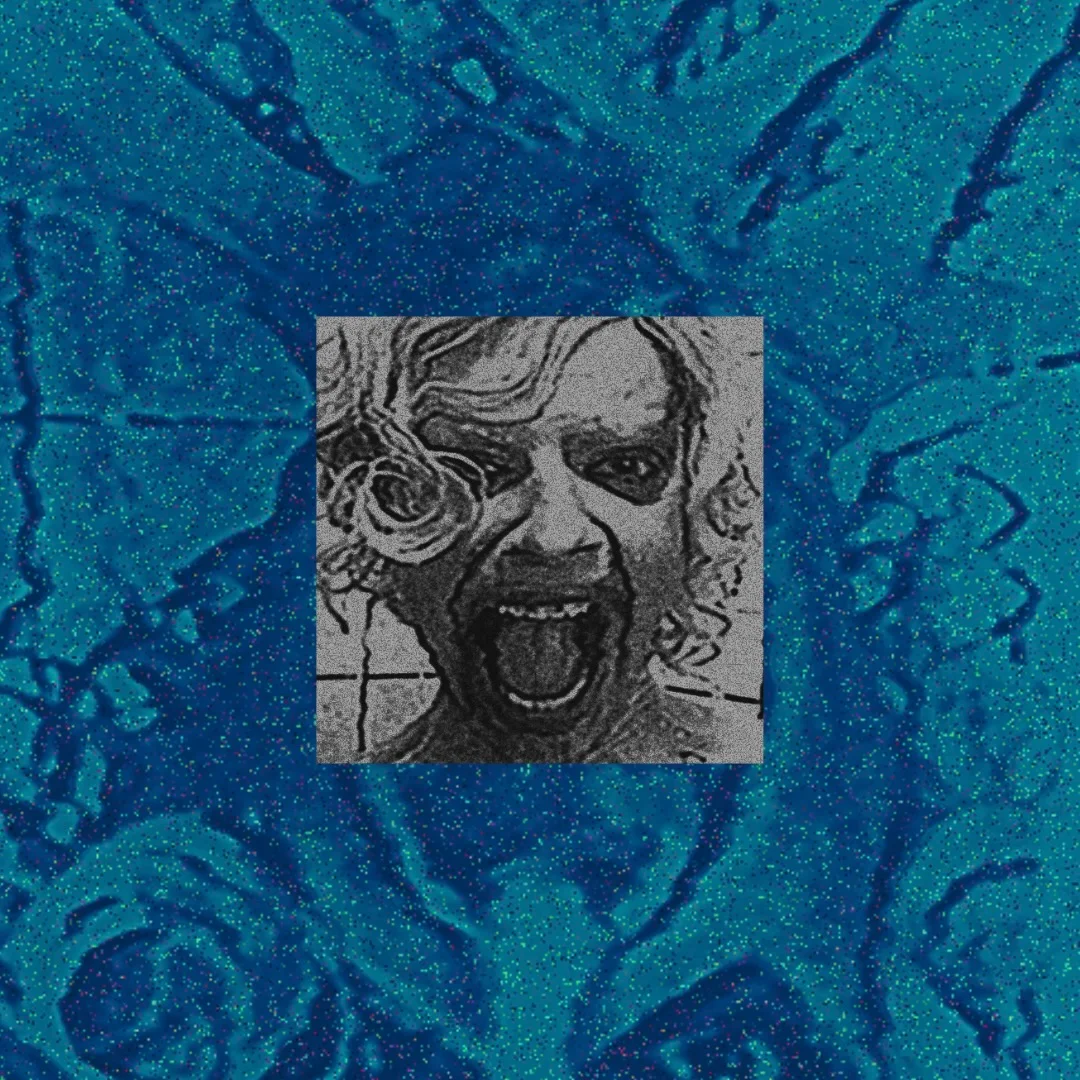
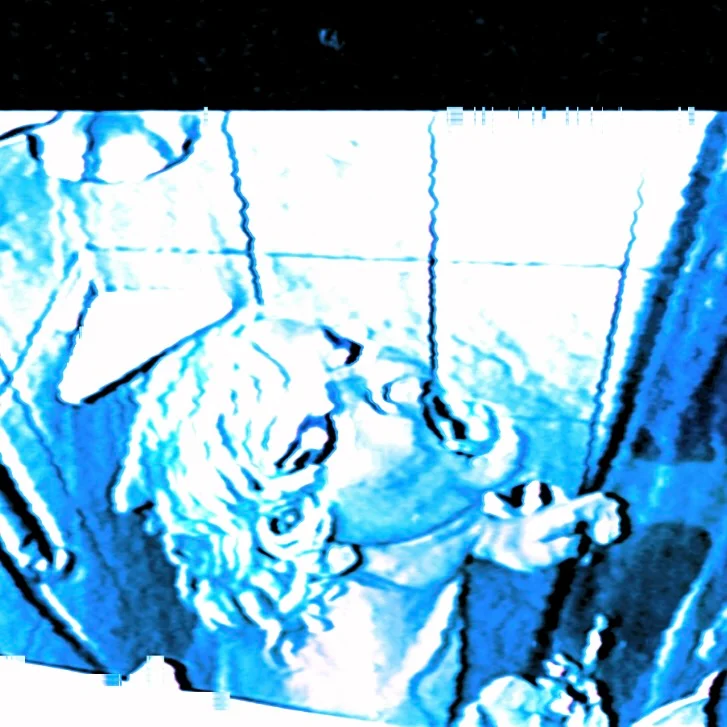
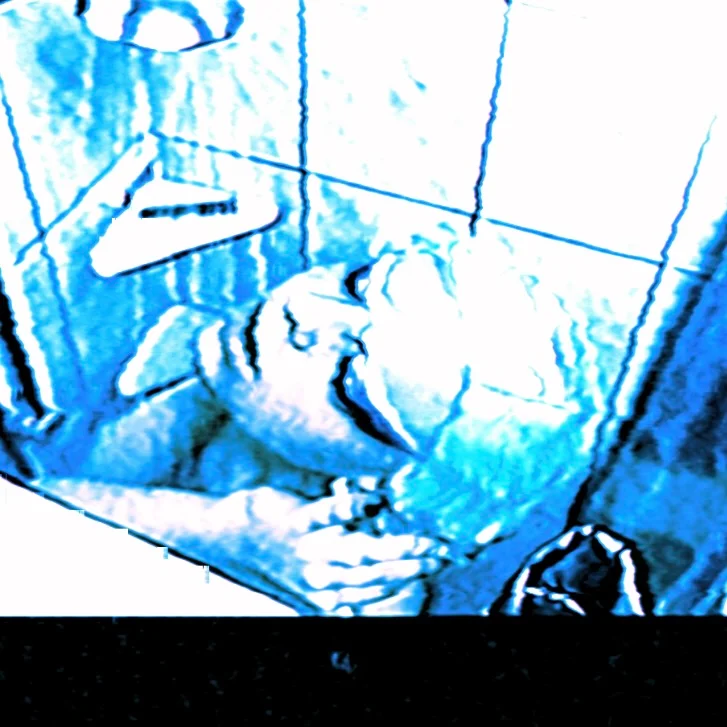
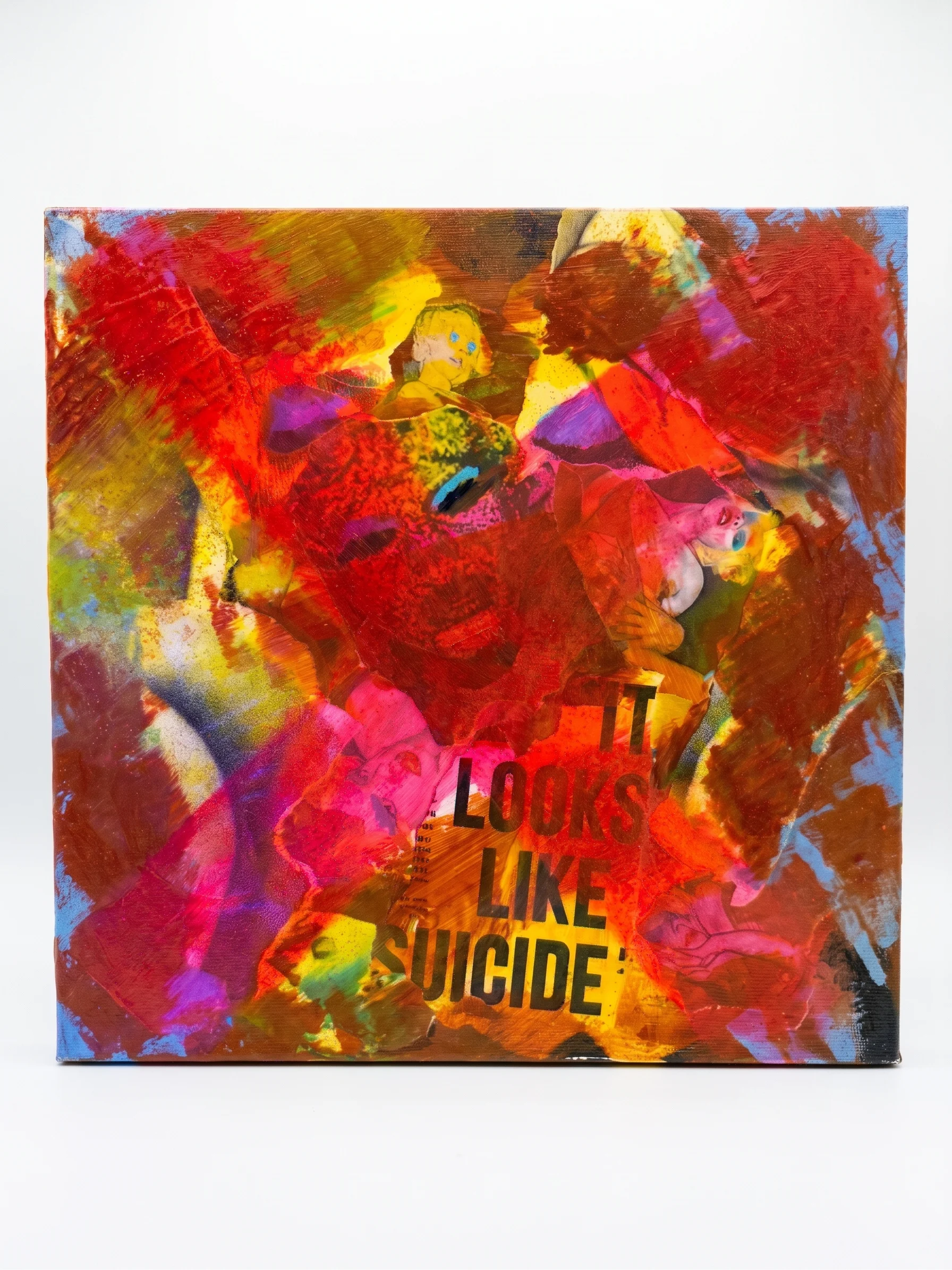
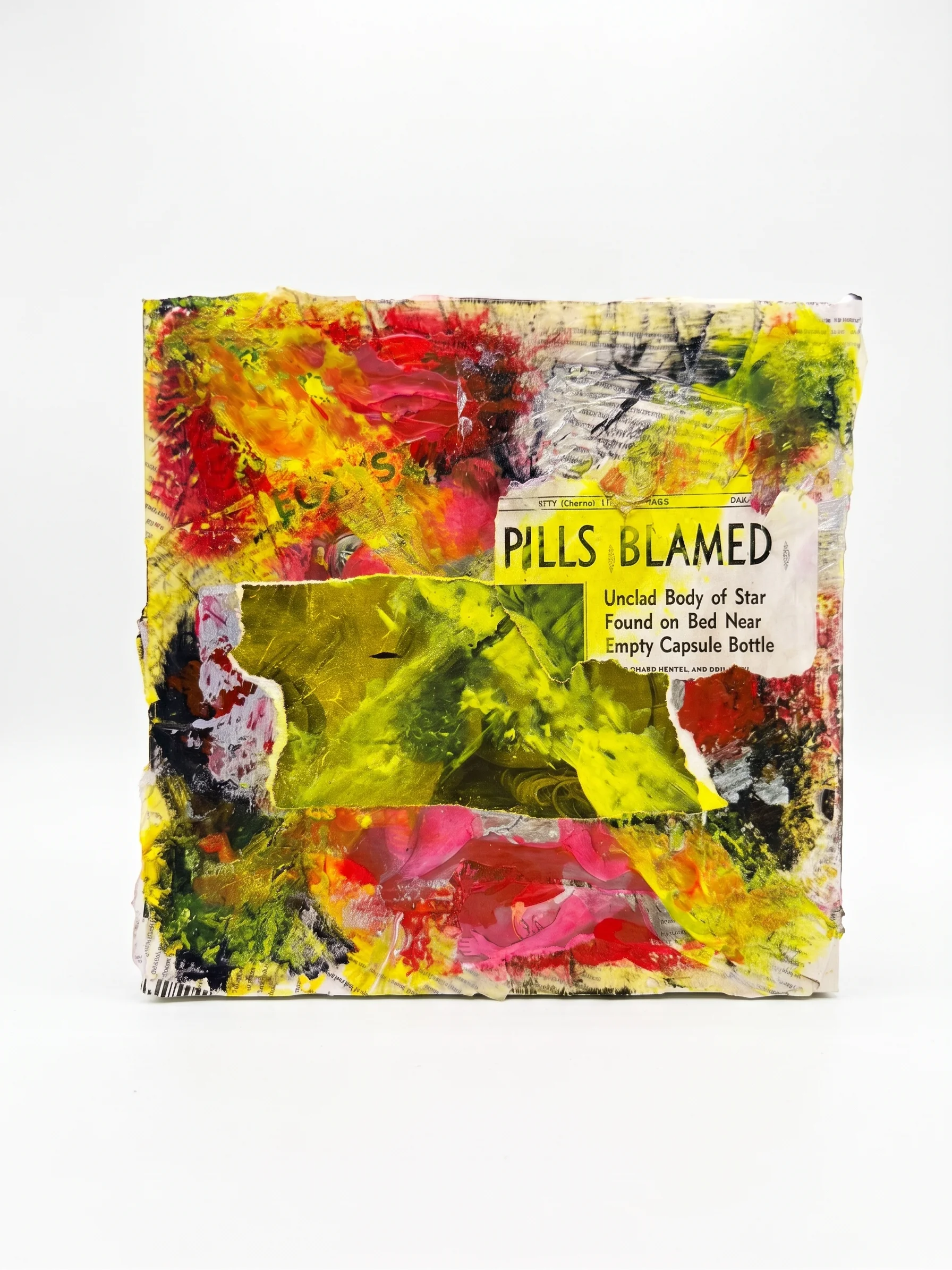
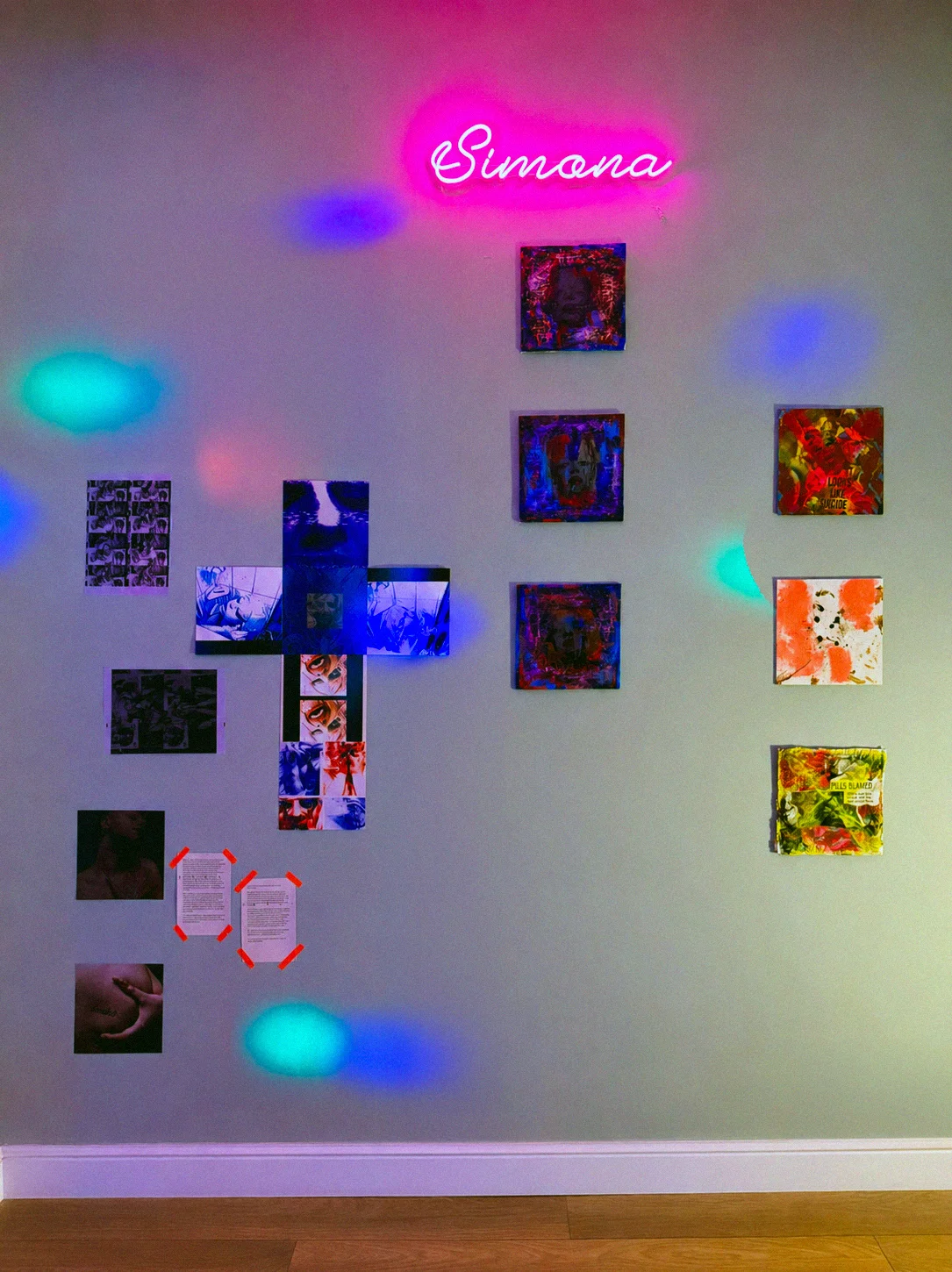
A triptych attaches posthumous headlines about Marilyn Monroe to photographs of the artist’s trans-femme body, while a central panel made with her blood tests how images and bodily traces are forced to testify to a suicide narrative.
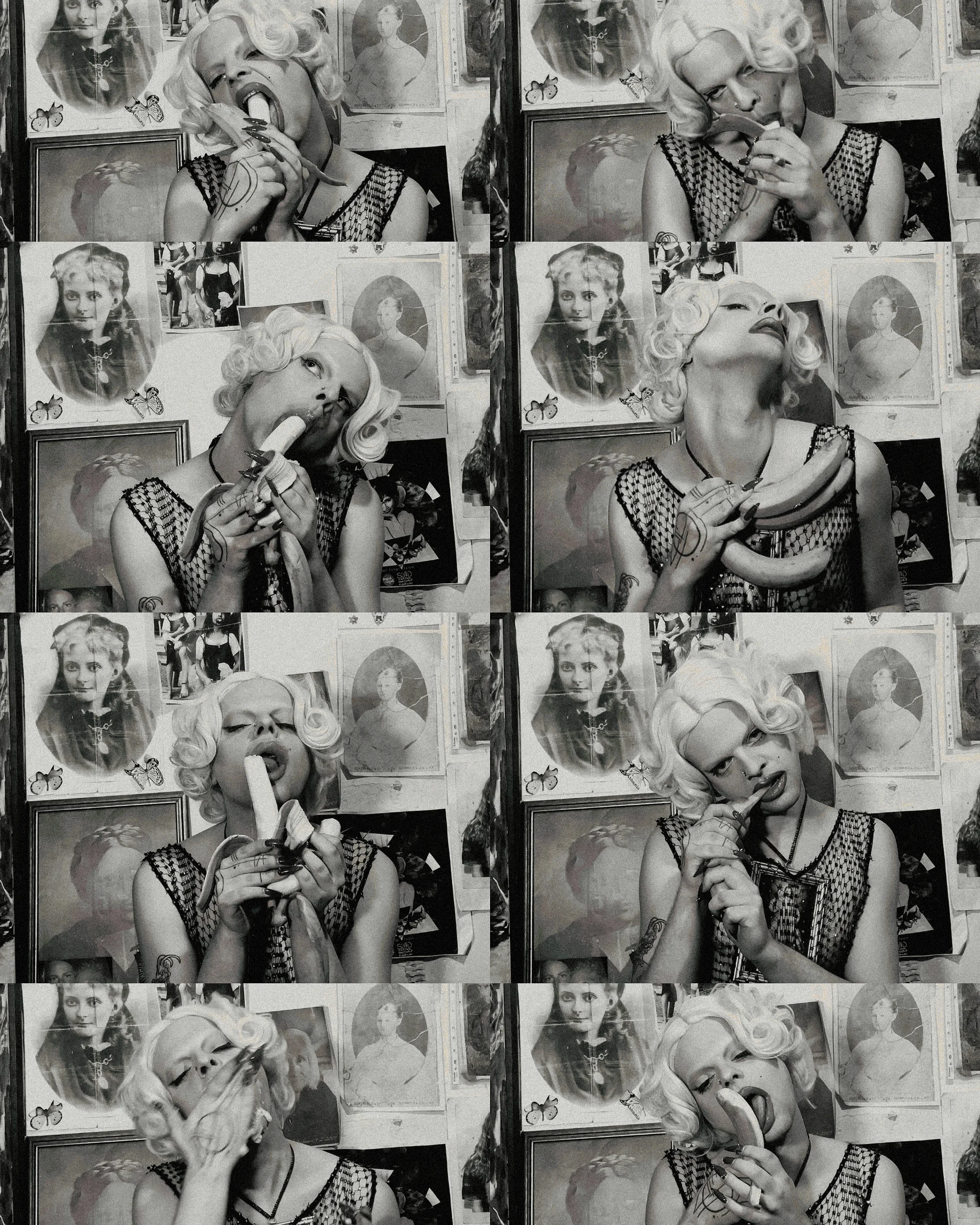
In a looped performance for camera, the artist fellates a banana, turning a familiar sexual gesture into an overplayed image of desire, glamour and repetition.
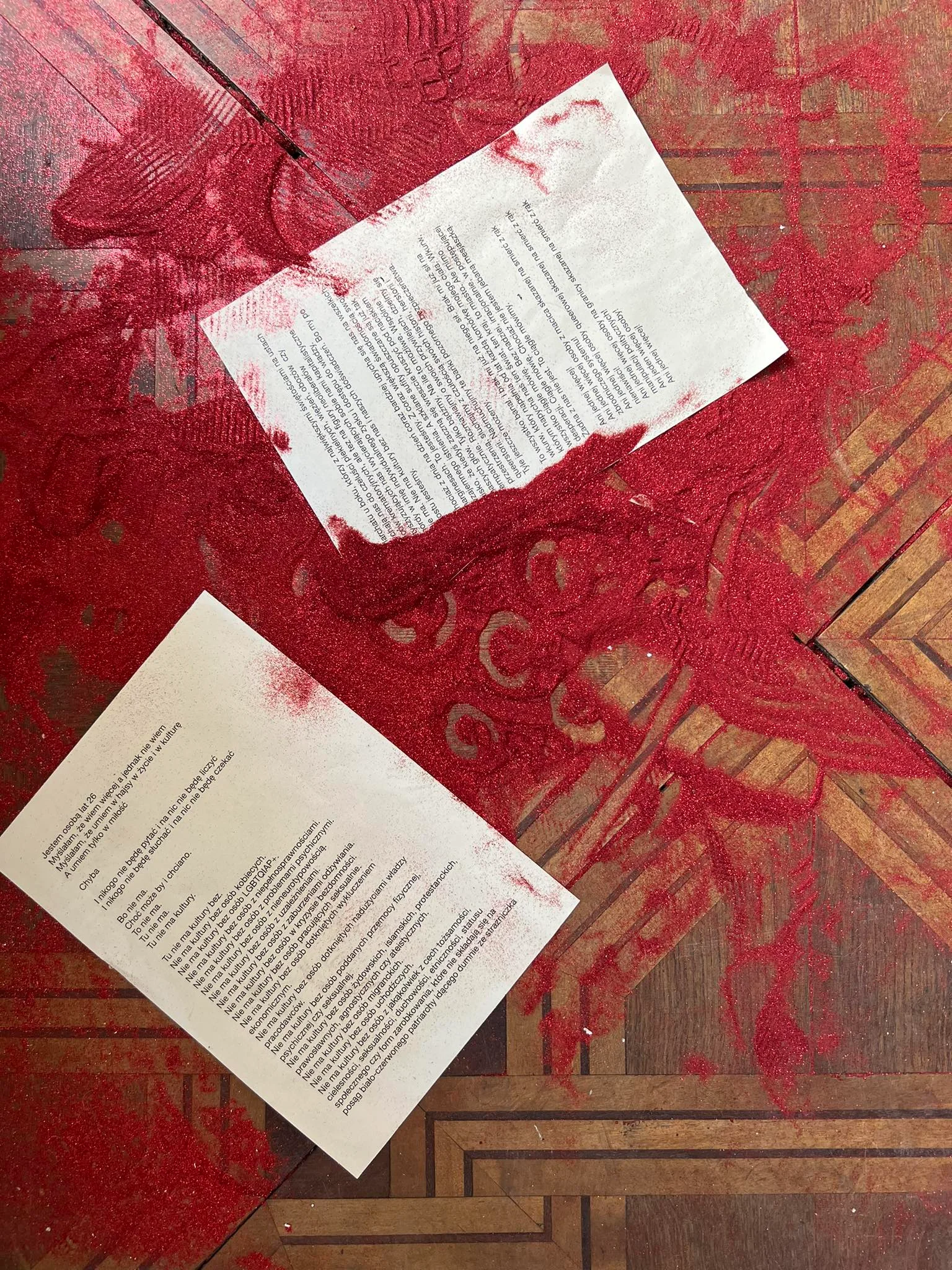
A closing manifesto from Ave demanding a culture built with — and not at the expense of — those pushed to its margins.
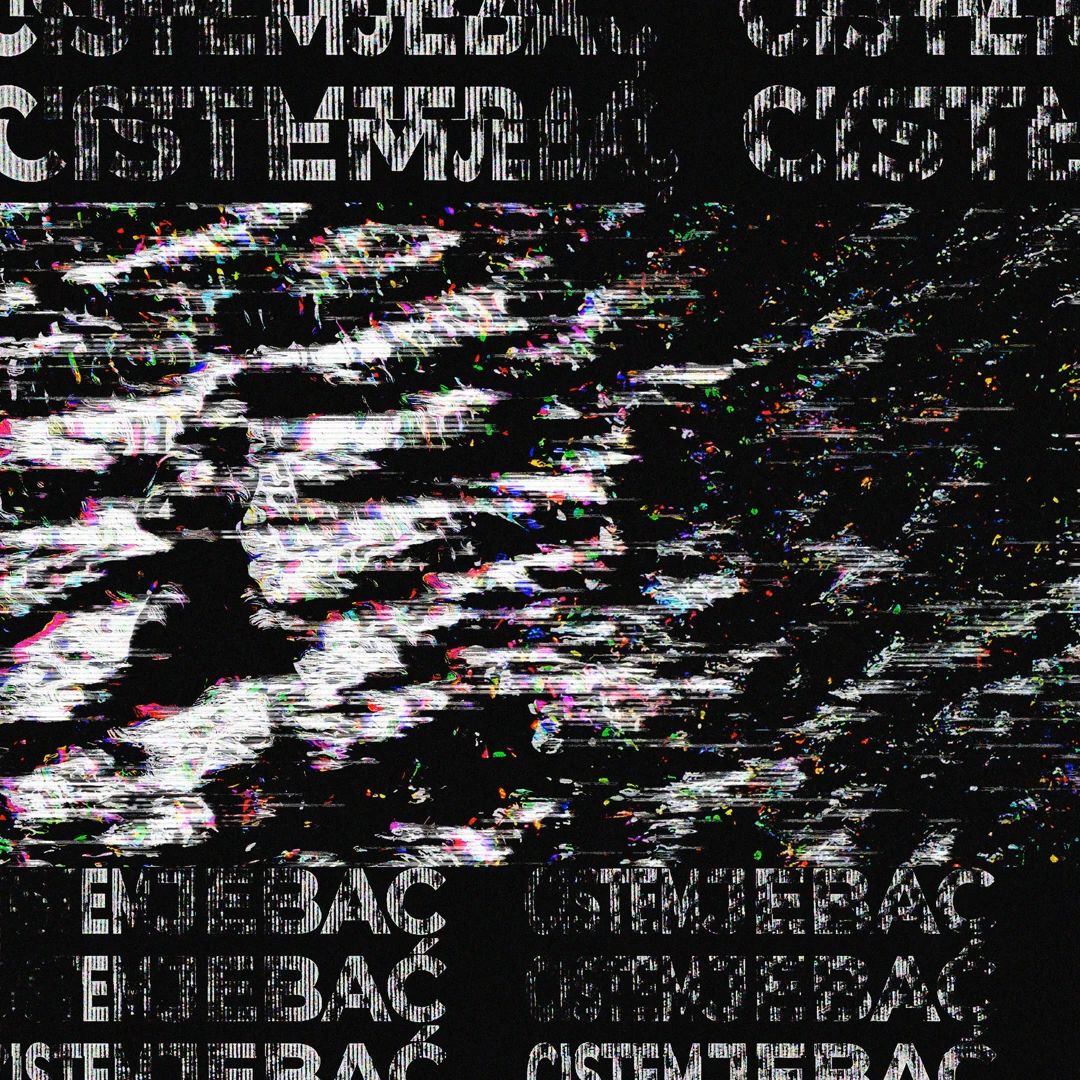
A queer and trans anthem of survival and refusal, blending spoken-word ferocity with industrial beats.
Photographic documentation of the exhibition space (2 plates)
The Last Supper opened with the artist feeding the audience pieces of a cake shaped as her own head. The performance then shifted into a reading of unpublished autobiographical fragments, moving through the exhibition and responding directly to works installed in the gallery. Presented as the finissage of I Just Wanted to Be an Icon, the piece moved from an edible self-image to autobiography spoken aloud, bringing the exhibition’s images back into relation with the artist’s own voice and presence.
Published on the occasion of the solo exhibition "I Just Wanted to Be an Icon". Rights to individual works and documentation remain with their respective authors and rights holders.