Fetus in Fetu
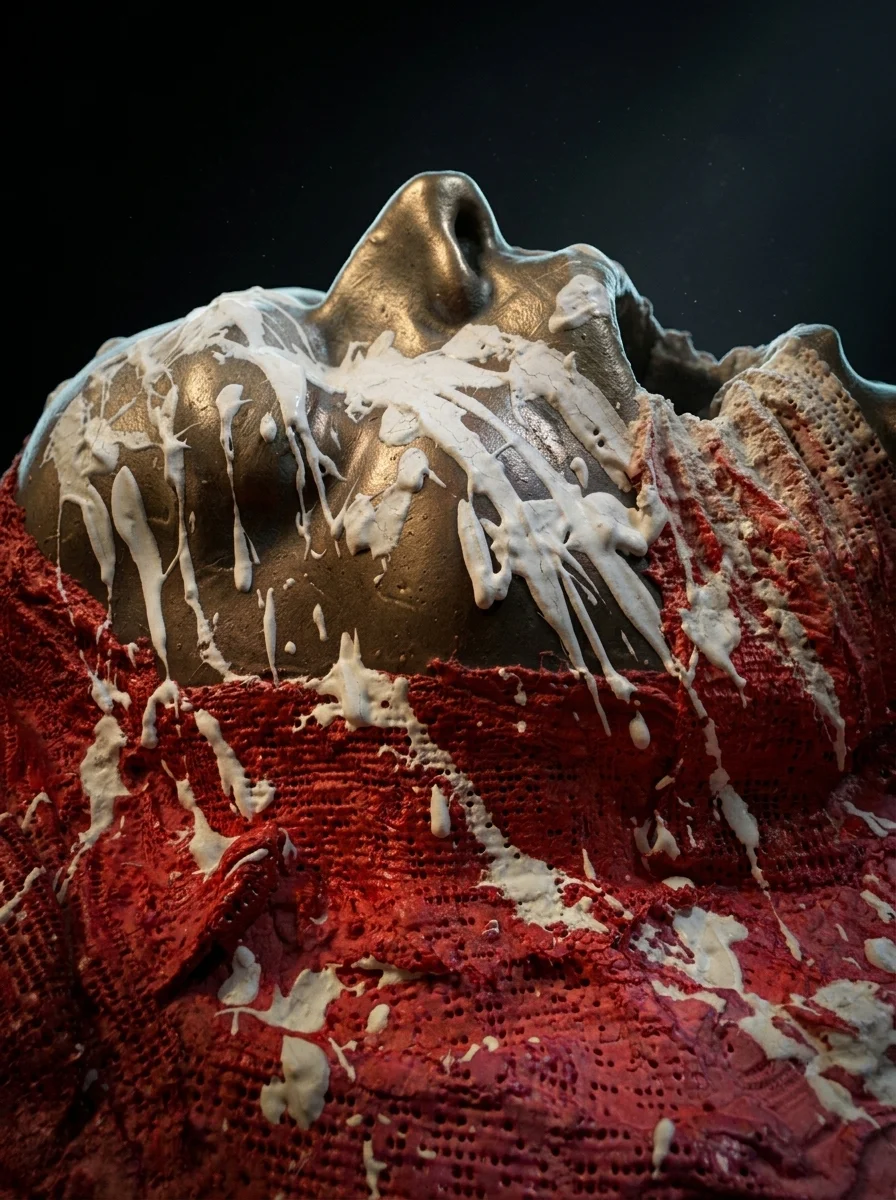
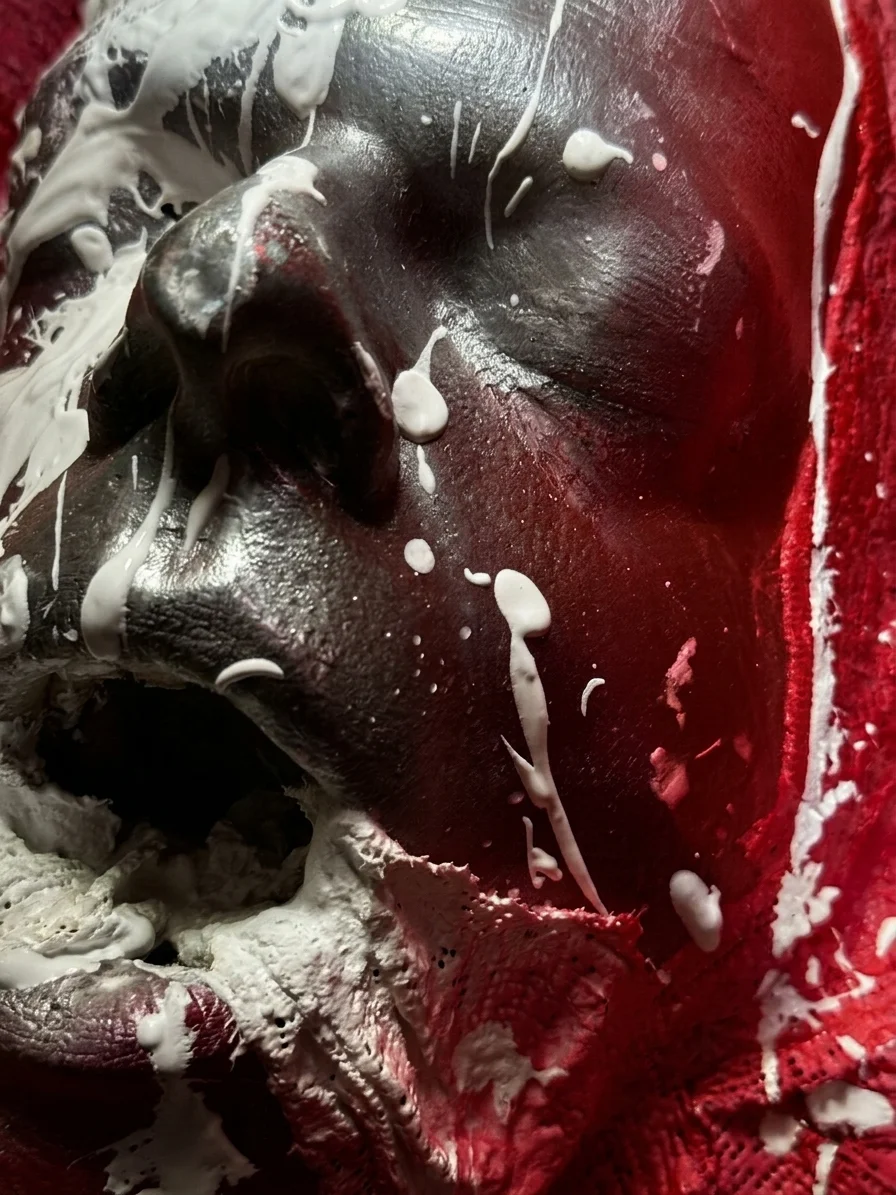
Faces are embedded and repeated until they begin to look less inserted into the objects than grown from within them.
Curatorial Summary
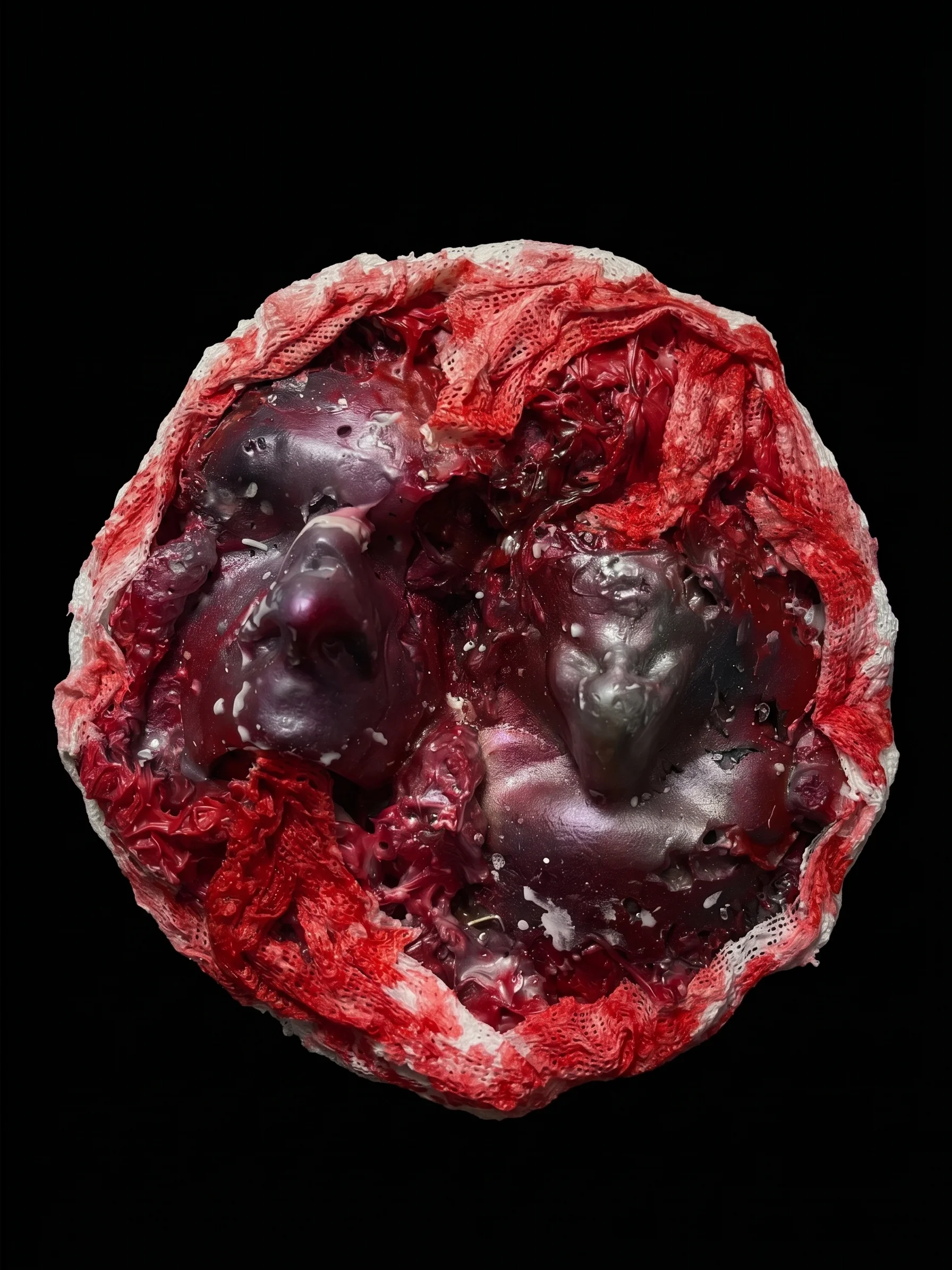
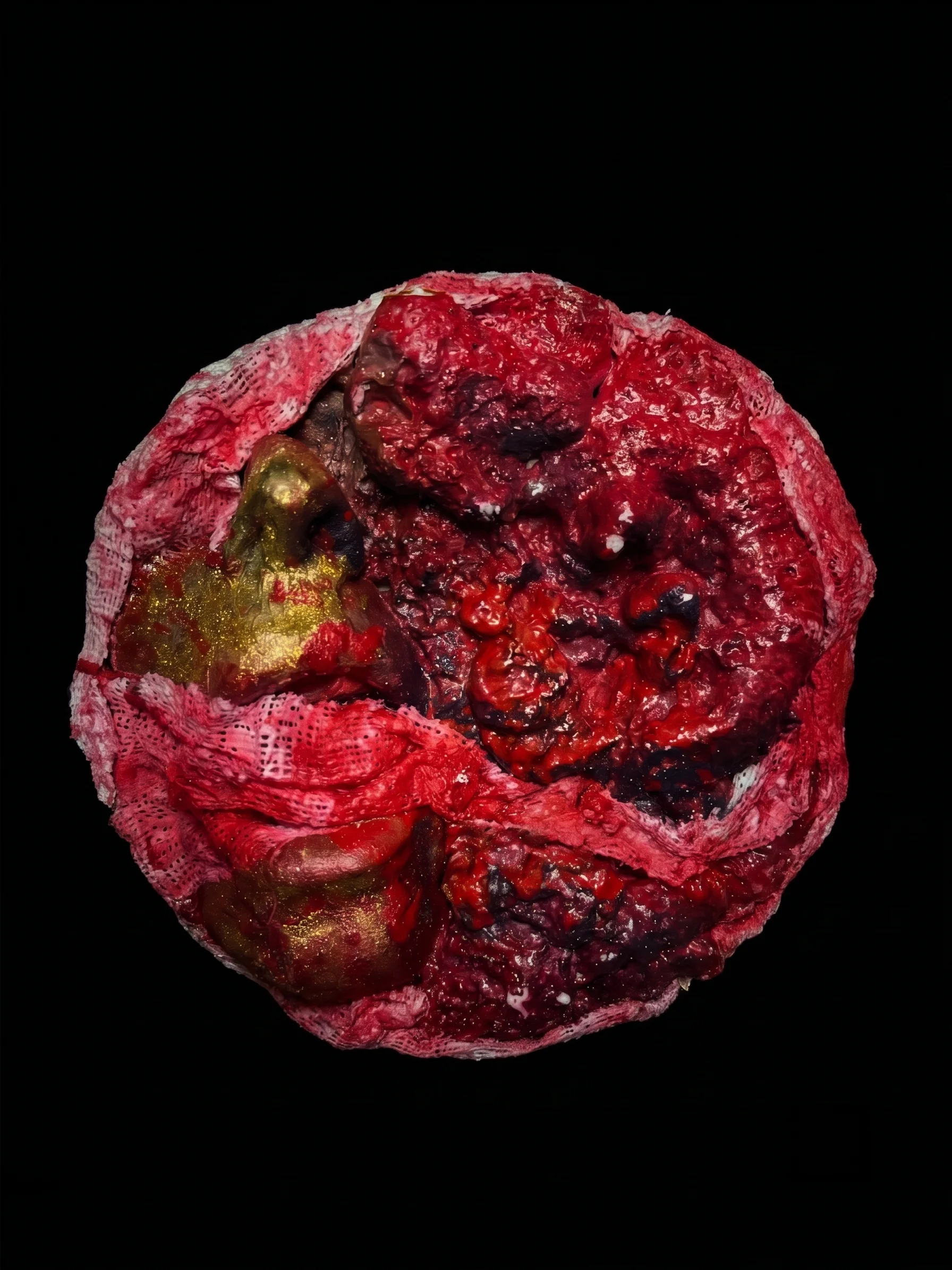
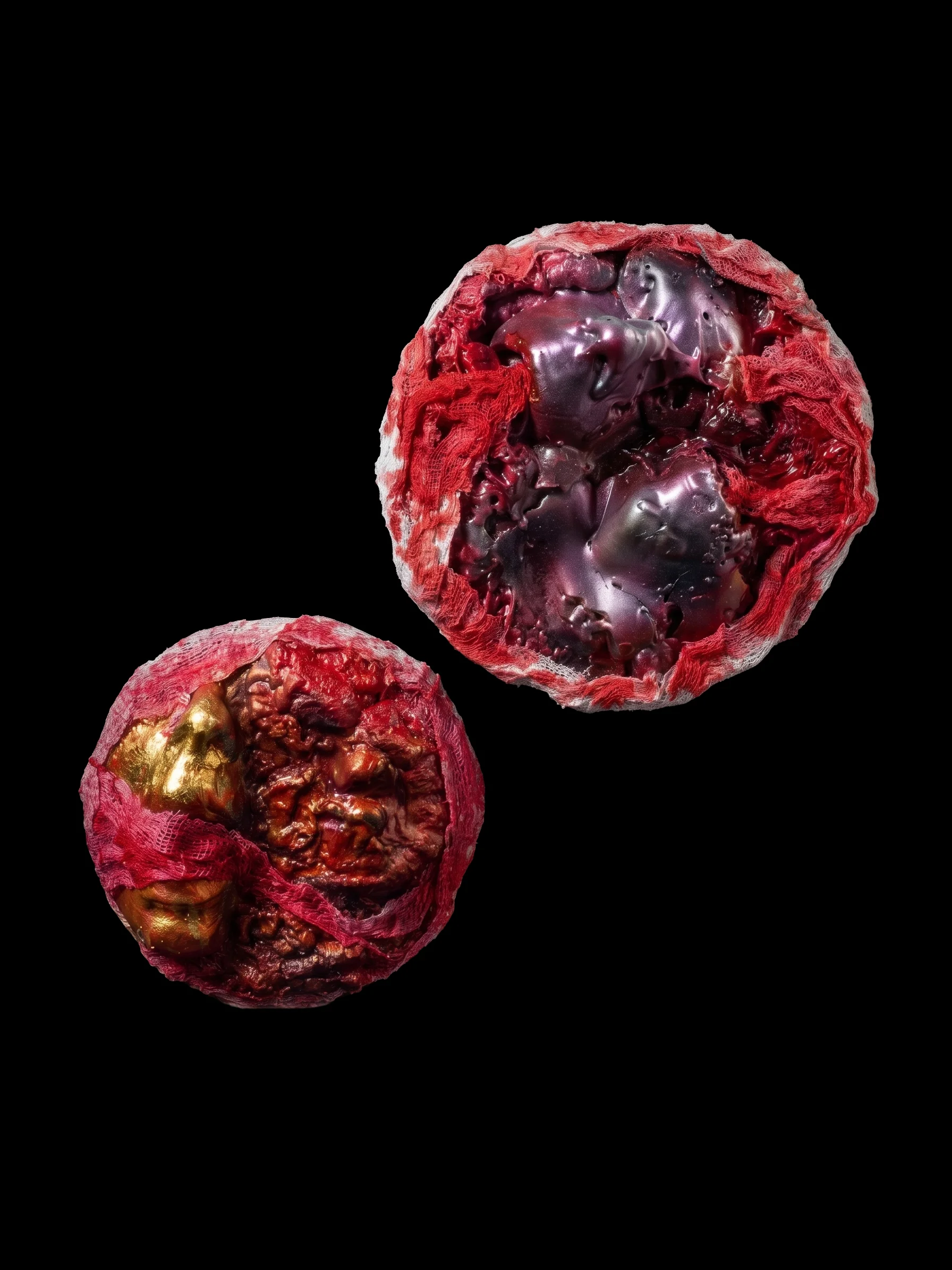
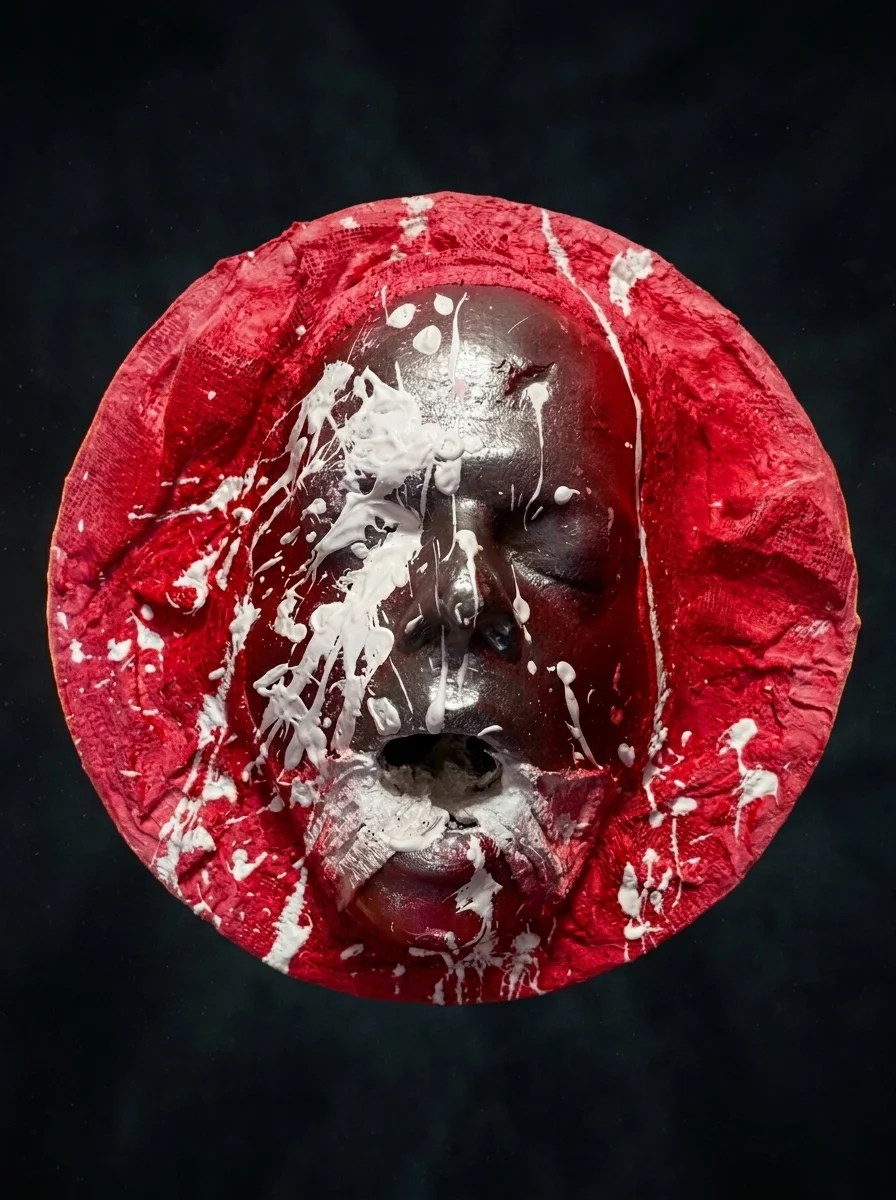
In Fetus in Fetu, faces appear from inside the objects rather than resting on their surfaces. Gauze, metallic skins and compact folds gather around recognisable features, pressing them deeper into the material. Some faces remain almost intact; elsewhere only fragments stay visible. As the motif repeats, it becomes increasingly difficult to decide whether the objects contain several bodies, several versions of one body, or a single form producing further faces.
The title introduces fetus in fetu as a structure of bodily containment, yet the works avoid anatomical reconstruction. Instead, they concentrate on what happens when one form remains lodged inside another. The surrounding material does not behave like a neutral shell. It changes the faces it holds, compressing their features and binding them to the objects that contain them.
Within Shekhinah in Labor, the series moves inward. Where other works rupture, spill or cross the edge of the image, Fetus in Fetu keeps its forms enclosed. This inward movement gives the objects something of the reliquary: a likeness is preserved, although there is no complete body to which it can confidently be returned.
Repetition makes that uncertainty more pronounced. A face appears again in another fold, at another scale, partially obscured or newly formed. Eventually the distinction between portrait and matter begins to collapse. The object no longer seems to carry an image placed inside it; it appears capable of generating the image itself.
artist
statement
Before I was born, I had already been imagined as a girl.
That fact stayed with me while I was working on Fetus in Fetu. I kept thinking about how an image of a body can exist before the body itself appears — how something can already be anticipated, pictured and given form in somebody else’s imagination.
I approached the objects through the faces. I pushed them into cavities, allowed material to gather around them and repeated them until they began to lose the clarity of individual portraits. Parts disappear; others remain sharply recognisable. I wanted the faces to belong to the objects rather than look attached to them.
At some point, I stopped seeing them as portraits placed inside forms. They began to look as though the objects had produced them. That shift became the centre of the work for me.