Fallen Icons
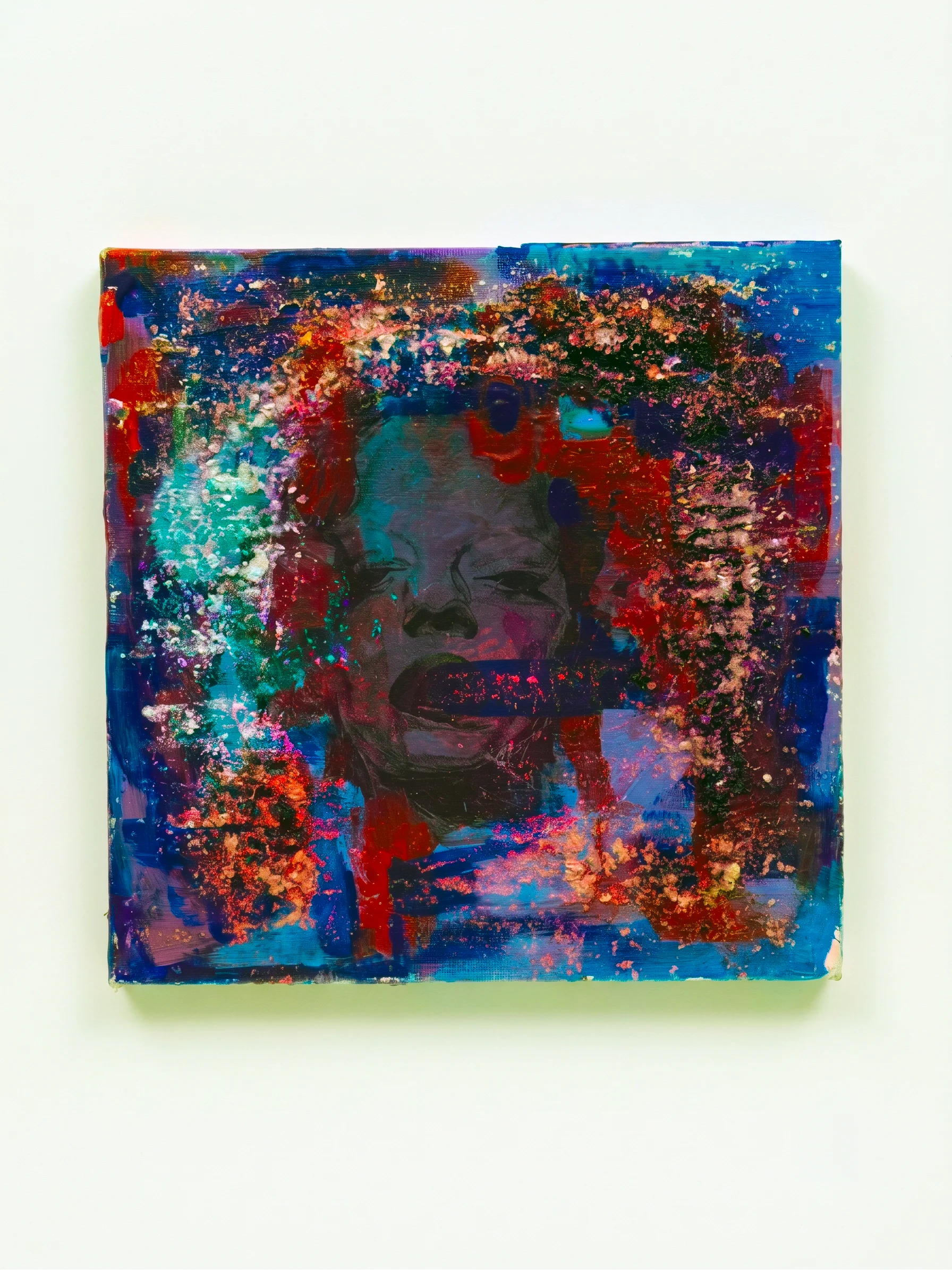
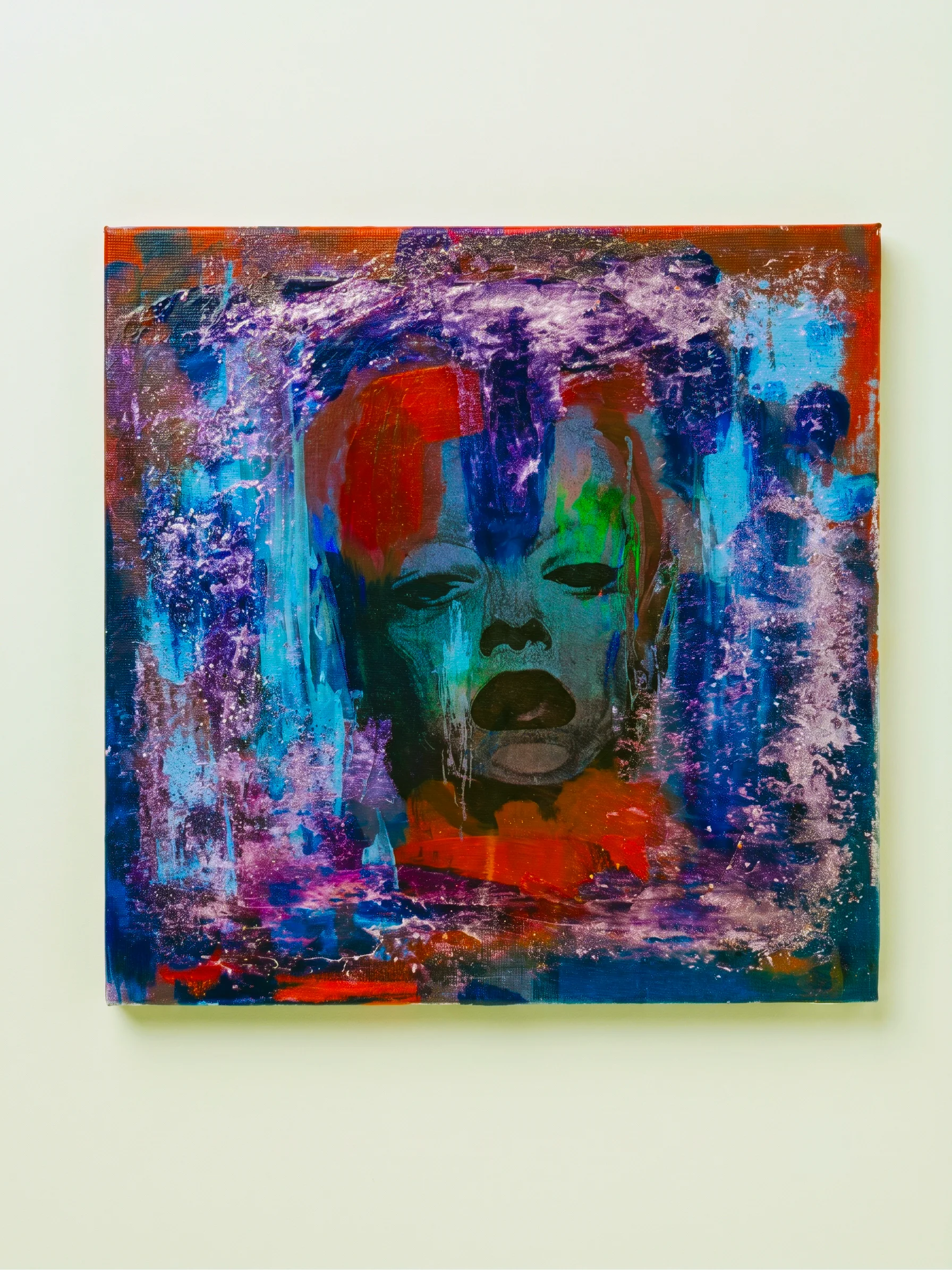
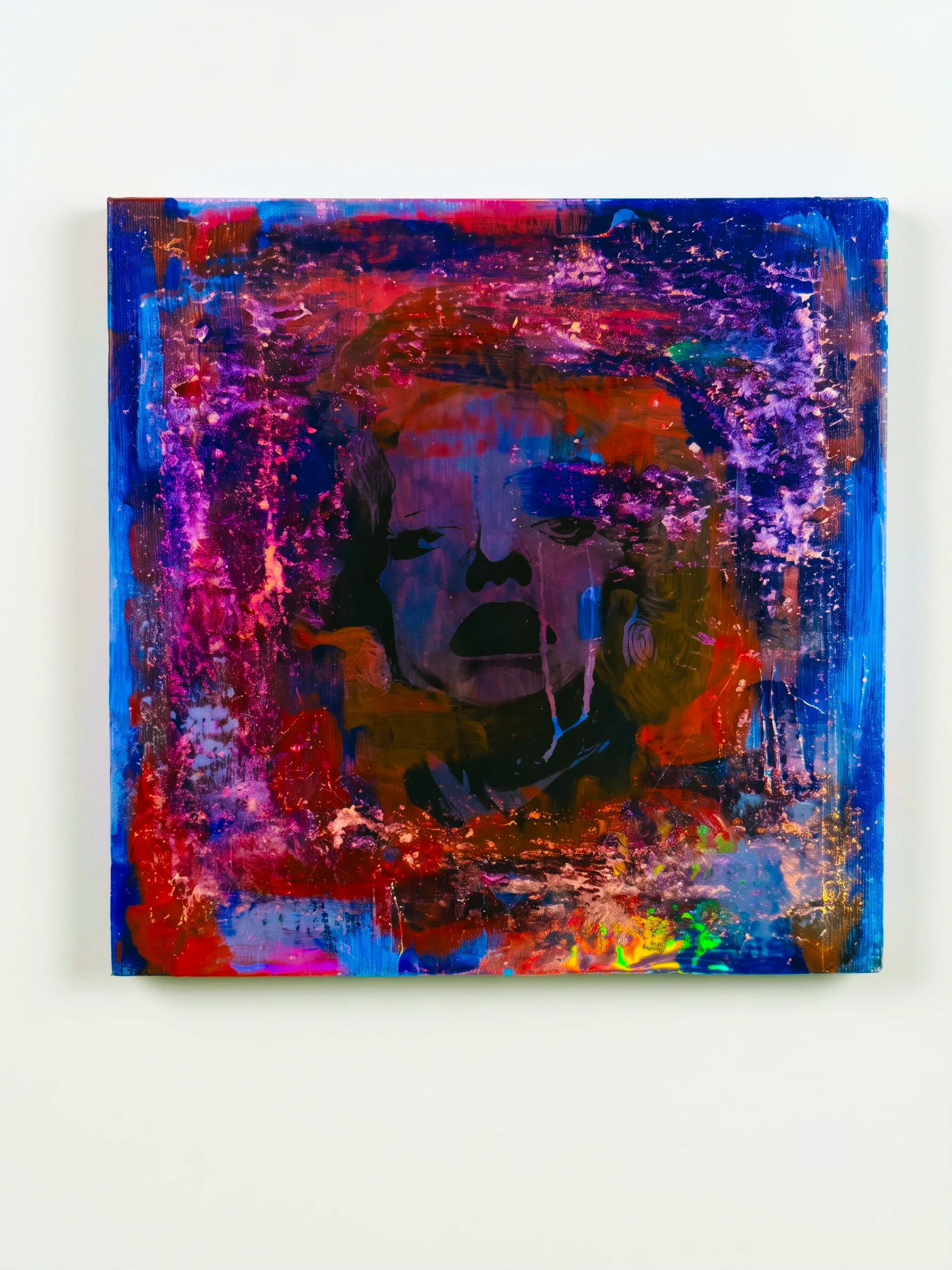
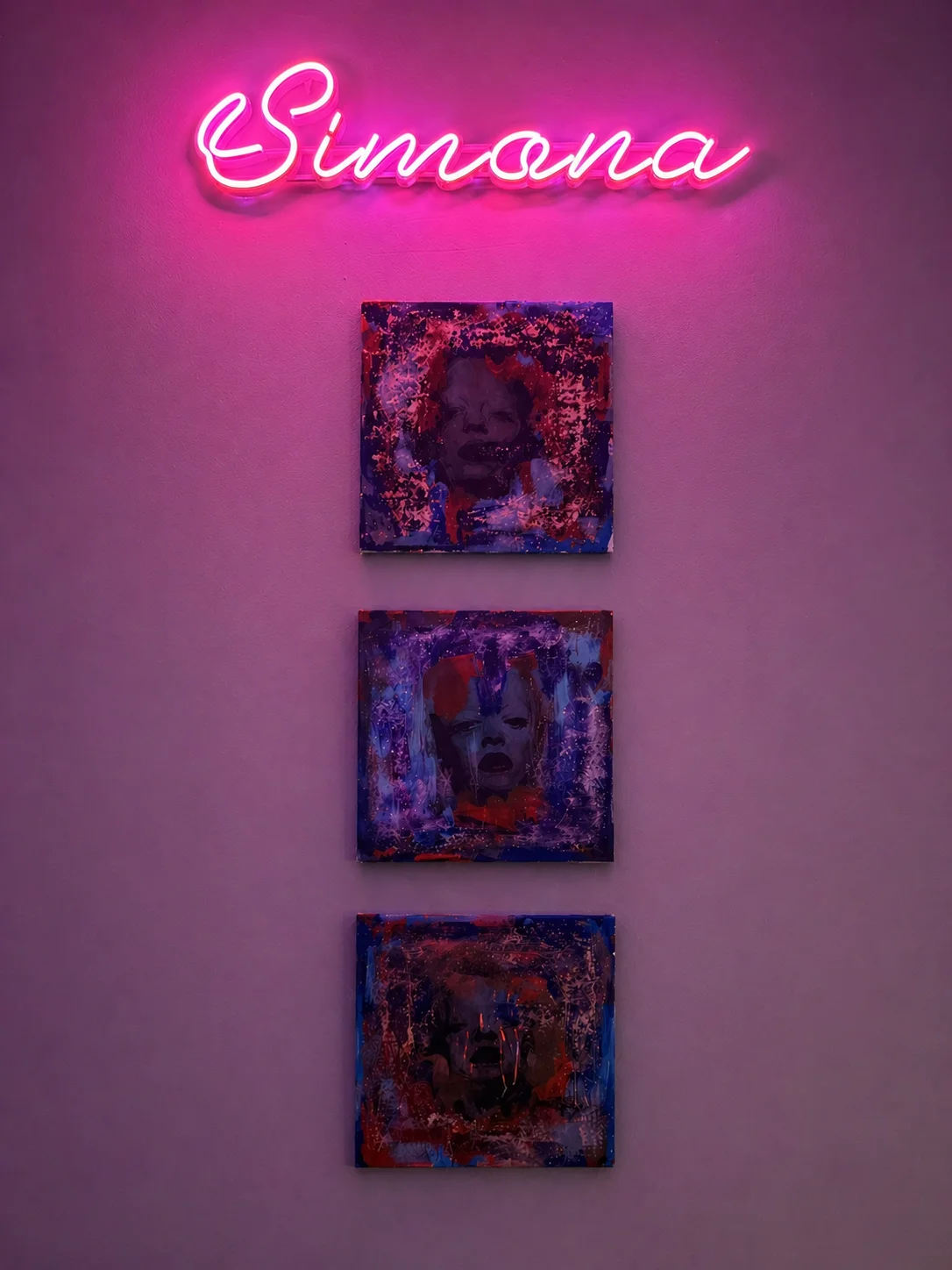
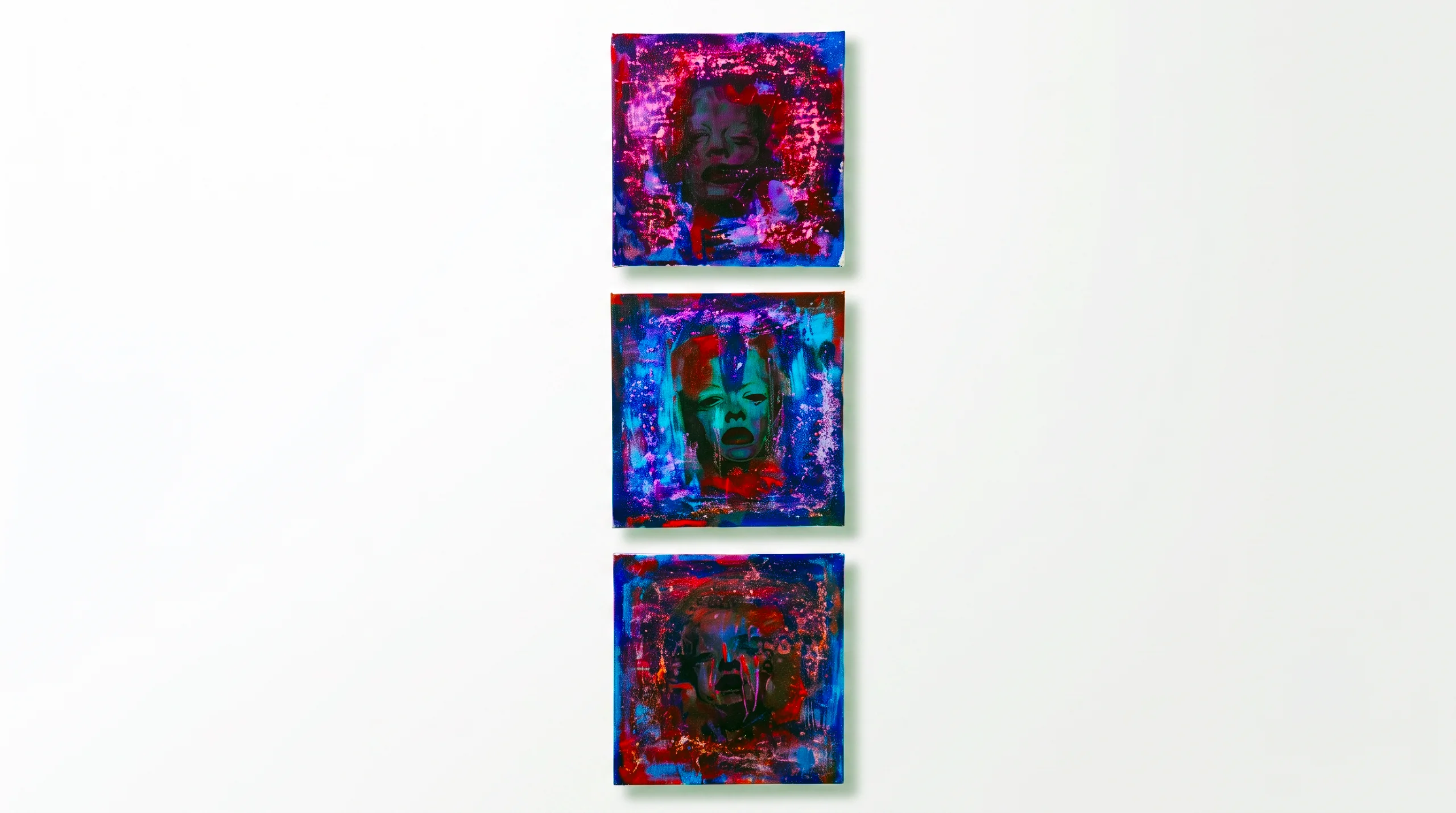
Three vertically arranged portraits repeat the codes of the Hollywood blonde, allowing glamour and distortion to sustain the icon without producing a definitive face.
Curatorial Summary
In “Fallen Icons,” three small portraits form a vertical montage of female expressions shaped by publicity photography and celebrity culture. Closed eyes, exposed teeth, an open mouth, and a face partially absorbed by paint appear as parallel modes of public performance rather than stages in a fixed chronology. The gaps between the canvases operate as cuts, while saturated colour, glitter, abrasion, and smearing draw the viewer toward surfaces that resist a stable reading of the faces they carry. Echoing the repeated circulation of Marilyn Monroe’s image, the work treats pop femininity as an inherited visual script whose familiarity depends on continual variation. Glamour persists within the disrupted surfaces, but no single portrait becomes an original or grants complete access to the person it appears to represent.
artist
statement
“Fallen Icons” consists of three small portraits arranged vertically and separated by narrow gaps. Each presents a different version of the Hollywood blonde: a face shaped by publicity photography, cinema, and the circulation of celebrity images. The expressions remain ambiguous, suspended between pose, pleasure, distress, and theatrical excess. Each portrait appears familiar before it becomes identifiable.
The vertical arrangement evokes both a film strip and a column of devotional images. The spaces between the canvases function as cuts, connecting the faces without fixing them within a chronology. The title draws together the religious icon, sustained through ritual repetition, and the pop-cultural icon, produced through the repeated circulation of a recognizable face. In both cases, the image promises proximity while making the person increasingly difficult to separate from her reproductions. No portrait can claim the position of the original.
The work draws on the afterlife of Marilyn Monroe’s image in Warhol’s serial portraits, where glamour, repetition, material error, and mortality occupy the same surface. It also recalls the tabloid production of the “fallen celebrity,” in which a woman’s expressions are arranged into a consumable narrative of success, crisis, and disappearance. The three panels interrupt this logic. They offer no dates, causes, or stable distinction between performance and confession.
Layers of blue, pink, violet, and red move across the faces through glitter, abrasion, smearing, and repeated applications of paint. The surfaces attract the gaze while interfering with recognition. They resemble damaged photographic material and digital images altered through successive copies. Paint enters the reproduced face as interference and revision, producing another image rather than uncovering a person concealed beneath it. Glamour persists inside the damage, while distortion becomes part of the icon’s appeal.
Within my trans-femme practice, the portraits address the desire to enter an inherited archive of femininity alongside the impossibility of fitting its images completely. The icon offers a script through which a body can become visible and desirable, while the conditions of recognition expose every departure from the expected pose. Seriality multiplies the ways the figure can appear, holding identification and resistance within the same sequence.
“Fallen” describes the loss of a secure pedestal, an untouched likeness, and a coherent story that could separate the person from her reproductions. The icons remain present, seductive, and materially disrupted. What collapses is the promise that enough images could ever produce a complete and accessible person.
exhibition dates