Ave I
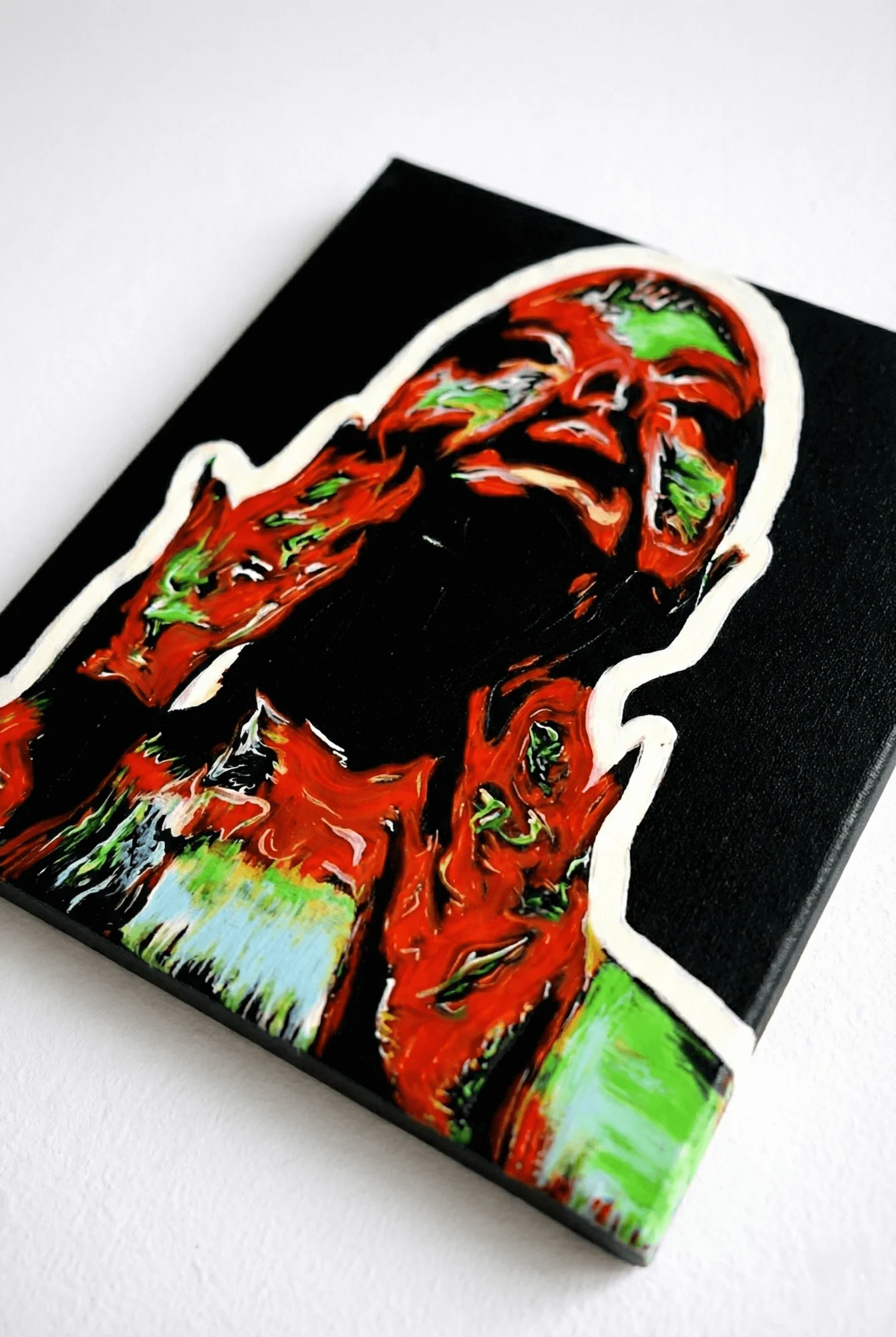
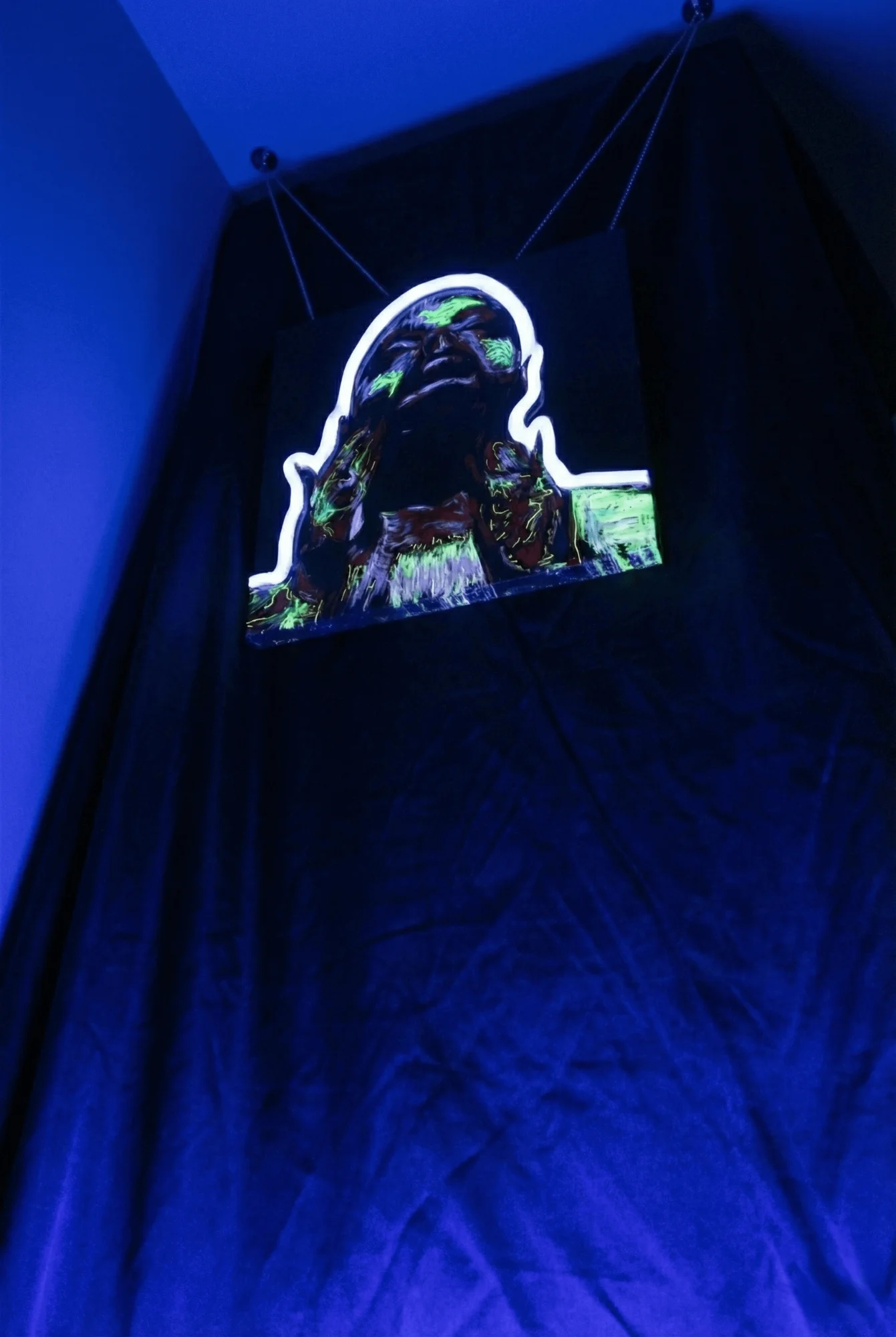
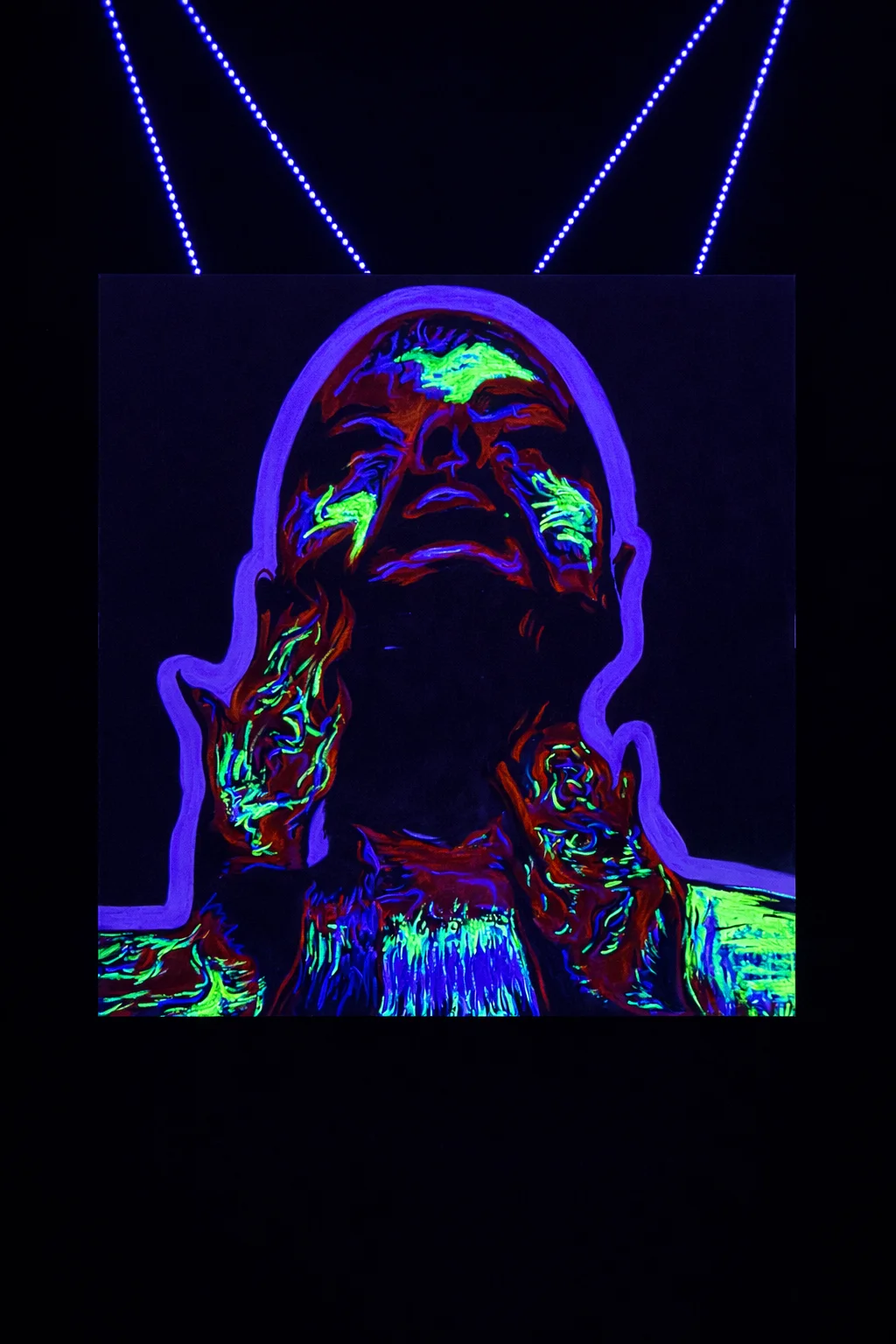
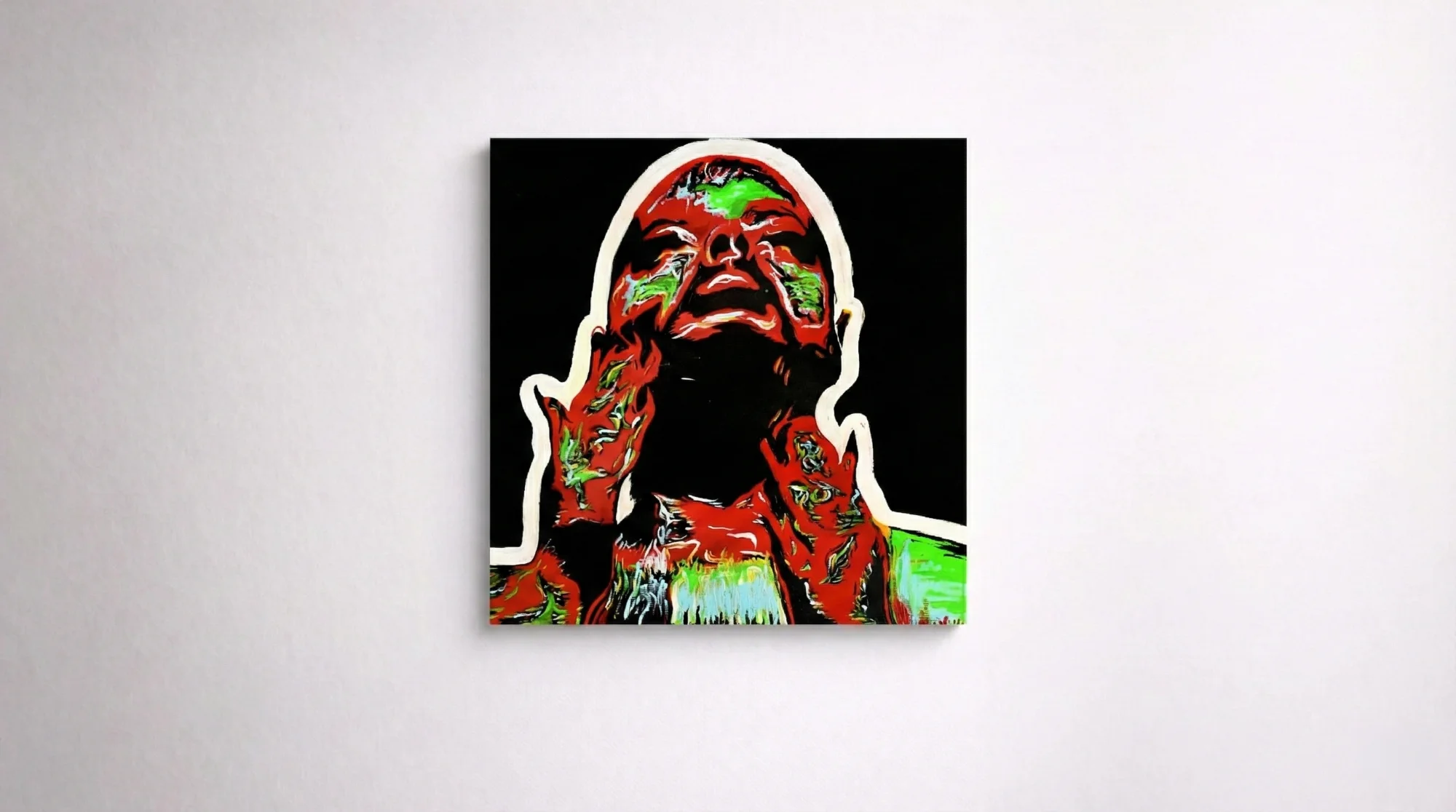
A fluorescent afterimage of performance in which religious rapture becomes a graphic study of bodily pressure, queer exposure, and collapse.
Curatorial Summary
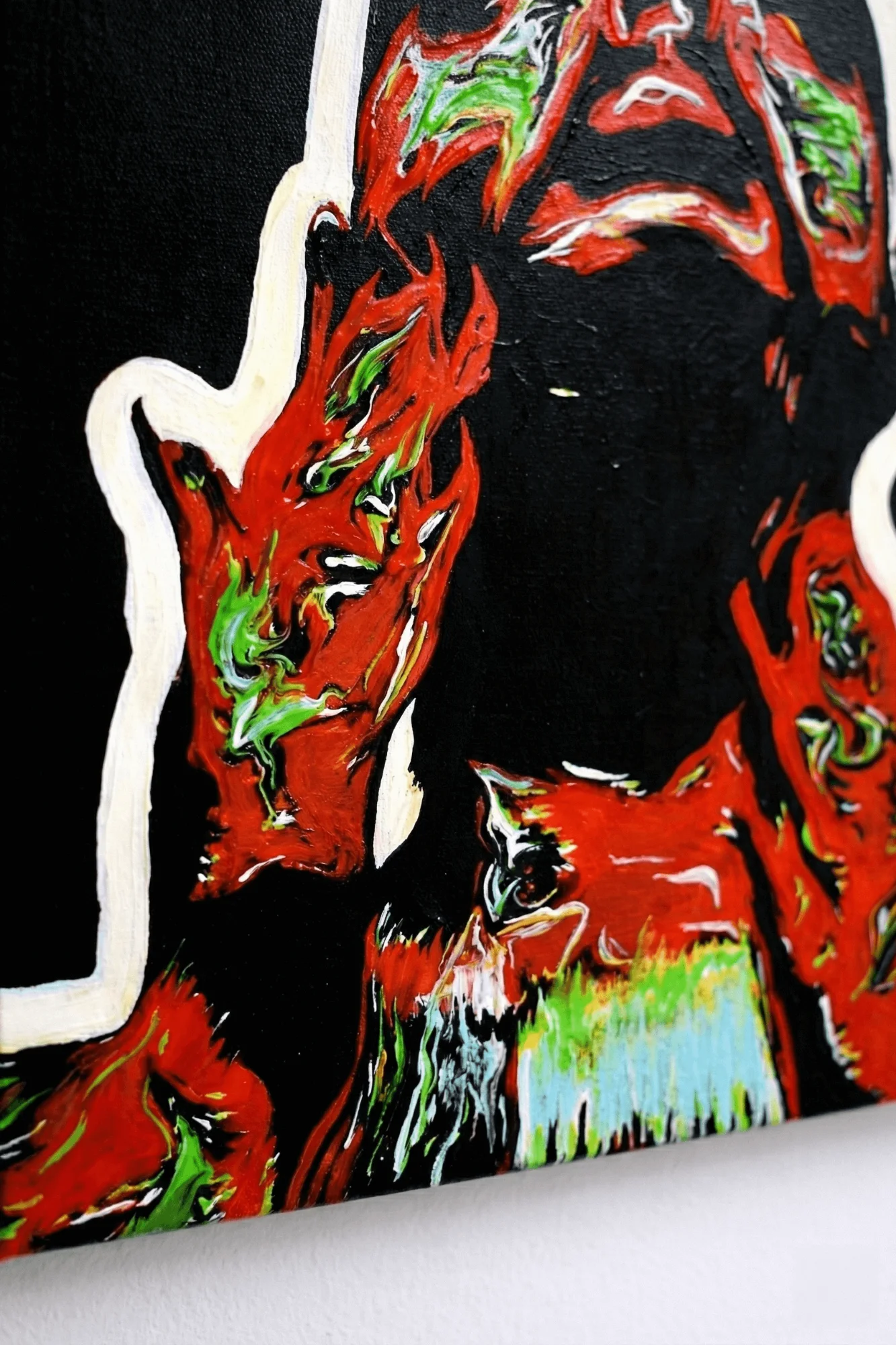
Emerging from a black ground and enclosed by a stark white contour, the figure carries the residue of a live gesture: head thrown back, mouth open, hands pressed against the face and neck. Flat planes of red and toxic green, heavy black outlines, and a poster-like reduction of depth transform the iconography of religious ecstasy into a scene of physical saturation. The body remains suspended between theatrical display and physiological strain, shaped by the pressure placed on a trans-femme figure to become visible and legible. The painting condenses the aftermath of performance into an autonomous image, preserving the tension that continues after the public gesture has ended.
artist
statement
I return to performance to examine what remains of a live gesture once it has passed into an image. The figure emerges from blackness as the residue of movement: head thrown back, mouth slightly open, hands clenched against the face. The gesture holds uplift, collapse, pleasure, and suffocation in a single bodily tension. The image captures a point at which the body can no longer contain what moves through it.
The work draws on the iconography of religious ecstasy, particularly the theatrical rapture of Bernini’s Teresa, and translates it into an acidic, radioactive palette of toxic greens, bruised reds, and scorched whites. Transcendence is pulled into muscle, nerve, and burning skin. Ecstasy becomes a condition of sensory and physiological saturation, shaped by the pressures placed on a trans and femme body: the demand to remain visible, legible, desirable, and available while containing the effects of that exposure.
The distorted figure is closer to Bacon’s unstable bodies than to devotional representation. Paint disrupts the face and prevents the gesture from settling into a readable expression of beauty or suffering. The fluorescent palette carries traces of pop imagery, commercial brightness, and artificial attraction, while the surface retains abrasion, leakage, and physical strain. The work develops through this tension between becoming an image and resisting the smoothness expected of one.
Theatricality remains central to the gesture. Its exaggeration does not conceal an authentic state underneath; it gives that state a form. Drag, grotesque distortion, and excess operate as methods through which bodily knowledge is produced and communicated. Artifice makes the pressure visible. Every element is heightened, while the pose, colour, and degree of distortion remain carefully controlled.
Within my practice, the image functions as a mutation of performance: a later form shaped by bodily memory and by the distance separating the event from its representation. Fidelity to the original action matters less than the affective residue it leaves behind. The work holds the atmosphere that remains in the body after the audience has gone — when the public gesture has ended, yet its pressure continues to circulate through muscle, image, and memory.
exhibition dates