Autopietà
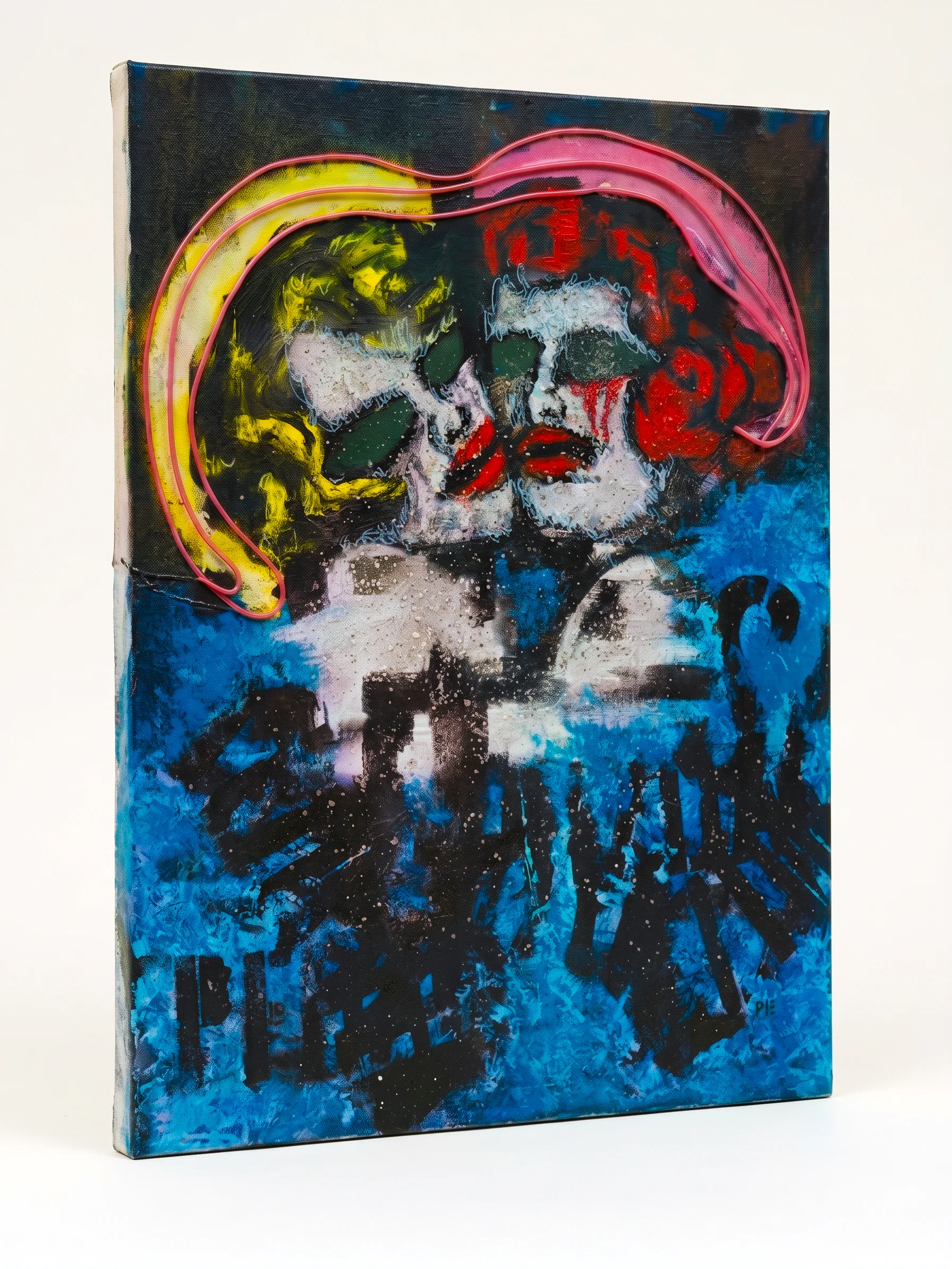
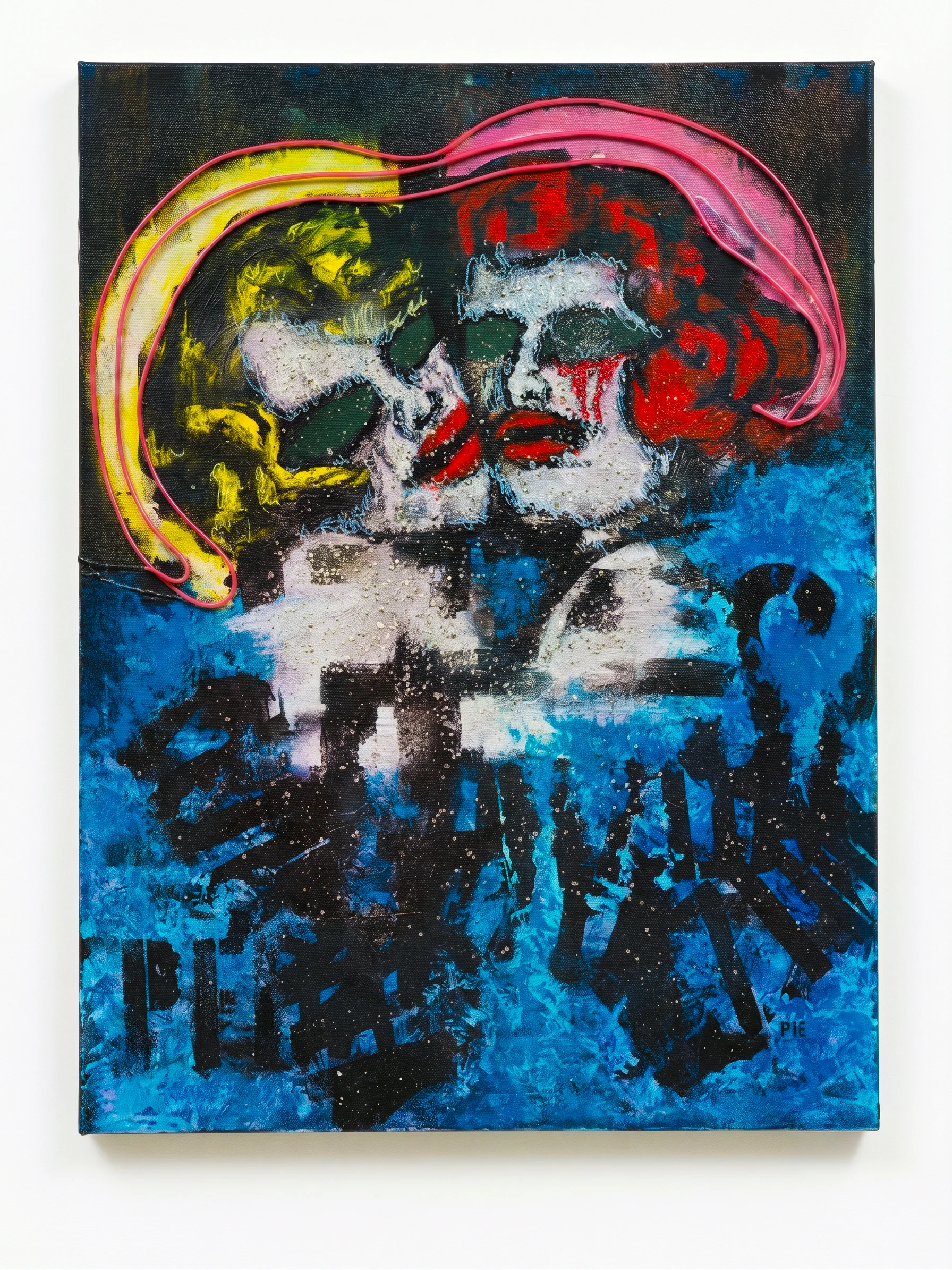
A doubled trans-femme self-portrait recasts the Pietà as an intimate encounter held beneath a shared neon halo and above a field of fragmented slurs.
Curatorial Summary
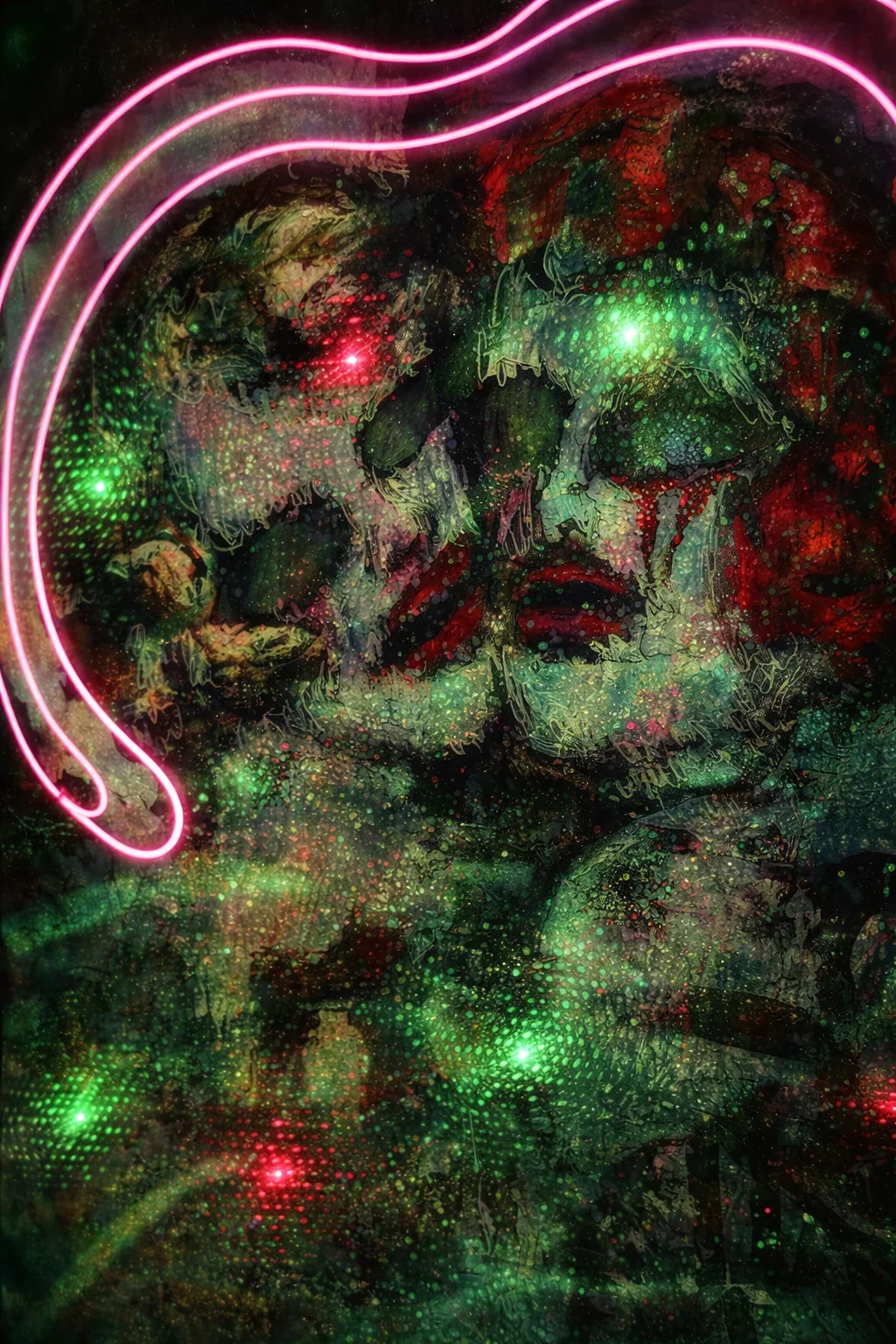
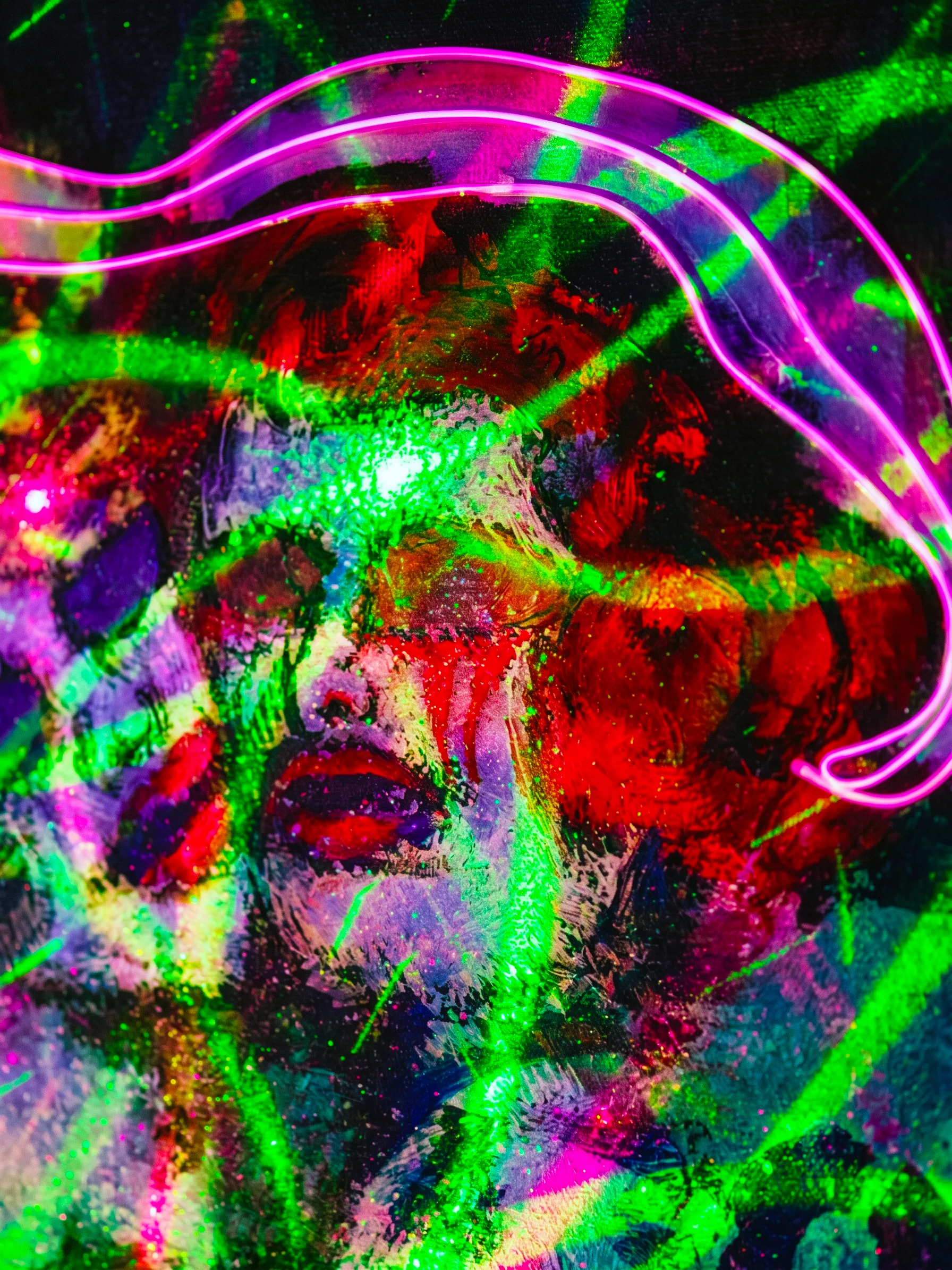
In “Autopieta,” two versions of the same face touch and partially merge, leaving their relation suspended between mourning, intimacy, and self-recognition. Neon aureoles form a shared circuit above them, extending beyond the painted surface and casting real light across the portrait. Red streaks, pale layers of paint, glitter, and abrasion disrupt the continuity of the faces, while black slurs overlap and lose legibility in the blue field below. The work transfers the emotional structure of the Pietà into a trans-femme self-portrait, placing an act of closeness within the continuing pressure of hostile language.
artist
statement
“Autopieta” begins with a doubled self-portrait. Two versions of the same face meet within a composition drawn from the emotional structure of the Pietà. The roles of mourner and mourned remain unsettled: either figure may be holding, grieving, kissing, or recognizing the other. Their contact folds care, desire, and loss into a single image without restoring a unified self.
The faces touch and partially merge, yet their boundaries remain visible. Red streaks, pale layers of paint, glitter, and abrasions accumulate across their skin, turning the portrait into a surface marked by repeated acts of looking and being looked at. The encounter offers no clear division between the body carrying the wound and the body witnessing it. Each appears through the other.
Neon aureoles form a shared circuit above the figures. Their electrical light transfers Catholic iconography into the material language of signage, performance, and queer nightlife. The halo is physically constructed, powered, and capable of going dark. Sacredness becomes conditional: produced through proximity, current, and the temporary illumination of two bodies remaining in contact.
Across the lower half of the painting, black slurs overlap, fragment, and sink into the blue field. Some retain enough of their original form to be recognized; others become dense visual noise. I use the insult as material without claiming to neutralize its violence. The words continue to press against the figures even as their syntax breaks down. They occupy the image as residues of language that has entered the body and cannot simply be removed from it.
“Autopieta” holds the tenderness of self-contact alongside the persistence of that language. The work neither separates care from injury nor decides which face supports the other. It allows one body to appear in several positions at once: as the person who is addressed, the person who answers, and the person who remains close enough to witness what the words have done.
exhibition dates