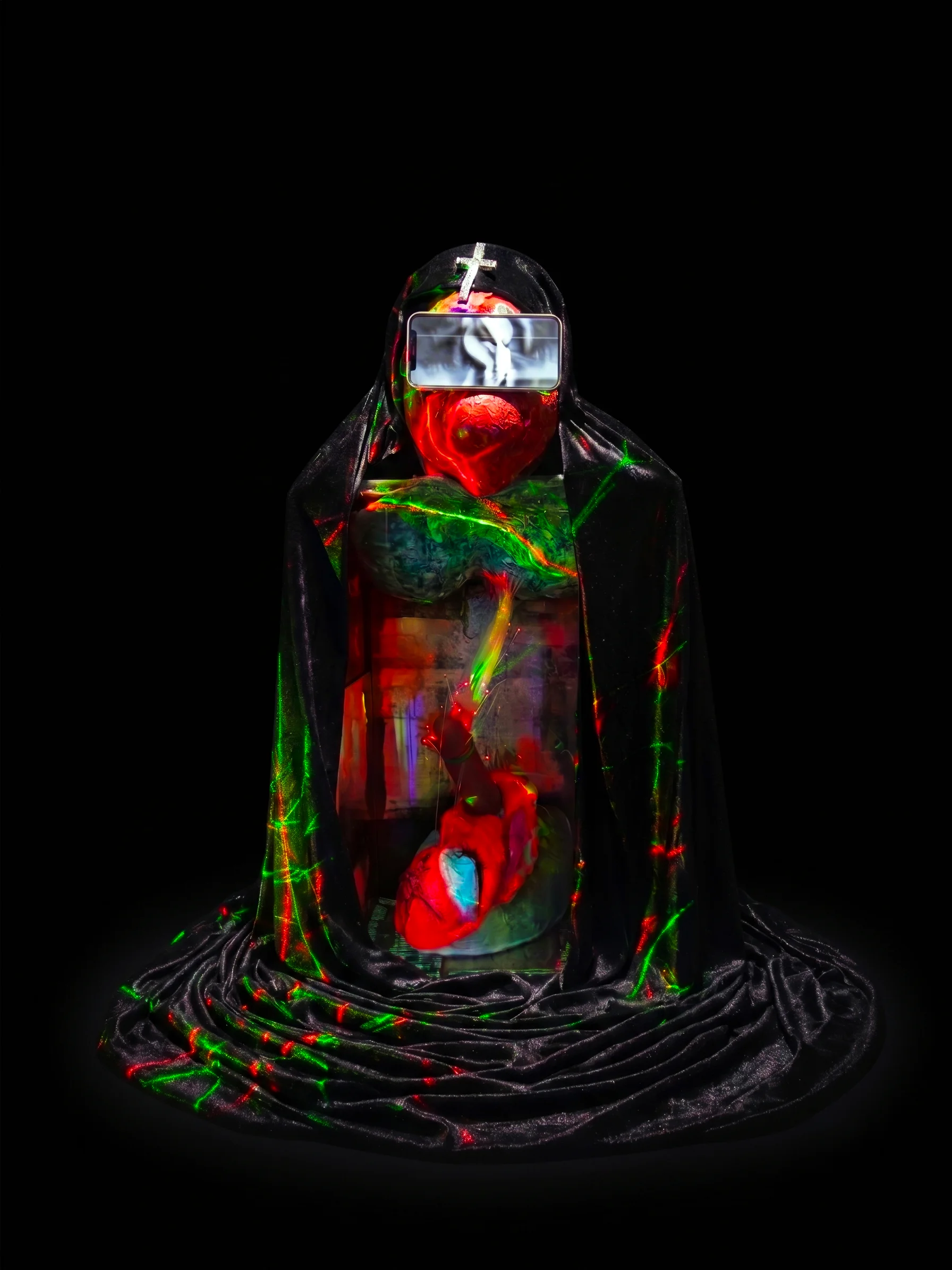
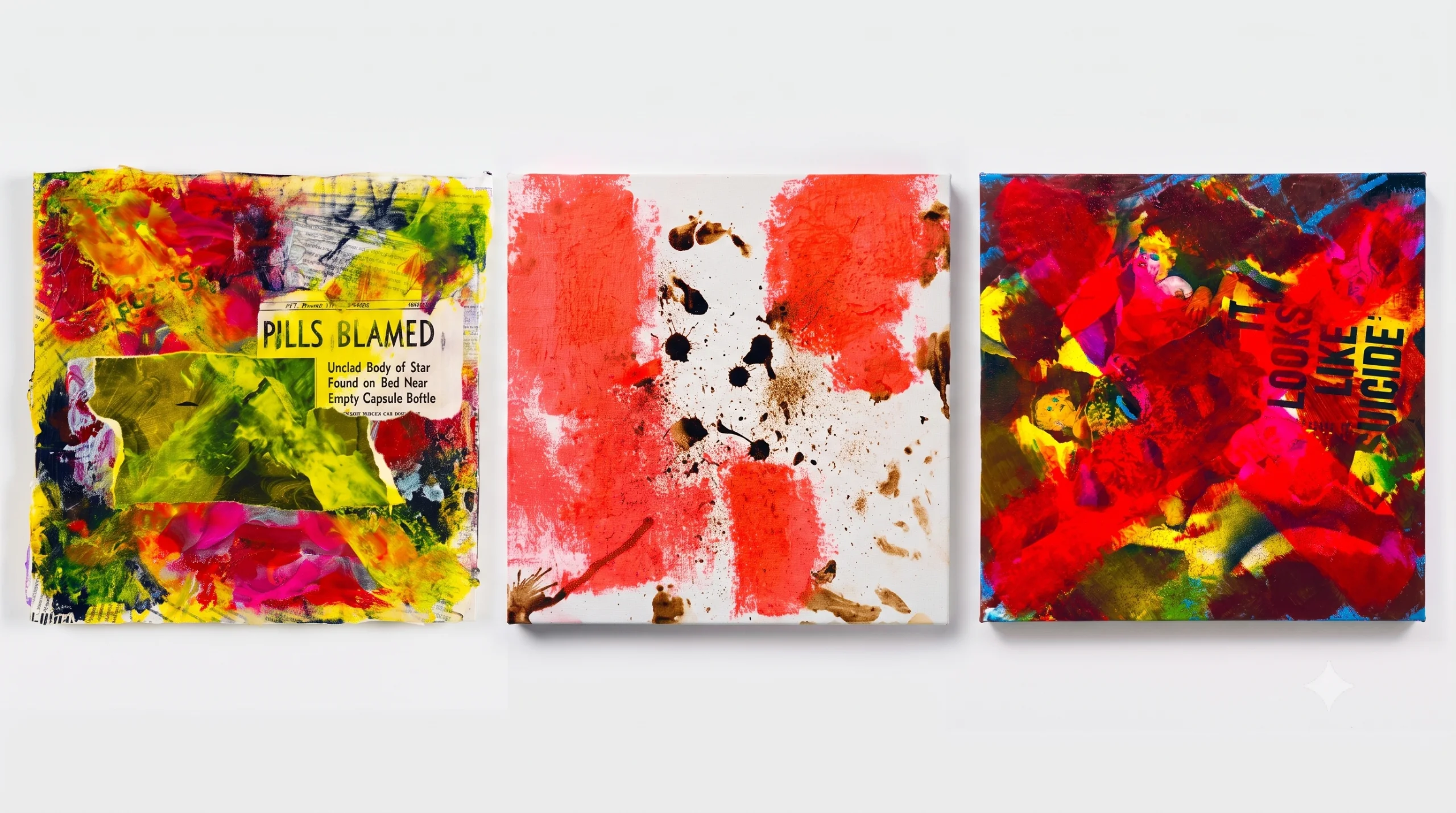
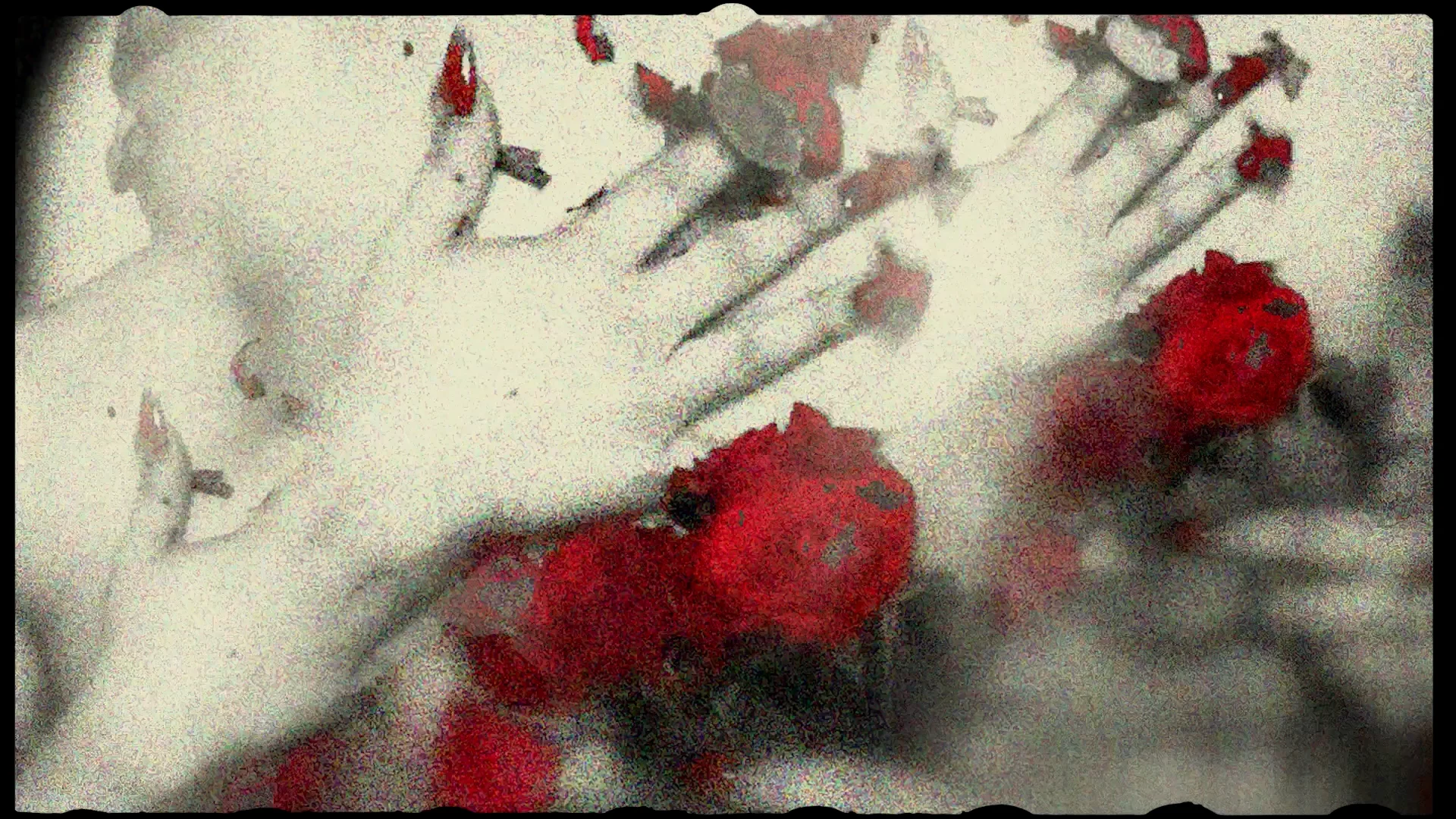
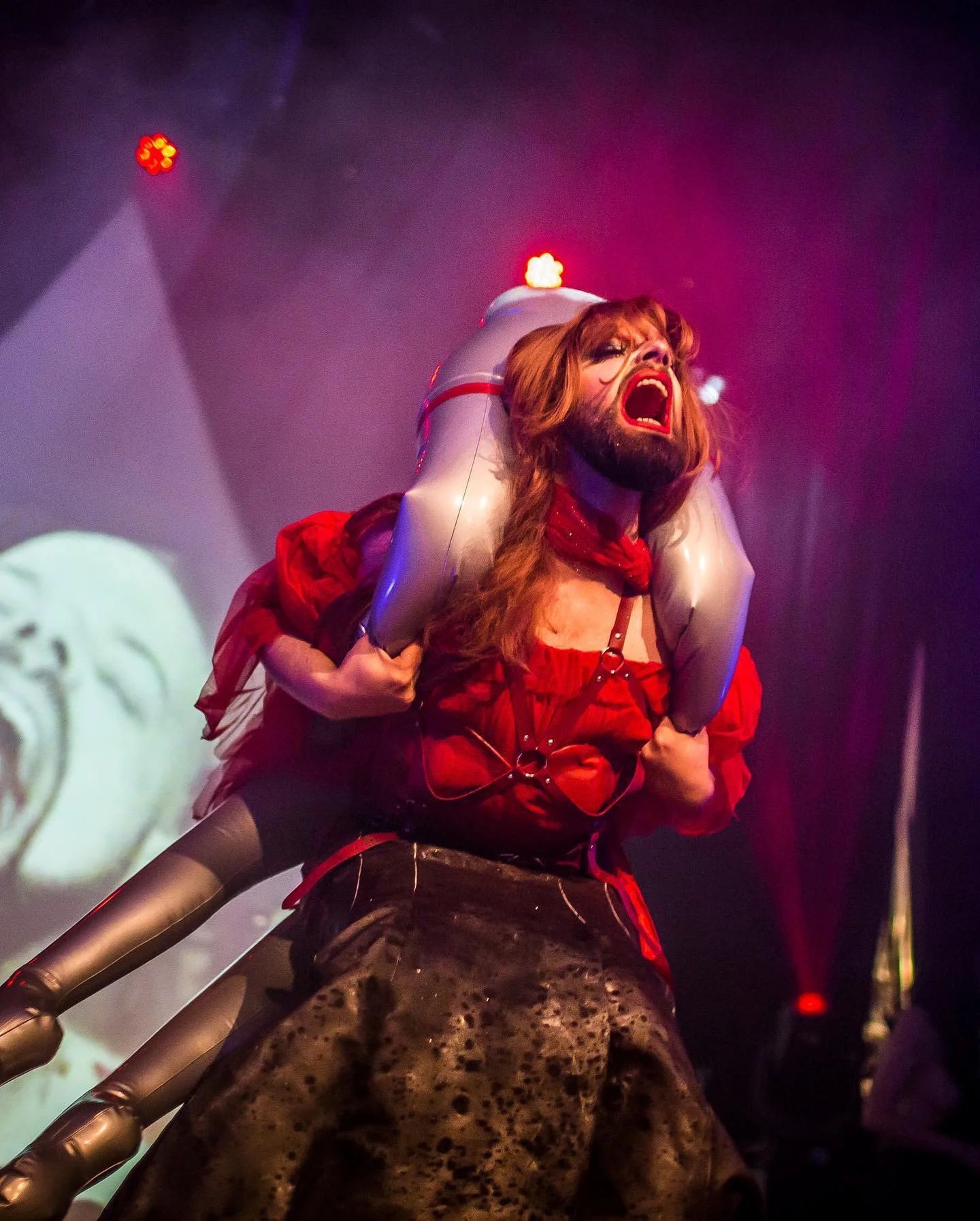
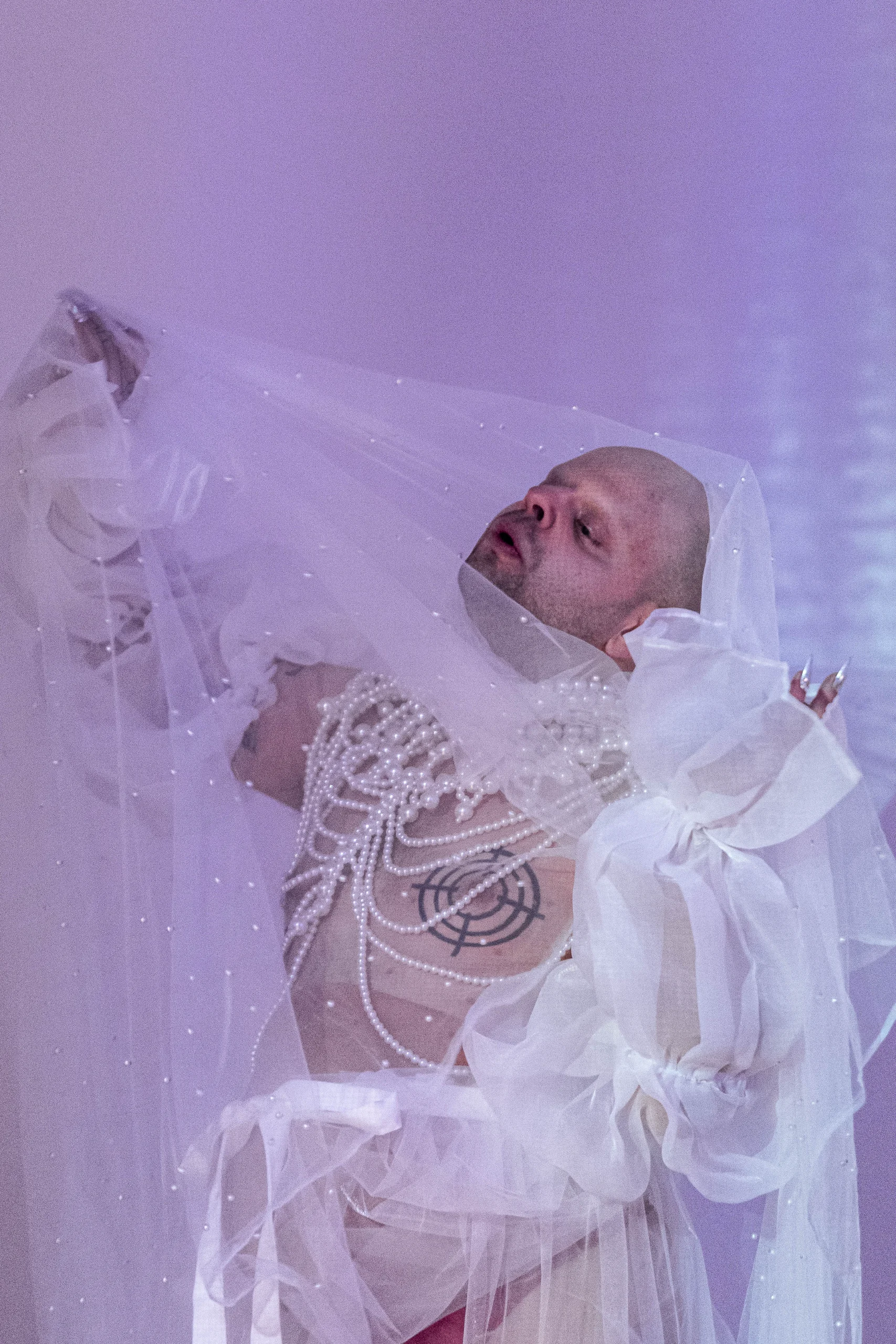
My performance Shekhinah in Labor had not even taken place at the POLIN Museum of the History of Polish Jews in Warsaw when articles about it began to appear.
The work used the Kabbalistic figure of the Shekhinah — the feminine presence of God — to think through gender, reproduction, the body, Jewish tradition, and my own experience as a trans artist. But none of that had yet happened in public. The work had not entered the space. There was no audience, no dramaturgy, no body moving between objects, no text anyone could hear and decide was good or shit.
There was no way yet to say that I had done something wrong.
It was entirely possible, however, to say that there was something wrong with me.
All it took was a short social media reel. My face, a few sentences, a handful of words: trans woman, nonbinary, POLIN, queer, Kabbalah, body.
Then it started.
Hundreds of comments. Thousands of reactions. Transphobia blurred into antisemitism, “gender ideology” into a Jewish museum, my body into some imagined collapse of civilisation. My name appeared in quotation marks. My deadname resurfaced. People referred to me in masculine forms. Nobody had seen the performance yet, which meant the performance itself was almost beside the point.
The evidence was already there.
I was the evidence.
What makes this memory stranger is what was happening inside POLIN at exactly the same time. I had never before felt so cared for as an artist. I was given safety, trust, and the conditions to make the work the way I had planned it. I could concentrate on the work instead of managing other people’s fear of it.
That experience has stayed with me as proof that protecting an artist does not blunt the edge of her work.
Outside, a few dozen seconds of video were enough.
Lately I have been thinking about this as living under accusation: a condition in which the accusation arrives before the act. First the category, then the person. First someone else’s story, then my own voice.
Sometimes my name enters the room before I do.
Google gets there faster.
Sometimes all it takes is saying “Simona” and the procedure has already begun.
A trans person knows this kind of surplus meaning. She gives her name and suddenly there is a debate about language. She walks into a bathroom and suddenly there is a debate about women. She makes a performance and suddenly she is responsible for Judaism, taxpayers, children, gender, and the fate of Western civilisation.
Sometimes I am impressed by the sheer scale of my supposed power. If my mere presence could really trigger everything I am accused of triggering, perhaps someone might finally count it as a professional skill.
I have been unable to find a job for almost two years.
I am not losing out in the final stages of recruitment. I am not getting that far. I send out CVs and nothing happens. Most of the time, I do not even receive a reply. This year, freelance work has almost disappeared too. I am in a disastrous financial situation.
I have experience. I have worked in culture. I have produced and curated, run an organisation, managed projects, teams, and budgets.
I do not know why my applications stop before the interview stage.
And it is precisely that “I don’t know” that stays with me the longest.
I do not know how many times someone simply had more experience. How many times the job was already intended for someone else. How many times my CV was mediocre. How many times chance or connections decided the outcome.
I also do not know how many times someone typed my name into a search engine and saw more than a candidate.
After POLIN, that question became harder to carry.
I do not know whether the reaction to the performance will make my professional situation worse. Perhaps no future employer will ever see the reel, the headlines, the deadname, the masculine forms, the thousands of reactions from people who had never seen the work.
I only know that from now on, I will remember them every time I send another CV.
Open transphobia at least offers a kind of epistemic certainty. Someone calls you a “man,” digs up your deadname, wants to know what you have between your legs.
You know what just happened.
Much more exhausting is a system that says nothing.
The most effective discrimination does not require hatred. Someone can use my pronouns correctly, think of herself as an ally, admire my art, and still quietly decide that things would simply be easier with someone else.
And right now, “easier” interests me more than “hatred.”
Hatred is spectacular.
Risk management is quiet.
No one has to think: I don’t want to hire a trans person.
It is enough to think: Why take on a potential problem?
An institution does not have to hate me. It only has to decide that things will be easier without me.
A person marked as a problem rarely gets to see the process by which she was marked.
She gets silence.
For a while, I even liked the word “controversial.” You can wear it like jewellery. I used that image myself. Visibility has its own economy. “Uncompromising” looks good in a bio. Radicalism builds a persona.
Eventually, you may discover that the jewellery fastens like a collar.
“Uncompromising” in an exhibition catalogue and “difficult” in a hiring process can be the same word in two different rooms.
“Radical” in a programme can become “risky” in a meeting you are not invited to attend.
Parts of the art world are perfectly willing to pay an artist for a radical body onstage for an hour and unwilling to have that same body inside their organisation for eight hours a day.
Marginalisation is desirable material as long as it does not interfere with the schedule.
My experience at POLIN showed me another possibility. An artist can be kept safe without having her work neutralised. She can be cared for without losing her autonomy.
That is the kind of environment in which I want critical art to be made.
Calm gives you time to look closely. It lets you stay with a question long enough for the answer to become complicated.
I want art that takes its material from reality and does not need an enemy in order to know why it exists.
For years, I have described radical honesty as one of the foundations of my practice. Honesty interests me at the point where it stops serving self-mythology.
The cost has to remain with me.
I can criticise institutions and desperately want one of them to hire me. I can experience discrimination and still hurt other people. I can be convinced that I am right and later discover that I was wrong.
For me, radical honesty means refusing to manufacture my own innocence.
That is why I do not trust the romantic figure of the truth-teller. The internet is full of people who are “just telling the truth.” Most of the time, that supposed truth is simply the old order after it has learned the language of rebellion.
Scandal proves nothing.
Marginalisation does not make anyone immune to being wrong.
The truth I am looking for always comes from somewhere. It passes through the body, memory, history, and my own blind spots.
For me, art is a form of inquiry.
Perhaps that is why I am less and less interested in framing my practice as being “against” something.
First a norm is established.
Here.
Then I am placed over there.
And when I begin speaking from the position assigned to me, I am told I am confrontational.
I want to enter tradition from within. I want to work with Kabbalah, Marilyn Monroe, Madonna, God, reproduction, sexuality, hunger, shame, and beauty because they belong to the world I am trying to understand.
My body is trans.
My gaze does not need to spend every waking hour doing the work of representation.
The norm has the privilege of private failure.
A cis person can make bad work and remain the author of bad work. I can very easily make bad work as a trans person. I can say something stupid as a trans person. I can fail to get a job and immediately start wondering whether I failed to get it because I am trans.
That last question is especially cruel because I will probably never get an answer.
Every statement has an addressee. My art does not speak to everyone either. The audience can be larger than the people a work is speaking to. Anyone can see it. Anyone can criticise it.
You can say the research is weak. That a symbol does not hold up. That the performance is pretentious, boring, terrible.
Please do.
At least then we are talking about the work.
The hijacking begins somewhere else.
It takes a photograph, a name, a pronoun, twenty seconds of footage, and attaches a story that was already waiting for them. The actual work becomes inconvenient because it might complicate the narrative.
A performance lasts for a specific amount of time.
Search results have no such dramaturgy.
A few months from now, someone may know nothing about the Shekhinah, the Western Wall in Jerusalem that became one of the starting points for the work, its structure, or what happened between me and the audience.
They will see a name.
Reels.
Headlines.
Comments.
Residue.
The work disappears faster than the reputation.
At the beginning of the performance, I asked the audience: “Which side are you on?”
The internet answered before I had the chance to ask the question.
It positioned me too.
What remains now are less spectacular things: more CVs, an inbox, a bank account, jobs that are not there, and the question of whether silence carries any meaning.
Radical honesty requires me to leave open the possibility that I may never find one answer. Transphobia, precarity, reputation, chance, and my own mistakes may have become a dirty mixture that can no longer be separated into its parts.
I do know what I want from art: conditions of calm in which something difficult is allowed to exist before it is judged, explained, or turned into something else.
At POLIN, I experienced that such conditions are possible.
I would like to have them outside the stage too.
I would like, sometimes, to enter a room before everything else enters with me.
To introduce myself.
Simona.
And for that name, for a moment, to mean only me.