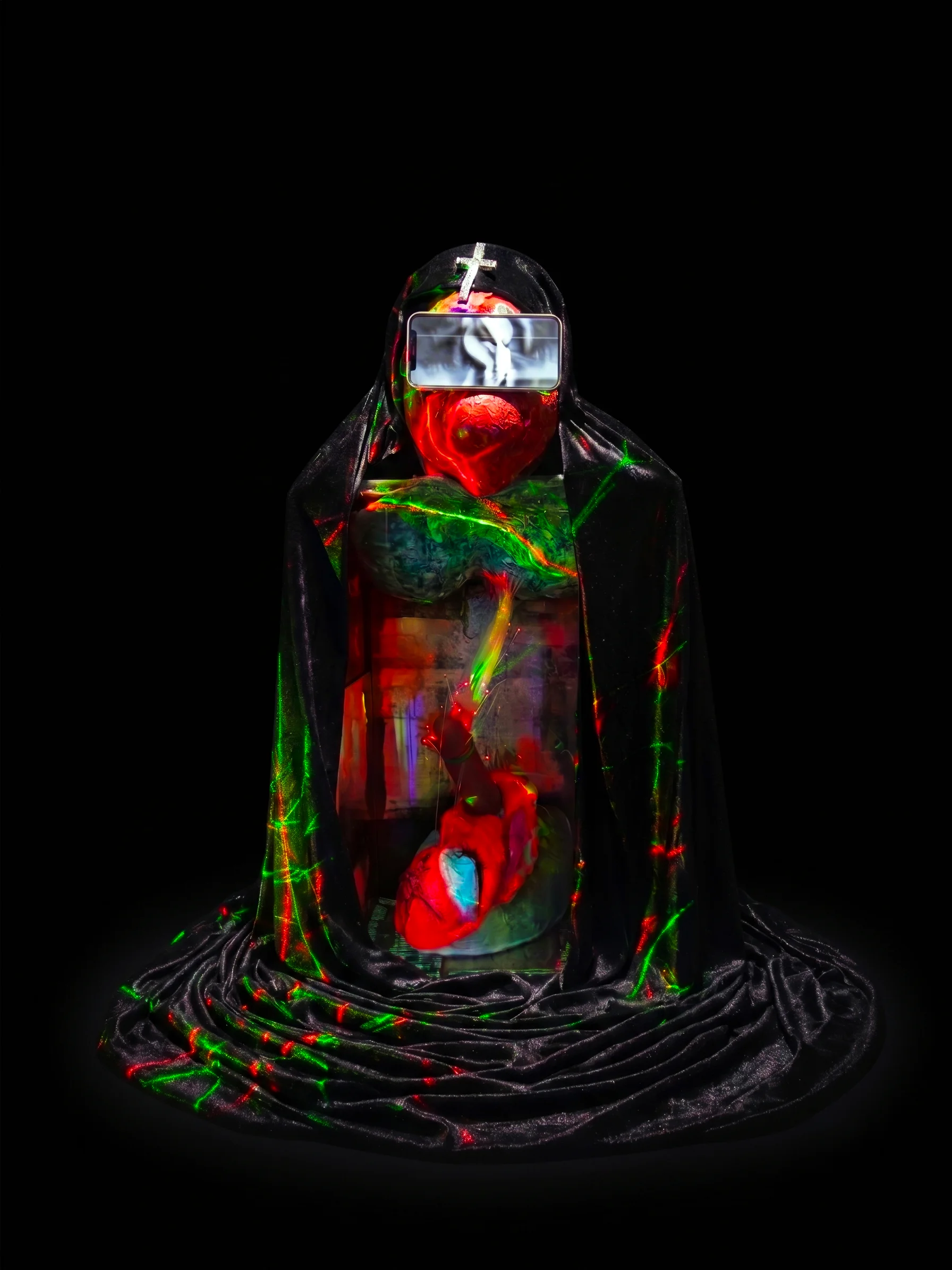
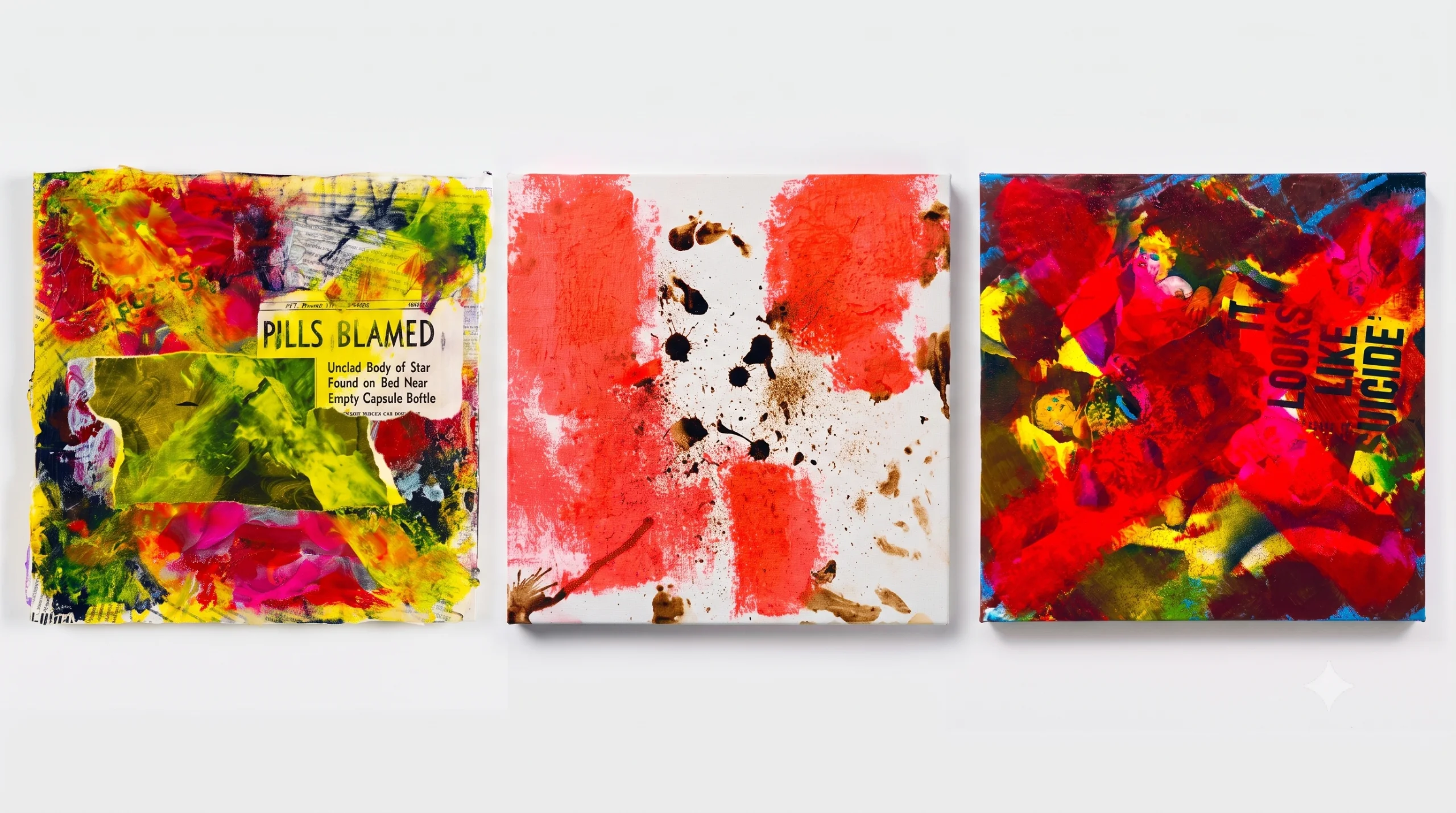
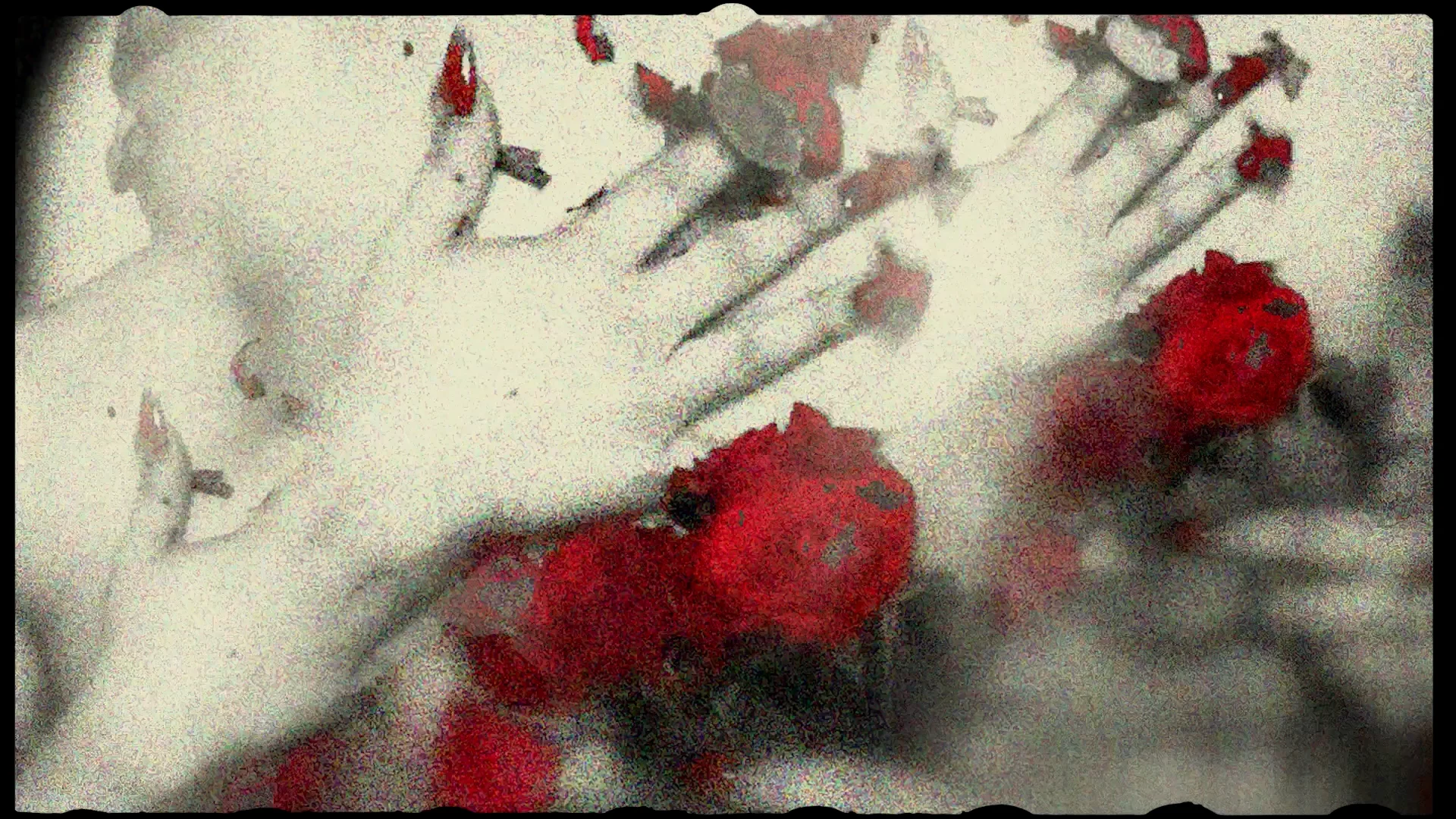
Lublin. The motherland.
The city where I was first attacked in public a year ago. The same city where, last Monday, I was knocked to the ground, someone tried to kick me and drag me out of a taxi I was just getting into. This happened after a screening of my film Fucking with Marilyn, in which I speak, among other things, about that violence from last year. A beautiful compositional loop of being expelled from the city — and from humanity.
Message received.
I am not meant to exist. Okay.
And indeed — as if I didn’t exist. On many levels. As if I had never existed there at all. Even though, paradoxically, for ten years I fought there for visibility. For others.
This year in particular, I feel invisible, undervalued, treated without respect. I resent it. Because I have received very little visibility in my life overall. Because I no longer have the strength to fight for it. Because it fucks me up that I can theoretically ramble for hours about intersectional, queer feminism and the margin as a zone of radical openness — with all my love for bell hooks — while at the same time not knowing where I’ll get the money for next month’s rent. Because this is not only about my narcissism, whether straightforward or inverted, nor about an anxious-ambivalent attachment style, but about a system and the practices that embody it. Practices that, although supposedly meant to dismantle that system, are merely another remix of it. Banally perverse.
I am writing this under the influence of a trigger: a text by Zofia Reznik titled “Not Only Exhibitions. Towards a Social Queerstory of Galeria Labirynt”, published in a volume on the not-only-queer history of Galeria Labirynt. A history of which — I feel — I was an essential part; one I co-created together with my collaborators and with the Gallery itself as an institutional partner. Yet in a text that adopts the perspective of “social history” and “queerstory,” there is not a single word about these activities. Ironically, it was precisely at Labirynt that I carried out, together with Iza Gawęcka, a substantial part of a transtorical project dedicated to Krystyna Modrzewska, the first openly known trans person connected to Lublin. But when this text is treated as a queerstorical source — it didn’t happen. We didn’t happen.
I am the Queer Mother of Lublin, painfully suffering — at a distance. This is my queer lament. I inspired the Lublin queer scene between 2019 and 2024. Between 2020 and 2024, mainly within the spaces of Galeria Labirynt. That is my place in the pantheon. And yet it was not even noted in the margins of queer history.
This is not a grievance directed at the author. It is not a polemic with the text, nor a pretext for any comment-section war. Grey flag.
This is an outpouring of many years of frustration, resentment and rage — after years of working myself to the bone for next to nothing, living in precarity with deepening depression and activist-professional burnout, while at the same time doing things that genuinely changed the scene. It is my lament and another lived example of Foucault’s theory of the archive as a tool of power. Not in a footnote, but on my own skin. Who gets written in, who remains reduced to “various activities,” who fits into categories — and who falls outside the margins of the table of contents.
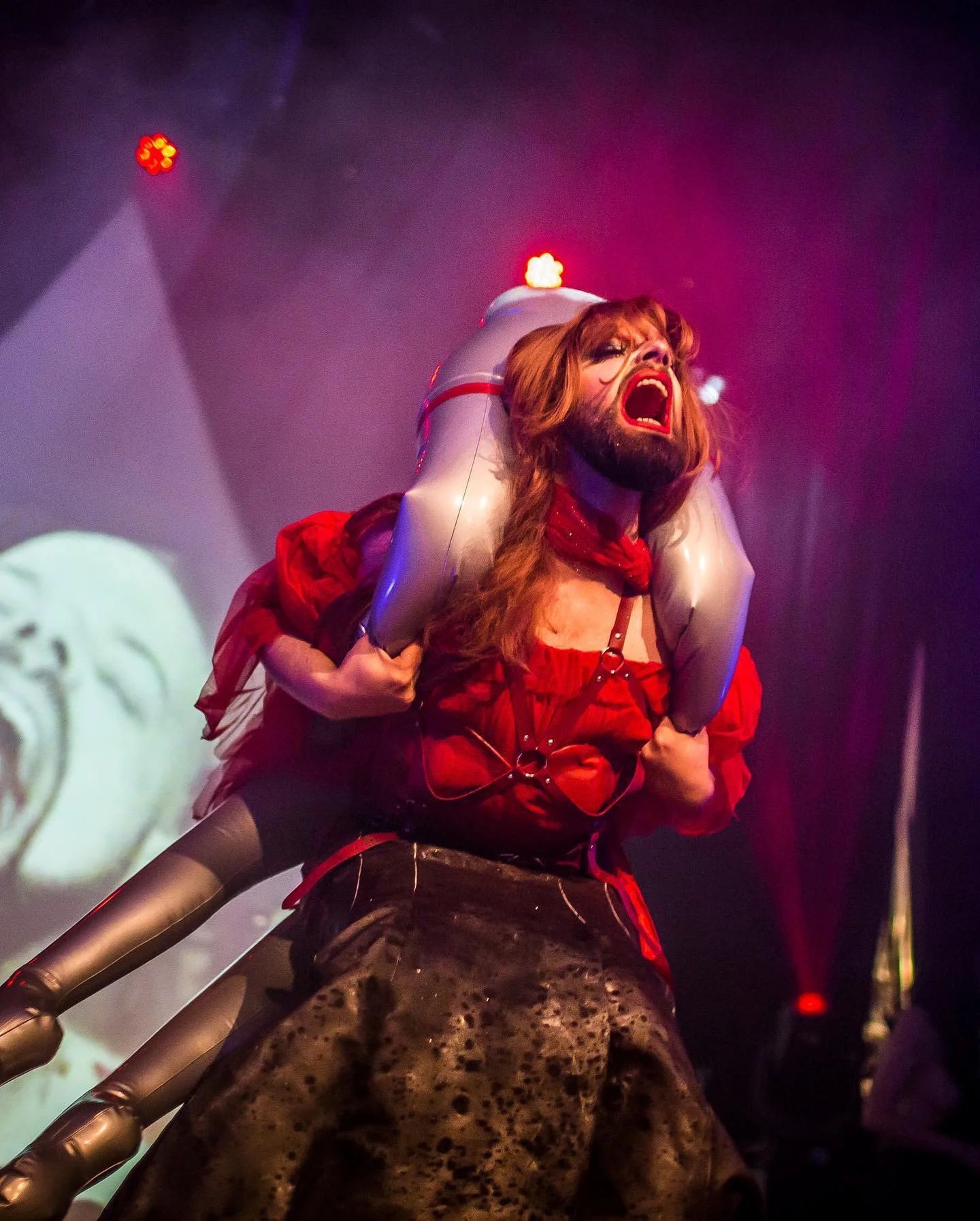
So I will write myself — and my collaborators from the Camera Femina Foundation — into that margin: Asia Bednarczyk, Weronka Rubin, Jola Prochowicz-Sienkiewicz, Bartek Wójcik, Alicja Sienkiewicz-Prochowicz. It was with us that queer, feminism and intersectionality entered Lublin in an artivist form that performed within the spaces of Galeria Labirynt. Queerz Get Loud, Demakijaż, Przegięcie. For years, I was the only drag performer in Lublin. In most cases, it was me who proposed the QGL programme, introduced diverse drag, burlesque, ballroom, and artists previously unknown — who a year later became stars of the queer mainstream. Film, music, literature, visual arts, workshops. Queer as an expression of rebellion against the realities of life in eastern Poland under PiS rule; a temporarily safer space where, even if only for a moment, people could experience and recognise themselves without the oppression of cis-heteronormativity. I was the one who conceived Przegięcie — a queer platform for burlesque, drag and queer performance — which came into being thanks to a message sent to Harpa Queen and developed through the work of many people, precisely within Galeria Labirynt.
All of this often happened at the cost of my life — in terms of mental health, but also financially, when budgets failed to add up. I invested my resources in so-called “change.” Those investments have resulted in me now having nothing left to lose. What I do have is depression, anxiety, a body falling apart, and debts exceeding fifty thousand złoty. I also have my memory — and my refusal to be erased.
One of my favourite anecdotes is also connected to Galeria Labirynt: as the first openly queer, trans person, I received there an award for cultural animation — in a year when I was unemployed. Nothing followed that award. I did not suddenly become inundated with job offers from cultural institutions. I simply had to leave Lublin and migrate to Warsaw for purely economic reasons. The city added a small moving-away starter kit to my suitcase — a two-ceramic-tile package of “appreciation.”
After that, I was probably in a kind of Stockholm syndrome with Lublin for several years, splitting my culture-making work between the motherland and Warsaw, with the side effect of increased queer presence at Galeria Labirynt. When I stopped, silence arrived quickly.
Silencing is also a form of violence. I say this broadly and generally — not only about myself. But I won’t expand on it now. I am still choking on the thought that I could genuinely have died in the centre of Lublin, outside the Culture Centre I had collaborated with for a decade, and no one would have even turned around. As a precaution, for my thirtieth birthday I threw myself a funeral and danced on the grave of my activism.